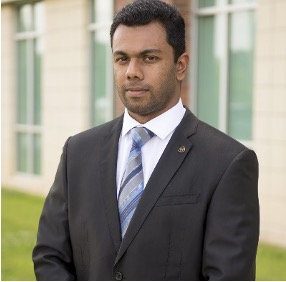
Vishesh Singh, B.P.T (India) MS (Sport Performance)
Instructor, Department of Kinesiology
Managing Director of Human Performance Laboratories
I am a full-time instructor and Managing Director for the Human Performance Labs (since 2016) in the Department of Kinesiology. I have two Bachelor’s Degrees. One is a Bachelor of Physical Therapy (India), and the other is a Bachelor of Science (Botany, and Chemistry). I did my Masters in Kinesiology with a concentration in Sport Performance. As a part of my Master’s degree, I served as a strength and conditioning intern with the Louisiana Tech football team.
What do I do?
As an Instructor, I have two primary duties:
- Teaching undergraduate-level classes. I teach KINE 292- Preventive Health and Wellness (a freshman/sophomore level class) and KINE 326- Functional Anatomy (a junior level class).
- Work as an Advisor: I work as one of the advisors in the Department of Kinesiology for Undergraduate students. As an Advisor, I provide guidance to students to make informed decisions about their academic and career goals. This mainly includes helping students in selecting their classes for each quarter; if a student is facing challenges related to academics, personal matters, or other aspects of university life, provide guidance and connect them with appropriate resources or support services; tracking their progress; informing them about the opportunities related extracurricular activities, research, and internships.
My role as Managing Director of Human Performance Laboratories (HPL):
The Applied Physiology Laboratory (APL), the Minds in Motion laboratory (MiML), the Strength Lab & Weight Room, and the Sport & Movement Science Laboratory (SMSL) are four research and teaching laboratory spaces within the Department of Kinesiology at Louisiana Tech University. These four laboratories are collectively known as Human Performance Laboratories (HPL).
Main duties as Managing Director:
- Coordinate with individual lab directors regarding lab space use or equipment use to avoid any scheduling conflict.
- Work as a common source of information for HPL related queries
- Building relationships with athletics and other groups to promote lab activities, which helps in the growth of the lab, department, and our students.
- Maintenance and upgrading the lab equipment.
- Procuring the new lab equipment. This mainly includes: comparing the equipment from different manufacturers, gathering quotes, writing grant, purchasing process, installment, and coordinate the training.
- Updating the HPL Webpage and YouTube channel.
- Help faculty and students with the data collection for their research projects.
- Training students and faculty for equipment use.
Main lab equipment the students learn how to use:
Biodex: Isokinetic Dynamometer which tells the amount force/torque produced during a movement. This equipment helps to find out strength discrepancies between the opposite muscle groups which is one of the main reasons for many sports injuries. For examples, one of the contributing factors for ACL injury is a markedly weaker hamstring compared to quadriceps. This equipment also helps to determine rehabilitation progress status which is important information to determine if the athlete is ready for “return to play” or not.

COSMED CPET: This device helps to determine an individual’s oxygen utilization capacity in the lab setting. Testing someone for oxygen utilization or maximum oxygen consumptions (VO2max) provides lot of important information. It indicates the ability of their heart and lungs to transport oxygen. It can also help to determine/understand suitable training intensities, preferred fuel (Carbs, Fat, Protein) for the activity, and recovery ability of an athlete.
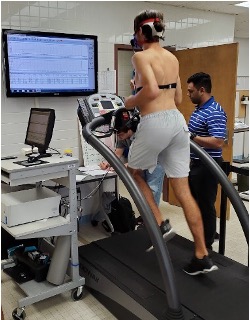
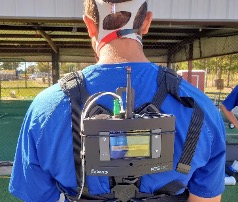
COSMED K5: This device tests the same parameter as COSMED CPET but this is a portable form with more advanced technology. With this device you don’t have to be in a lab setting. You can take the device to the subject and test them in their preferred environment like track, field, trails, or while playing tennis. It can even be used if the individual is in a wheelchair.
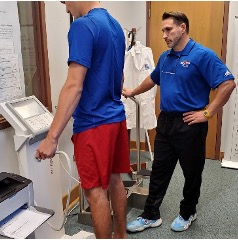
InBody: This piece of equipment is one the finest BIA devices available on the market. This device tells a person’s percent body fat which is no doubt a very important factor for health as well as sport performance perspectives. In addition to fat percentage this device also provides segmental analysis (upper limb, lower limb, trunk) for lean body mass, skeletal muscle mass and hydration level.
- There are many other pieces of equipment in the HPL and students can find all lab related information on the HPL webpage (https://www.latechsportscience.org/)
Why do students need to learn how to use all of this equipment?
Learning to use this equipment and the latest technologies can be crucial to a student’s professional journey. Students often believe they might not need to know how to use the equipment or technologies and that they are only for research. This is not true anymore, especially as the technology is becoming more advanced and affordable. Because of this, many non-research facilities/professionals (PT clinics, fitness centers, strength and conditioning coaches, sports coaches, and athletic trainers) are not only using them but also looking for candidates to hire who already have experience with these technologies. Learning the latest technologies and getting involved with research gives students confidence and separates them from the rest of the crowd. It also opens the doors for different non-traditional career options in sports and fitness. But the most important benefit is that it helps students understand the importance of information you get from equipment and how to use it to help others. The ability to use such information allows you to prevent injuries, boost performance, enhance the rehabilitation program, and improve the quality of life.

 The Exponential Factor