Thaddeus J Light, Ph.D., CSCS, USAW-2

Education:
- West Virginia University – B.A., History (2010)
- Louisiana Tech University – M.S., Kinesiology, Sports Performance (2015)
- East Tennessee State University – Ph.D., Sport Physiology & Performance (2019)
Relevant Experience:
- Research Scientist – Florida Institute for Human & Machine Cognition (2019-2021)
- Athletic Performance Assistant/Head G League Strength & Conditioning Coach – San Antonio Spurs/Austin Spurs (2021-2022)
- Head of Strength & Conditioning and Sport Science – Indiana Fever (2022)
- Head of Weightlifting and Strength & Conditioning – LiftLab Co. (2022-2023)
- Senior Consultant – Teamworks (2023-Present)
The path that I’ve traveled, both in my education as well as my professional life, has been atypical. I’m currently working as a Senior Consultant with Teamworks, where I assist tactical (military, police, fire) groups with their handling of complex performance datasets. I could not have foreseen myself in this role – I hardly even knew this kind of position existed – but it’s an excellent fit for my skills and experience, and has been great for myself and my family.
The Journey (so far):
I came to Tech for my Masters in Kinesiology – Sport Performance in 2013. My goal was to become a professional-level Strength and Conditioning Coach, and the first step in the plan that I had formulated was to attend graduate school. My undergraduate education was in History, and I was heading toward law school when I realized that I needed to make a change. I needed to get back into sport. I began coaching High School sports, then earned my Certified Strength and Conditioning Specialist and started training athletes on a very small scale. I needed to deepen my knowledge base, get as much experience as possible, and meet as many high-level coaches as I could. Tech fit the bill. Dr. David Szymanski agreed to take a chance on me, allowing me to work with him coaching the baseball team, assisting with research, and serving as a Graduate Teaching Assistant in the Dept. of Kinesiology.
In addition to helping Doc and performing my departmental duties, I did things that would come to greatly influence my education and career path. I interned at National Strength & Conditioning Association headquarters as a coach in their performance center, kick starting my relationship with the NSCA. I also began traveling over to LSU Shreveport to train for weightlifting with Dr. Kyle Pierce, recent inductee to the International Weightlifting Federation Hall of Fame. These steps put me in contact with excellent coaches and gave me irreplaceable experience.
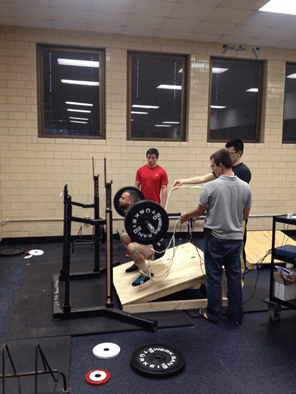

Some pictures – the lab before it was the lab featuring me squatting for research, and a crew of us KINES grad students lining up for graduation.
After graduating from Tech, I decided to pursue a Ph.D. at East Tennessee State University. My research experience at Tech and my desire to better understand the underlying physiology involved in training made the decision easy for me. A Ph.D. isn’t necessarily a requirement for coaching at the professional level, but it provides options, which is what I wanted. While there, I coached weightlifting at the Olympic Training Site and was head Sport Scientist for the weightlifting team. Being in the program at ETSU allowed me to gain immense amounts of practical experience in both coaching and sport science data collection. It was during this time that I interned for the Indiana Pacers, which would later influence my career.
After I completed my Ph.D., I moved to Florida to work as a Research Scientist with the Florida Institute for Human and Machine Cognition. I had never envisioned myself working specifically in research, but it was a great opportunity and I knew I would be working with brilliant people. There I helped to design and implement research protocols focused on human performance in extreme environments (microgravity, hypoxic conditions, cold water exposure, etc.), mainly in military populations. I was privileged to work there for 2.5 years.
Another opportunity came, and I left my position as Research Scientist to go work with the San Antonio Spurs. I worked in the Spurs organization as the Head Strength and Conditioning Coach for their G League team, the Austin Spurs, as well as an assistant for the San Antonio Spurs. This experience was a huge leap for me. I learned so much – not only about coaching and sport science, but about how quality organizations are run. I also learned about life in the NBA G League. If you love basketball, you will love the G League. Please support the G League, the athletes deserve it.
After a single season with the Spurs, I was given the opportunity to become the Head Strength and Conditioning Coach for the Indiana Fever in the WNBA. A major factor in my recruitment for the position was the relationships I made during my time as an intern with the Pacers. I took the opportunity and ran with it. Working in the WNBA with the Fever was a joy for me and my family. Professionally, had an excellent year as a Performance and Medical Department, seeing a 70% reduction in the numbers of games missed due to injury. However, the organization was in the midst of a rebuild and my contract was not renewed or extended. That’s the business of sport, and it was an outcome we always knew was possible.

To any Tech students are reading this who want to work in high-level collegiate or professional sport: you need to know the hard truths about that path and what happens when you actually achieve that goal. You will have to move wherever the job is, and then you will have to eventually move again. You likely will get paid much less than you deserve for the time you put in. Your actual job performance may have nothing to do with your ability to stay employed in your position. Your performance may even be judged by people with no training knowledge and no concept of what you actually do on a day-to-day basis. You must commit to the job 7 days a week, nearly 365 days a year, and if it’s in-season you may be living your life an hour at a time, unable to plan anything outside your required duties to the athletes you serve. If you have a family, you will need to be okay with sometimes being away for extended periods if the job demands it. You have to get comfortable with the idea that you’ll be in a job until you get fired (or not renewed) and then have to find something somewhere else or make it work in whatever location you’re in.
Not all of those things listened above may be true at once, but it’s highly likely that a few will be. This is the reality of being a strength coach at the highest level, and one that you will come to know as you speak to coaches in that world or you live in it yourself. You have to navigate the chaos of it, and deeply love the process of the sport that you’re working in. Even with all of that, I can’t imagine a job that’s more fun on a daily basis.
If you want to work at the top of any profession, you need to be honest with yourself about the steps it will take to get you there. At the very least, that will often mean that you have to move, in addition to the huge amounts of time and effort that will go into meeting that goal in other ways. My wife and I met when we were grad students together at Tech, and I’ve been dragging her (and now our kids) across the country ever since. This is the real story, the one that gets no awards or recognition – intense discussions, hardships both expected and unforeseen, and disappointments that can destabilize your family. And you go through it all anyway, keeping faith that it will eventually work out, because it has to work out.
After my time with the Fever, I was able to get a job in a private training facility coaching weightlifting as well as individualized strength coaching and personal training (athletes vs. general population). This was my first time working in “the fitness industry” and I really enjoyed helping the folks I worked with to meet their goals. Though I still prefer the atmosphere of working within a sports organization, there’s a big difference between training someone who is paying to be there as opposed to someone who is being paid to be there. It’s much easier to get compliance in a private facility.

I failed this 50kg chin-up attempt, but 45 kg was good. The Tech pinny helped.
However, the experience of working in a private training facility, or maybe just this specific facility, wasn’t right for me. I was working long hours with relatively little pay and those hours were not conducive to me having quality time for myself and my family. I worked there for almost a year, and during that time I pursued other employment options. I had numerous interviews with NBA and WNBA organizations but no luck on securing a job. I cast a larger net and began applying for jobs in research and at colleges and private high schools as well. I had many more interviews but no luck there either. At one point I was told I didn’t have enough high school coaching experience and that it would be too much of a learning curve for me.
Still, I kept on trying to find a steady position. Eventually, as luck would have it, a friend of mine reached out asking if I would be interested in a position that he knew would be coming available. Again, to Tech students reading this (if you’re out there): you must network effectively and maintain those connections – they will be essential to your professional success. The open position that was brought to my attention is the one that I now hold. Of course, I still had to earn that position on the merits of my education, experience, and fit within the organization, but it helped to have a friend let me know the opportunity was there.
As I stated at the beginning, I now work as a Senior Consultant with Teamworks, dealing in sports technology and data management. It’s a great fit for me; I understand the physiology and testing methods for the data I’m working with, I have the research background that allows me to arrange the data in the most efficient ways, and I can speak the same language as the coaches and departments that I help. I mainly work with tactical groups – military, government agencies, police, and fire departments. It feels good to know that I’m giving back to those groups in a way that is direct and helpful. I work remotely now, so it also feels good that I’m able to be present in the day-to-day lives of my wife and children and know that I’m putting us in a more stable position from which we can build our future. I’m excited to see where the journey takes us next.
Post Script:
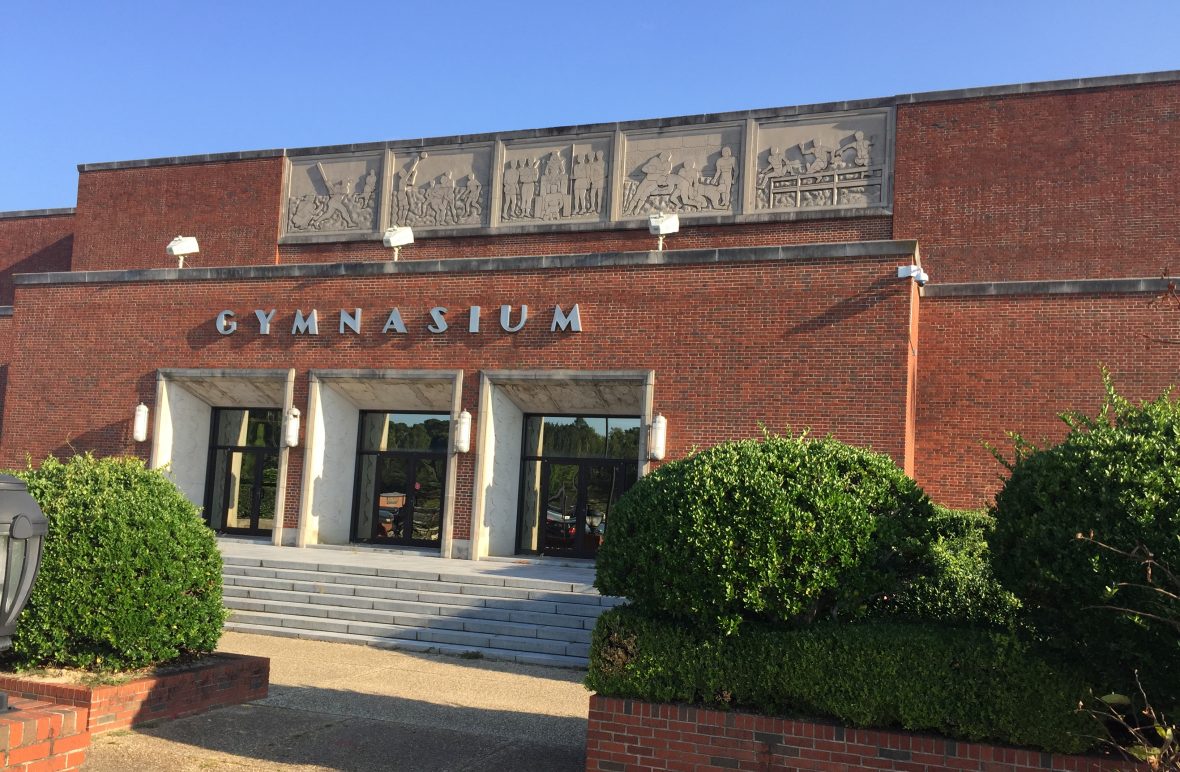
When I made the decision to go to Tech, I knew that it was going to alter the course of my life, but never could I have imagined the magnitude of that decision’s impact. I met my wife and some of my closest friends in Memorial Gym, and was given the chance to develop my skills as a coach, teacher, and researcher. Last but not least, I very much want to use this opportunity to thank the Szymanski family for their help at Tech and beyond. They’ve been a great resource for me, personally and professionally, for years.

 The Exponential Factor