
Jesse Wendt
Louisiana Tech University- B.S. Kinesiology and Health Sciences – Class of 2021
Education and Background
While I was at Louisiana Tech, I attended a seminar presented by the UT Health EP Heart program in Houston, TX. I remember leaving this seminar thinking how cool the presentation was and the potential of working with medical devices. Shortly after this seminar I found out that my dad was going to be needing a pacemaker which prompted me to do even more research into what pacemakers are and how they work. At the time I was very nervous at the thought of my dad needing a pacemaker but now that I work in the industry, I know that pacemakers are very common. In fact, they are great devices that help to improve a patient’s quality of life.
In my last quarter at Tech, I did my internship at Northern Louisiana Medical Center in the cardiac rehab department. While I was there, I expressed my interest in this program in Houston and the idea of working with medical devices. As luck would have it the head of the cardiac rehab center was also an x-ray tech that worked in the cath lab at the hospital. He allowed me to come and see procedures every so often which gave me my first exposure to a cath lab and how it worked. I mostly saw left and right heart caths but I was able to see the beginning of a pacemaker generator change. By the end of my internship, I was hooked. I knew this is the career I wanted to pursue and after graduating I applied for the EP Heart program.
EP Heart Cardiovascular Electrophysiology Program
The UT Health EP Heart program is located in Houston, TX just minutes away from the Med Center in downtown Houston. It is a 6 month program that covers the Cardiac Rhythm Management (CRM) industry, Electrophysiology (EP), and structural heart industry. The program is offered twice a year, staring in January and July. The staff includes: John Boettcher, a former Medtronic sales rep with years of experience and CRM instructor. Dr. Anne H. Dougherty, a practicing physician (who if you’re lucky you will get to see do cases during your time at clinicals) and EP instructor. Courtney McAlister, RN, BSN the structural heart instructor. Wendy Boettcher, RN, BSN, the clinical instructor who has years of experience working with medical devices and Mary Jones the program manager. Though this is just a brief overview of their background, the entire staff is amazing and has become a great professional resource that extends beyond just the completion of the program. The program is split into three distinct curriculums; CRM, EP and structural heart. However, between CRM and EP there is a professional week where you will get to practice and hone your interview skills, resume building and other skills to help you succeed in a professional environment. This also includes numerous presentations and interviews with some of the top medical device companies in the world. The staff has done an amazing job building this program and continuing to attract top companies to come and interview its students. Some of the companies include; Biotronik, Abbott, Medtronic, Boston Scientific, Biosense Webster, and many more. A large part of that success comes from the education and hands on experience that you receive at the program.
The program focuses on three industries; CRM, EP and structural heart. The Cardiac Rhythm management (CRM) curriculum involves implantable medical devices like pacemakers, defibrillators and cardiac resynchronization (CRT) devices. You will learn about how pacemakers work, the indications for implanting them, the specific algorithms and technology that different companies have and much more. As you are learning about them you will also get the opportunity to use four different companies’ programmers to practice testing and programming demo devices. You will also get to use an advanced sim lab that allows you to see a simulated implant to help you get familiar with how implants flow and what supplies or issues you may need to be prepared for.
The Electrophysiology (EP) curriculum focuses on identifying arrythmias and learning how to map these arrythmias during an ablation. This portion is taught by a practicing physician, Dr. Dougherty, which is an experience that is unique to this program. Her knowledge and first-hand experience, possibly even from cases she did that week, sets your education apart from others. You will get to see the different kinds of technology each companies use and practice mapping on computer simulators. Using the sim lab you will get to see great examples of mapping and how different catheters work. You even get to try your hand at trying to place and manipulate a catheter while its in the “body”.
The Structural Heart curriculum covers some more complex procedures like a TAVR (transcatheter aortic valve replacement), mitral valve repair, left atrial appendage closure devices and some of the new devices that are coming to market soon. You also get to learn about echocardiogram imaging and how to identify different structures and locations within the heart. Once into this part of the class you will get the chance to go with Courtney to the Med center and watch some structural cases. This could be a TAVR procedure, a mitral clip placement or both.
Throughout the program you will complete roughly 200 hours of clinical observation. This could be spending a day in a clinic watching the reps from several companies interrogate, test and reprogram devices. Once you get some experience under your belt some will even let you do the testing and programming while they watch. Clinicals also include time at four different Memorial Hermann hospitals throughout Houston where you will get to watch anything from a pacemaker implant to an AFib ablation. You will get to stand inside the procedure room and watch the reps as they map a complex flutter ablation or you can watch as they test the leads that were just placed in the patient’s heart. During this time, you can network with local reps that could even land you an interview and possible job with their company. Upon completion of the program, you will have gained valuable experience and knowledge in many different aspects of medical devices and therapies available. You will also have a strong skill set that will help you progress through your career and professional life.
What I do Now
I currently live in Lafayette, LA working for Biotronik as a field clinical specialist (FCS). Biotronik is a medical device company that specializes in a number of different areas ranging from pacemakers and defibrillators to coronary stents and spinal cord stimulators. My job as an FCS in the CRM division revolves around pacemakers, defibrillators and heart failure devices. I provide technical and clinical support for Biotronik within an assigned territory and professionally represent Biotronik and provide education, follow-up services, implant services, in service training, and other related services as necessary to sales force, physicians and other cardiac pacing-related professionals. I am present when the device is implanted to test and ensure the leads are in the best place possible to maximize the efficiency and battery life of the device. I routinely test and check the devices in office follow ups to ensure the device is working as it should. We are constantly involved in patient care from programming changes to maximize battery life to programming the device so the patient can safely get an MRI or undergo surgery. This is not a 9-5 job; implants can be early in the morning or late at night. You can have small clinics or huge clinics with 20+ patients. Plus a big part of this job is being on call, that could mean a 2 AM visit to the ER or a Saturday morning check. But this career is so rewarding, I get to see the benefits of these devices first hand. Whether that be a patient that has regained their energy and is able to walk and do the things they want too again. Or, during the ER checks when you see the patient’s defibrillator has delivered a lifesaving shock to get them out of a lethal arrhythmia. I’m still very early in my career but getting to work with such amazing and beneficial technology is a truly unique and special experience. I can’t wait to keep advancing and learning more and more every day.
I want to give a special thank you to John and Wendy Boettcher and the rest of the staff at the EP Heart program. Thank you for all the advice both during and after the program as well as teaching us and giving us such a special and unique education. Also, thank you to Dana, Judy, Katherine and Bill at Waco Cardiology for hiring me out of school and helping to teach me to care for patients the best I can. And a special thank you to Biotronik and Ramon Carrasquillo and Ryan Quinlan for giving me the opportunity to be a part of something special. And lastly thank you to Ms. Boyd and the Kinesiology department for an amazing college experience and education. As well as giving me the chance to talk a little about the unique and wonderful career that is Cardiac Rhythm Management.
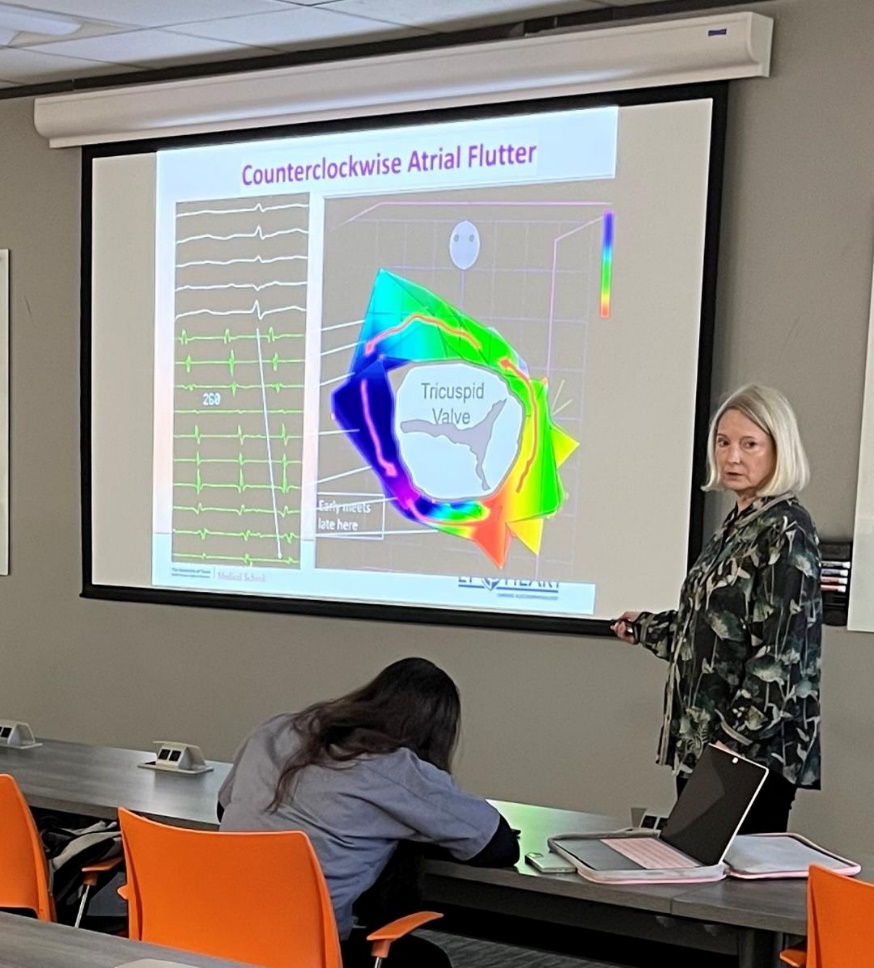
Presentation by Dr. Doughtery

Clinical experience during a procedure

In the sim lab

Presentation by Baylis Medical
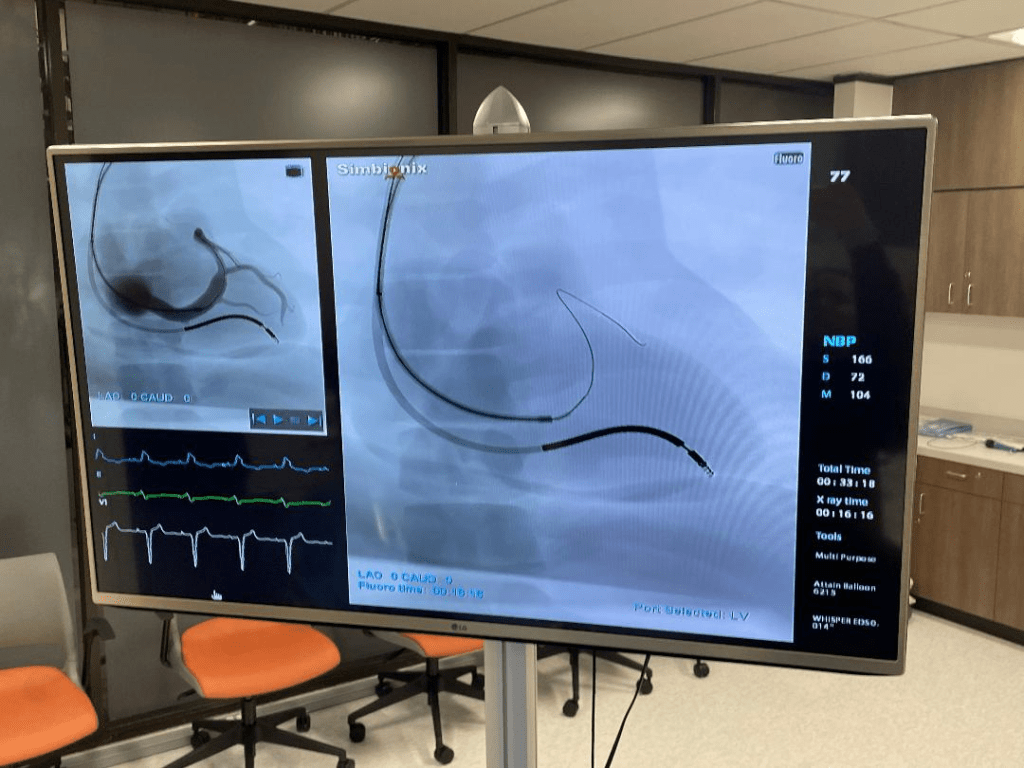
Simulated implant

 The Exponential Factor