Landry Burback, Louisiana Tech University B.S. Kinesiology- Exercise and Health Promotion
My name is Landry Burback and I am from Stonewall, Louisiana! I am currently the Marketing & Health/Wellness Coordinator at Ruston Sports Complex and Ruston Parks and Recreation. I am a 2024 graduate of Louisiana Tech with a B.S. in Kinesiology, Exercise and Health Promotion. I am currently also a graduate student pursuing my MBA from Louisiana Tech!
When I entered my college career, during the unprecedented time of 2020, I had just experienced having my senior year of high school cut short, and had an interesting transition into college life. Most of our classes were online or hybrid, meaning that I spent a lot of my days finding different spots on campus with my friends to get our schoolwork done and to “zoom” into our classes. It feels like just yesterday I was in a zoom waiting room waiting for Ms. Boyd’s FYE class to start! Looking back, it was a pivotal season and one that was difficult to navigate, but everyone really did their best to help it be as “normal” as possible. Transitioning to college is already hard enough, leaving your hometown, most of your friends, family, and the way of life that you have known for so long, and try adding in a pandemic!
Entering college, I really wasn’t completely sure on what kind of career I wanted to pursue. I ran track and cross country all throughout high school along with a half marathon, so I knew I loved exercise and what it did for the body, so I decided to give kinesiology a shot! I thought that physical therapy sounded interesting to me so I kind of took that and ran with it. I observed some physical and occupational therapists and continued my kinesiology studies throughout my whole freshman year, but still felt that I was unsure if this is what I really wanted to do.
After many talks and advice from my friends and family along with a lot of prayer and faith, I decided to see what other majors and careers had in store. This took me through my sophomore year of switching majors 3 times! Yes 3! Just to really realize how much I missed the content of Kinesiology and going right back to where I started. This time however, I changed my concentration to exercise and health promotion because I knew I still didn’t want to do PT or OT.
Still not sure of what path God wanted me to take, this was right around the time where talk was getting around of a brand new state-of-the-art indoor sports facility opening up in Ruston. I thought to myself that this would be a neat place to work and who knows, maybe sports management and recreation could be exciting! So I landed an interview and got hired to mainly develop both the sports complex and parks and recreation’s social media, along with helping tournaments and events run smoothly and all the planning and marketing that took place within that as well.
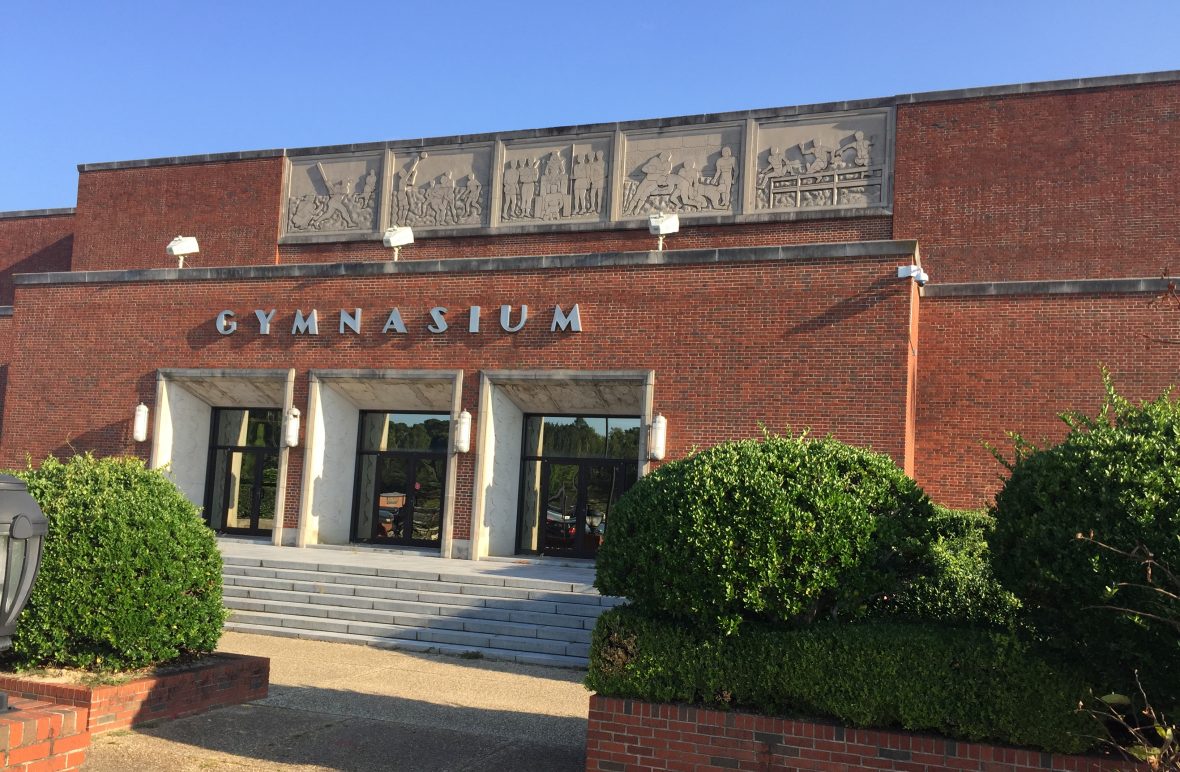
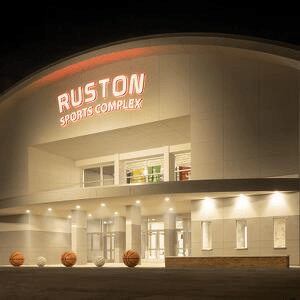
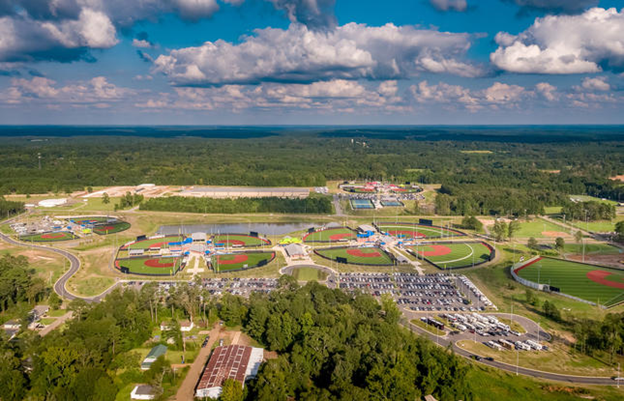
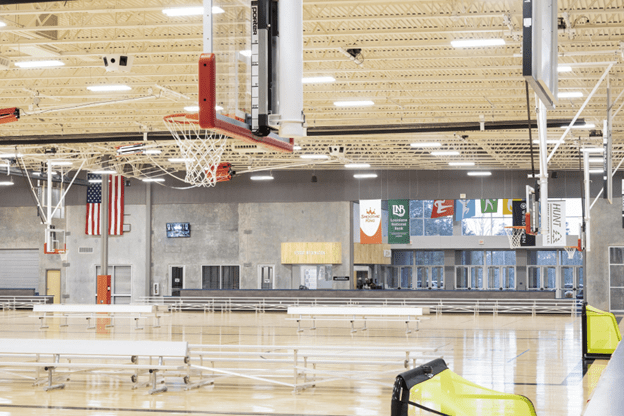
Outdoor and indoor photos of the 185 acre site of Ruston Sports Complex
Long story short, I have continued my job here all throughout the rest of my college years learning all of the ins and outs of the sports business and recreational industries, with my roles and responsibilities at the facility growing more and more as time went on. I have had the opportunity to do some pretty neat things throughout the years!
Started a youth running program in the summers
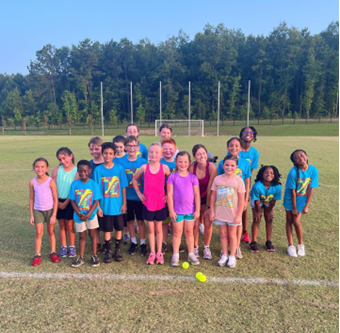
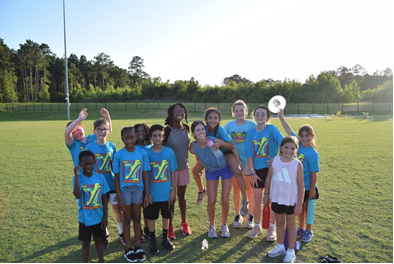
I have created and led in this role for the past 2 summers and have loved it! Our parks and recreation organization provides so many different sports and activities for kids and adults, so I decided to add in a new program as well, RPAR on the Run! This month-long program takes place in the summer and allows youth to learn how to run long distances. I really enjoy getting to create the workout program for the kids, plan fun games, and just see them improve all throughout the program. Running, especially long distance, is a great way for all ages to set goals and show yourself what you’re made of! The kids improve all month long and have a great time making new friends, all while learning how to run!
Started the first annual Ruston Rudolph Run 5k
My dad has always been my biggest supporter and coach throughout my whole life! I would not be where I was today without him!
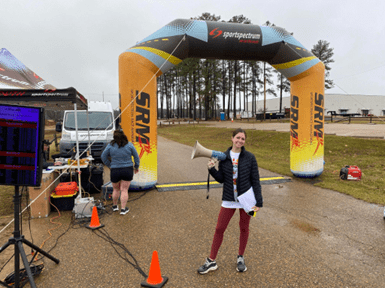
I have always had a love for running (and Christmas of course) and was given the chance to combine those two while planning the Ruston Rudolph Run 5k! I had the privilege of getting to plan and execute all areas of the race. Our second annual RRR 5K is coming up on December 19th, so make sure you come take part in the fun!
Started a Senior Adult Fitness Program
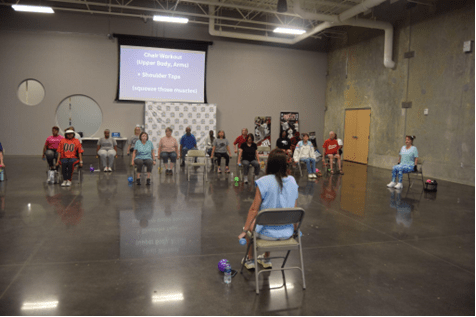
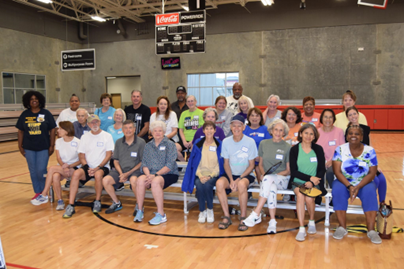
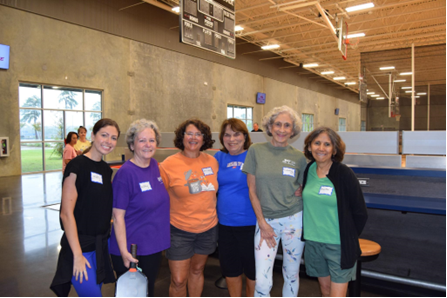
This has been my most recent endeavor that has been so much fun! Starting this past summer, I noticed that there was a gap between what activities we offered for our youth and adults, and then what was available for older adults. So, the Senior Adult Fitness Program idea was born! I was able to start, plan, and lead weekly group exercise classes and other activities for those that are 60+ in the community of Ruston. It is so important for senior adults to continue to move their bodies as they grow older and face things such as sarcopenia, osteoporosis, and other areas of mental/physical decline. Our program works to improve all areas of the body through strength, cardiorespiratory endurance, balance, flexibility, coordination, and so much more. We also explore other activities such as pickleball, walks in the park, zumba, exercise bingo, and more!
I got an inside look at what it was like to work with senior adults in my practicum senior year with Mrs. Szymanksi in water aerobics! She is awesome and so are all the participants!
When I graduated college in May, I was offered a full time position as the Marketing & Health/Wellness Coordinator at the complex. Throughout the rest of my Kinesiology studies and working through college at the complex, I really fell in love with sports marketing and the business side of sports. This role has been the perfect combination of my love for exercise and recreation along with my interest in marketing and business. My job roles now consist of all the areas listed above along with working with our sponsors here at the complex. I work to get new sponsorships and our current ones to maximize their visibility and grow their commitment to the community at our facility. I also get to run all of our social media platforms along with the senior adult fitness program I started here in June! This job really is a perfect blend for my kinesiology background and what I am learning now in my MBA studies. I am able to continue learning so much while also applying my knowledge to something greater!
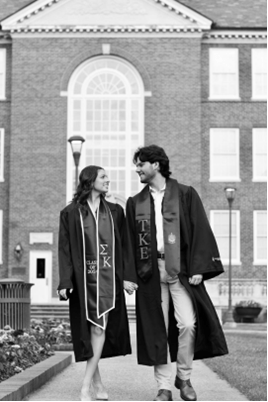
Everyone’s journey and story is different, but I am here to say that it is okay to not know what you want to do when you start out! I am so thankful with how Louisiana Tech poured into me for 4 years through the Kinesiology department, my professors truly enabled me with the education and foundation to go out and be great! I am also so thankful to my director and co-workers here at the complex who have given me so much freedom to really make each endeavor what I have wanted it to be, along with teaching and still continuing to teach me along the way. I can also attest to the community, opportunities, and friendships that were made possible through my sorority in my time at tech as well, Sigma Kappa, along with all of the other organizations I was involved in on campus as well. I am a strong believer in my faith and trusting that God always has a plan that is much bigger than our own. He truly loves to work in mysterious ways!
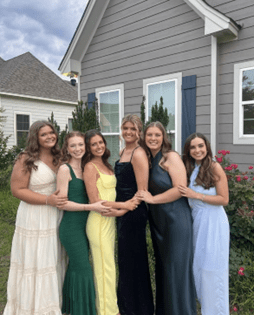
My family, friends, and boyfriend have always been my biggest support system!
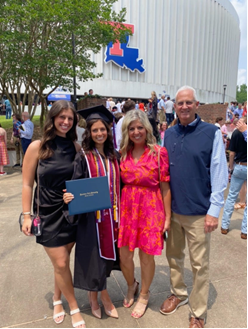
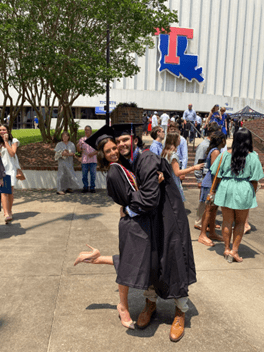
My boyfriend, Aaron, and I actually met our freshman year on zoom in our FYE class! We graduated together, both in Kinesiology, and will have been dating for 4 years at the end of November.
If you’re considering Kinesiology but aren’t sure about traditional paths like PT or OT, know that this field offers so many diverse career options. Stay curious, set goals for yourself, and be open to unique opportunities—you’ll find your path.
Feel free to reach out if you’d like to hear more about my journey or the latest at Ruston Sports Complex!
MichaelCatalanello Louisiana Tech Kinesiology and Health Promotion -2019
My name is Michael Catalanello, and my career journey took a few unexpected turns before I found my true calling: working with student-athletes. It has been a rewarding path, filled with lessons, growth, and moments of clarity. I want to share my story in hopes that it might inspire others who are seeking purpose in their work.
I’ve always had a passion for health, the human body, and helping others become better athletes. That’s why I pursued a degree in Kinesiology at Louisiana Tech. At the time, I wasn’t sure exactly where it would lead me, but I knew that helping others would be at the core of whatever I did.
After graduating, my first job was at Origin Bank as a Personal Banker. While the work was steady, and I gained valuable professional experience, I couldn’t shake the feeling that I wasn’t fulfilling my true purpose. I wanted to make a more direct impact on people’s lives, and banking wasn’t giving me that opportunity. The desire to teach and coach had always been there, but I wasn’t sure how to make the leap.
One day, I received a call from a close friend. There was an opening for a science teaching job at Loyola College Prep (LCP), and they thought I’d be perfect for it. It felt like the universe was aligning, giving me the push I needed to make the change I had been waiting for. I jumped at the opportunity, and from that moment, I knew I was on the right path.
After I accepted the science teaching position, I quickly realized that my passion extended beyond the classroom. Teaching gave me the chance to inspire young minds, but I knew I had more to offer. With my background in Kinesiology and being an athlete all of my life, I began exploring how I could contribute in other ways.
Before long, I found my niche in sports. I became the strength and conditioning coach for all sports at LCP, which allowed me to combine my love for teaching with my knowledge of physical fitness. This role allowed me to have a direct impact not just on students’ academic growth, but on their physical well-being and athletic performance. Helping students push their limits and achieve their goals both on and off the field felt incredibly fulfilling.
Coaching has given me a sense of purpose I hadn’t experienced before. Working with young athletes to help them grow stronger, both mentally and physically, has been one of the most rewarding aspects of my career. I’m able to see the direct impact of my work, not only in their sports performance but also in their confidence and resilience.
Looking back, I realize how much I’ve grown, not just as a teacher and coach, but as a person. I wouldn’t be where I am today without the guidance and mentorship of the incredible teachers and professors at Louisiana Tech. They not only gave me the foundational knowledge I needed, but they also believed in my potential to make a difference. Their support inspired me to continually strive for more and pushed me to become a better educator and coach.
My time at Louisiana Tech University was more than just about earning a degree. It was where I truly began to develop the skills and experiences that would shape my career. I was fortunate to be involved in a variety of activities that expanded my knowledge and practical skills. I worked at the Lambright Sports and Wellness Center, participated in cheerleading, and even contributed to Rock Steady Boxing; a program designed to help people with Parkinson’s disease improve their quality of life through physical exercise. These experiences showed me the profound impact physical health can have on people’s lives, which only deepened my commitment to helping others. Additionally, my internship at Johnson Physical Therapy allowed me to apply what I’d learned in the classroom to real-world scenarios, helping athletes recover and improve their sports performance.
Even after leaving Louisiana Tech, I’ve remained in close contact with many of my teachers and professors. Their guidance didn’t stop at graduation, in fact, I still lean on them for advice and perspective whenever I need it. These relationships have been invaluable, providing a network of support and insight as I continue to grow in my career. It’s a reminder that mentorship doesn’t have an expiration date, and having people to turn to for advice can make all the difference.
As I look to the future, I’m excited about the continued journey of teaching and coaching. I hope to inspire more students and help them discover their own paths. If there’s one thing I’ve learned, it’s that following your passion and staying connected with those who uplift you can lead to a truly fulfilling career.
Education:BS in Kinesiology and Health Promotion from Louisiana Tech (2010)
AS of Occupational Therapy Assistant from Univ. of Louisiana-Monroe (2014)
MS of Occupational Therapy from Univ. of Louisiana- Monroe (2017)
From the beginning, it was pretty clear that I was destined to be a Louisiana Tech Bulldog. I was born and raised on the outskirts of Dallas, Texas to parents who were both Tech alumni. I also had an uncle, grandmother, and great-grandmother who were Tech alums. Bulldog red and blue was in my blood, no matter how much I tried to convince my parents that I should go to one of the Texas schools or LSU, and finally after orientation in the Summer of 2007 I began to understand why they pushed so hard for me to attend Tech as well. Prior to college, I played and watched every sport imaginable, did well academically, and was involved in my local community in many different ways, but was not really sure what the future held at that point in my life.
When I arrived on campus in the fall of 2007, I planned on being a chemical engineering major, but that lasted all of about two weeks before I switched to the College of Business. My dad was an accounting major and I enjoyed math, but I quickly realized that I absolutely despised the idea of sitting behind a computer for the next how ever many decades until I could finally retire. So I began asking around and doing my own research about other things Tech had to offer and I ended up finding the Kinesiology department at Memorial Gym. When I started classes there, I found a little slice of what I was looking for: people who liked sports, people who liked science, and the professors who were able to put it altogether into a degree that I could see my future self enjoying in a career that was not bound to a desk.
My time at Tech was great, and the kinesiology program set a foundation for me that I am greatly thankful for. The best and worst thing about getting my kinesiology degree from Louisiana Tech was the opportunities it provided me career wise, but since I still was not sure which direction to go with my career, it all seemed a little overwhelming. While finishing up my degree, I was able to become a certified personal trainer through a course at Lambright, which I used sporadically for a couple years before letting that go. I also took organic chemistry, and studied for the MCAT, but did not do well enough on that to apply for medical schools. Physical therapy interested me at the time, but I let others tell me that my 3.52 GPA wouldn’t get me into there either, so I didn’t even apply. There were a couple other options as well, but nothing really stuck so I ended up graduating and moved back to Texas.
While trying to figure out the next chapter of my life, I used my degree to work in corporate wellness, traveling the country doing healthcare screenings for health insurance purposes. While traveling, I took pre-requisites online to start nursing school in order to work in pediatrics. I returned to the University of Louisiana at Monroe to begin my nursing education, but right before starting I felt like I was not making the right career choice. From there, I went to meet with the occupational therapy department at ULM, and found an area that seemed to suit me. The field would allow me to work in pediatrics, and help children succeed, while also using my creativity more than other areas in the medical field would.
In 2014, I received my Associate’s of Occupational Therapy Assistant and began working as an occupational therapy assistant at a pediatric outpatient therapy clinic outside of Dallas. The primary focus of the clinic I worked at was sensory integration, so it was filled with swings, rock climbing walls, and obstacle courses to focus on helping children achieve sensory regulation. It was an awesome choice, but the goal was always to go back and get my Master’s in Occupational Therapy, so I met all of the prerequisites and went back to school less than a year later.
ULM has a bridge program that allows occupational therapy assistants to get their Master’s to become occupational therapists while working full-time and attending classes online plus on campus weekends for hands on material. I was able to complete my Master’s of Occupational Therapy at the end of 2017, and began working full time.
After graduation, I wanted to travel, so I put my pediatric dream on hold and began doing travel occupational therapy across the country. This included working mostly in skilled nursing facilities working with a wide variety of diagnoses including strokes, heart attacks, dementia, orthopedic injuries, and many others. I traveled for about a year and half working in Oregon, Kentucky, and a few areas of Texas, until life changed, and I got married. We decided to settle back in Texas, where I got to work part time in pediatrics, home health, and skilled nursing facilities.
Our family began to grow, and COVID made us rethink our lives, so in May of 2021 we felt God calling us to move to Louisiana. With a growing family, I took a job in Lafayette, Louisiana back working with adults, and yet again abandoning my dream of working with pediatrics, mostly because the financial compensation for working with adults is significantly better than working with children.
Since being in Louisiana, I have worked in home health, skilled nursing facilities, and currently working at an inpatient/outpatient brain injury center, where we work solely with adults with both acquired and traumatic brain injuries. After many jumps into unsatisfactory jobs and many prayers, I also have returned to pediatrics by starting my own pediatric outpatient business called 1720 Pediatric Therapy in the southern Lafayette area.
As I wrap this up, I want to look at three areas: 1) how Louisiana Tech’s kinesiology department set me up for success, 2) how awesome the field of occupational therapy can be, 3) life lessons from my journey that you can take with you.
I can not speak highly enough of the foundation that I received from Louisiana Tech. The professors that I encountered there (most of whom are still there) always had my best interests at heart. They were able to advise on all the possible career paths that we as students could take, and would often help us research those areas if we had questions. Without the education from Tech, I would most certainly not be where I am today, and probably would have had to take many more pre-requisite classes to reach my goals. I am thankful for each and every one of them for the education, and life lessons.
As I highlighted throughout my story, occupational therapy is a very diverse field and it is not always easy to describe exactly what we do. Working with adults, our goal is to either help people with injuries or diseases regain their independence with daily activities (feeding, bathing, dressing, leisure activities, etc.) or to help people with progressive diseases maintain their independence or quality of life for as long as possible. This can look like a mix between physical therapy, psychology, adaptation, and caregiver education, among other things. In pediatrics, we work with individuals with autism, Down syndrome, developmental delays, NICU babies, feeding disorders, sensory dysfunction, along with other less common diagnoses. We address these limitations through primitive reflex integration, sensory integration, fine motor coordination, activities of daily living training, and much more. In both adults and pediatrics, we work in coordination with physical therapists, speech therapists, behavioral therapists, and other medical professionals to help clients achieve their highest level of independence. The world of occupational therapy is vast, and has a little bit of something for everyone.
Now, the lessons learned throughout this process. 1) We don’t all know what we want to be when we are 21-24 years old. 2) If you want to do something or have a goal, don’t let anyone talk you out of it. There is always a way to reach your goal, even if sometimes you take the scenic route. 3) Don’t chase jobs for money. Yes, money is needed, but happiness is much more important. 4) The journey is just as important as the destination. Don’t overlook the present while reaching for the future. There are so many lessons to be learned that can save you from heartbreak in the future, plus you will meet some pretty cool people along the way! 5) Don’t give up on your dreams, even if you have to put them on hold you can always go back to them and find a way to achieve them. My pediatric therapy clinic dream started in 2014, and it took 10 years for me to return to it, but I believe those 10 years were needed to teach some very valuable lessons to help my business succeed in the future.
If you have any questions about the Louisiana Tech kinesiology program or occupational therapy, please feel free to reach out to me at seth@1720pediatrictherapy.com
Sydney Rice BS Kinesiology and Health Sciences – Louisiana Tech University 2020 3rd year Occupational Therapy Doctoral Candidate – University of Arkansas/University of Arkansas for Medical Sciences
My name is Sydney Rice, and I’m a third-year occupational therapy doctoral candidate at the University of Arkansas/ University of Arkansas for Medical Sciences (UAMS). I’ve always wanted to pursue a career in the medical field and work closely with individuals to facilitate healing. I graduated from Louisiana Tech with a Bachelor of Science in Kinesiology and Health Sciences in 2020. My years in the Kinesiology department at Louisiana Tech were some of my best memories from Tech! I felt adequately prepared to start my OT program because of the investment of time and support the Kinesiology department provided to their students. During my time at Tech, I attended Rock Steady Boxing classes through one of my courses and later became an assistant coach. This experience made me realize the importance of addressing caregiver health and well being. Until this point, I intended to pursue a career in physical therapy. However, after exploring other careers, I realized that my interests in caregiver health and holistic treatment aligned better with occupational therapy.
At this point, I connected with an occupational therapist, Dr. Danielle Acurio, and observed her occupational therapy sessions in early intervention home health. This experience stuck with me because Dr. Acurio had a naturally fun and interactive approach when working with children. I was shocked that you could use toys and music to treat individuals experiencing developmental challenges! On top of this, therapy felt like play. I admired her enthusiasm and her impact on children’s and families’ lives. Most importantly, her dedication to her patients inspired me the most. When explaining her love for the profession, she said, “I view occupational therapy as my art outlet.” This idea resonated with me as she explained the integration of art and science that is occupational therapy. She described each patient or situation as a “blank page” that permits new approaches and expressiveness and challenges you to persist until you see the desired result. Her dedication to meeting the needs of her clients and her perspective on the holistic and artistic nature of occupational therapy helped me confirm occupational therapy as a career encompassing my personality, values, and innate skills. She confidently encouraged me to pursue occupational therapy at the University of Arkansas and expressed her confidence in the staff and leadership, providing an enriching and non-traditional learning experience!
My last semester at Tech was a transformative period, particularly due to the challenges brought about by COVID-19. During this time, I discovered the therapeutic power of gardening, which helped me manage stress and maintain a sense of normalcy. The pandemic, with its shift to online learning and the need to manage personal health and social connections, further deepened my understanding of the importance of holistic care. These experiences, coupled with my previous experiences in caregiver health, complex healthcare needs, and a growing interest in nature, became the foundation of my future endeavors.
My desire to positively impact the lives of others has been constant but how I wanted to achieve my goals changed. The holistic and innovative approach occupational therapy used felt different from my earlier career pursuits. Fast forward to today; the occupational therapy program at the University of Arkansas/UAMS has prepared me to feel confident in addressing a wide variety of challenges, including how individuals’ cognition functions, how they regulate their emotions, process information through their senses, and move about in the community. Occupational therapists also know how to rehabilitate upper extremity conditions, help children with developmental delays, advocate for clients, understand health policy, conduct research, develop programs to serve specific needs, and promote health in groups and populations. Going into this program, I knew that their values of self-directed learning and non-traditional practice aligned with my interest in the intersection of nature and health and caregiver health and well being.
The faculty and leadership of my program have been instrumental in providing practical opportunities through coursework to interact with clients and engage in research with community organizations. Currently, I am completing my capstone research at the Hux Occupation Lab at the University of Arkansas under the mentorship of Dr. Glenda Hux, OTD, OTR/L, IHC. Dr. Hux’s passion for research and interprofessional collaboration in population health and the health and wellbeing of parents and caregivers of children with specialized healthcare needs is contagious. Her mentorship has further fueled my enthusiasm for this specialty and my commitment to making a meaningful impact. She developed a framework called Integrating Neural Networks (INN) which focuses on a mind, body, spirit connection to healing through occupational engagement.
Through my capstone research, I will be applying Dr. Hux’s INN framework to explore the impacts of occupational gardening interventions on the interoceptive awareness of adolescents with a history of stress or adversity. Interoception is the process of sensing internal bodily processes such as hunger, thirst, pain, and even emotions. Additionally, interoception influences how individuals interact in different contexts and daily activities. During capstone I’ve spent most of my time reviewing literature, writing, analyzing data, and attending journal clubs and presentations related to my research interests. When I’m not working on my capstone research, I assist with Dr. Hux’s research projects in the Hux Occupation Lab.
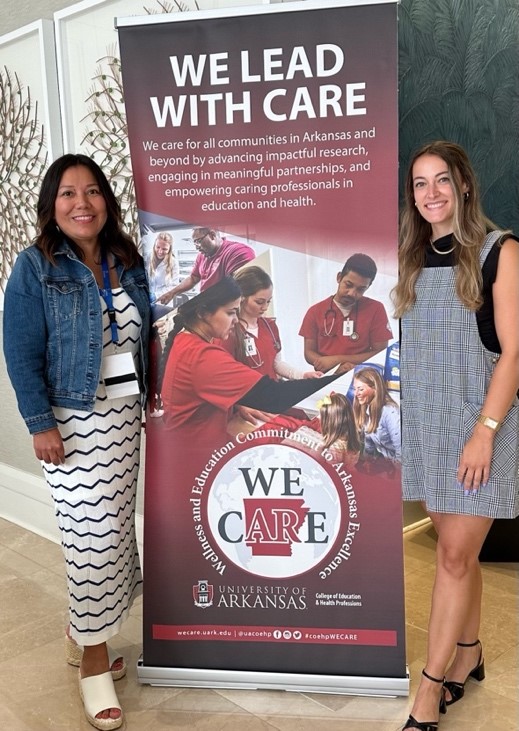
Dr. Glenda Hux and Sydney Rice at the Cardiofaciocutaneous Syndrome (CFC) Conference in Orlando, FL July, 2024.
Dr. Amy Wagenfeld, an occupational therapist, therapeutic and universal design consultant, and a professor of landscape architecture at the University of Washington is also my mentor. Dr. Wagenfeld and I share a common interest and value in the connection between nature and health. She has guided me through the processes of clinical reasoning, design, research and publishing, and networking in the nature and health sectors.
The most important advice for students considering careers in kinesiology is to keep an open mind about career options, do your research, and make sure that your choice aligns with your purpose. While OT school hasn’t been easy, having my “why” was crucial for persisting through some of the hardest days! I would be happy to connect with any students interested in pursuing a career in occupational therapy! Please reach out if I can be of assistance in any way!
Contact Information: Ricesydney5@gmail.com
CarFit training day as a part of the Occupational Adaptation and Innovation Neuro course
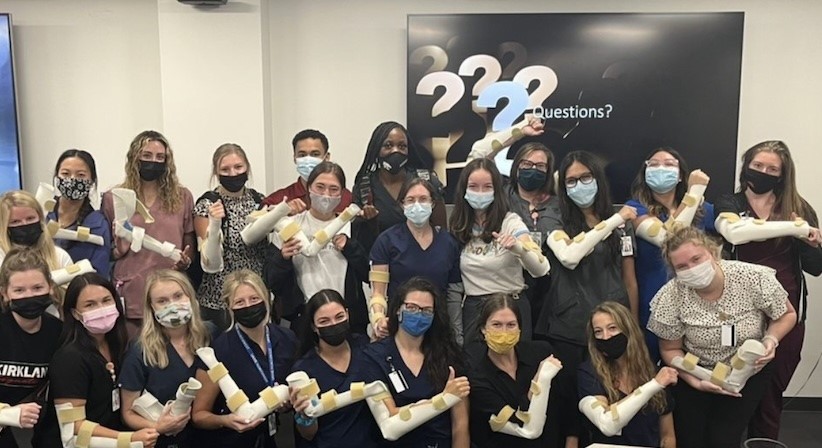
Orthotic fabrication during the upper extremity rehabilitation lab course
Jason Beam, Ph.D. B.S. Mathematics- Louisiana Tech University 2006 M.S. Health and Exercise Science- Louisiana Tech University 2007 Ph.D. Exercise Science- The University of New Mexico 2013
My name is Jason Beam, andI currently live in Los Alamos, NM. I have a full-time job at the Los Alamos National Laboratory (LANL) as an Occupational Safety and Health Professional. My main responsibility is to oversee the surveillance of the medical fitness programs. In other words, I am the strength and conditioning coach for the Los Alamos Fire Department (LAFD), LANL Hazmat, and LANL emergency response employees. Employees in these three groups are required to complete an annual physical fitness assessment and medical physical. If an individual does not meet a standard for physical fitness, I get to create an exercise program for them to follow and/or personal train him or her to improve their fitness. One of my major responsibilities every year is to design and implement a 24-week strength and conditioning program for the LAFD training academy. In addition to this, I also open our wellness center every day, teach a group exercise class, and give regular presentations to the LANL employees. I have given many presentations, but a few of my favorites are on how to improve body composition, back health, and metabolism.
Before I started my position at LANL in 2022, I was a full-time assistant professor at Santa Fe Community College (SFCC) in the School of Fitness Education. I started my position there in the spring of 2014 as an adjunct faculty member. I taught a kinesiology course. A full-time position opened in the fall of 2014, and I applied and received the position! At this time in my life, I was still single with no wife and no children. I had just finished my doctoral studies at the University of New Mexico(UNM) in the summer of 2013. I applied for many assistant professor positions across the United States. I was offered three in-person interviews at three universities, but I was not their chosen candidate. My wonderful mentor at UNM, Christine Mermier, told me about the adjunct faculty position at SFCC, and the rest is history.
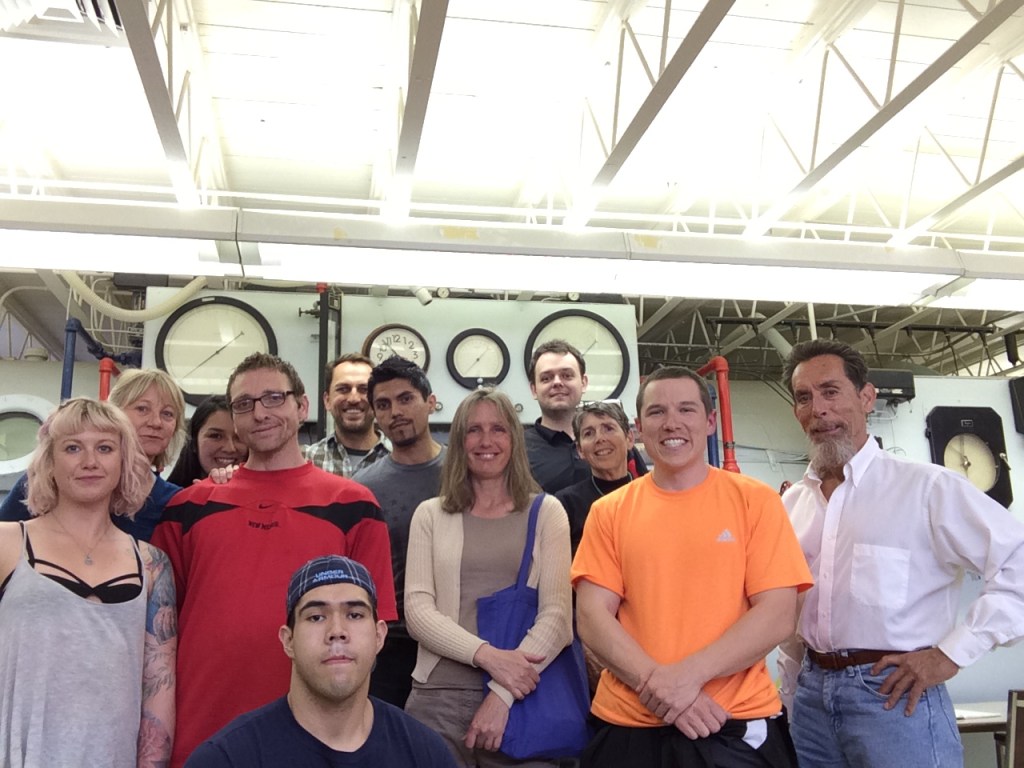
Photo of my SFCC exercise physiology class in 2015 outside the hypo/hyperbaric chamber at UNM. My doctoral mentor, Christine Mermier, is the third person from the right. My colleague in the School of Fitness Education, Enita Pendleton,is the second from the left.
While I was an assistant professor at SFCC, I taught many classes such as sports nutrition, exercise physiology, anatomy & physiology, kinesiology, and a beginner’s resistance training class. I enjoyed creating and teaching these courses, and I still teach my anatomy & physiology course as an adjunct faculty member. In the spring of 2016, I bought my first house in Santa Fe, NM. In the summer of that same year, I met my wife. We were engaged in October of 2016 and married in March of 2017. We have been married seven years and have three boys, Joshua (about to turn six), Caleb (will turn three at the end of this year), and Simeon (10 weeks old). In 2018, we sold our house in Santa Fe and bought a house in Rio Rancho, NM. During the COVID pandemic, the exercise science program at SFCC was not doing well. As a result, the program was cut and so was my position. I lost my job there after the spring semester of 2021, and I was unemployed for about six months.
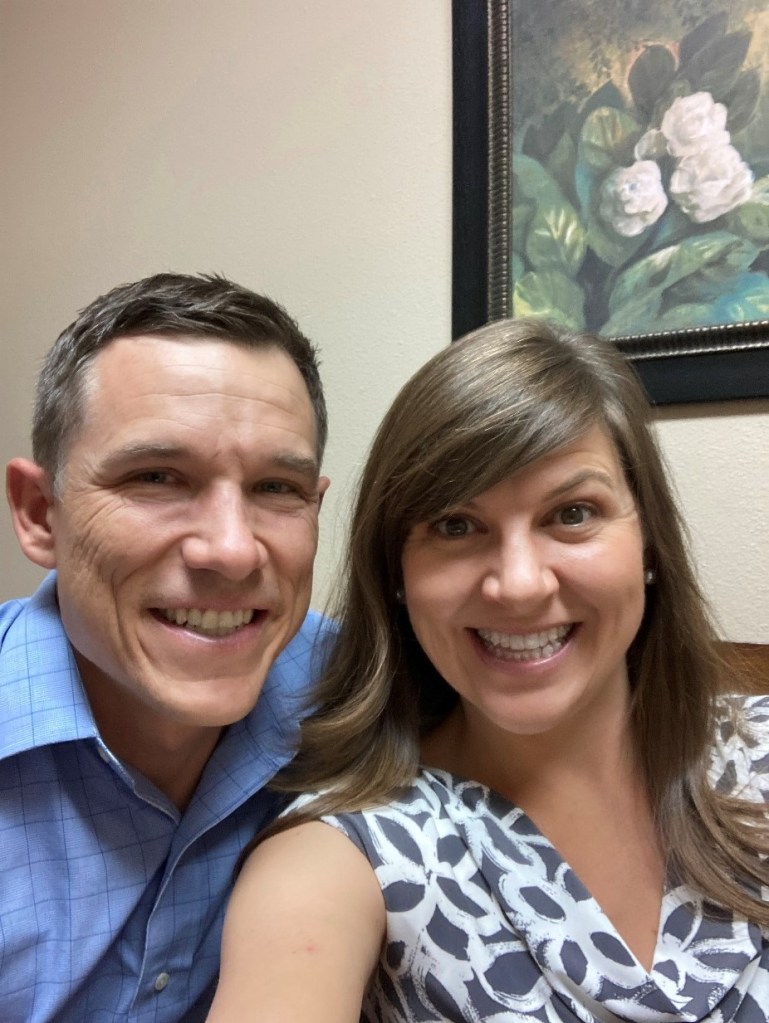
Photo of my wife (Tara), and me.
Photo of my wife (Tara), sons (Caleb and Joshua), and me.
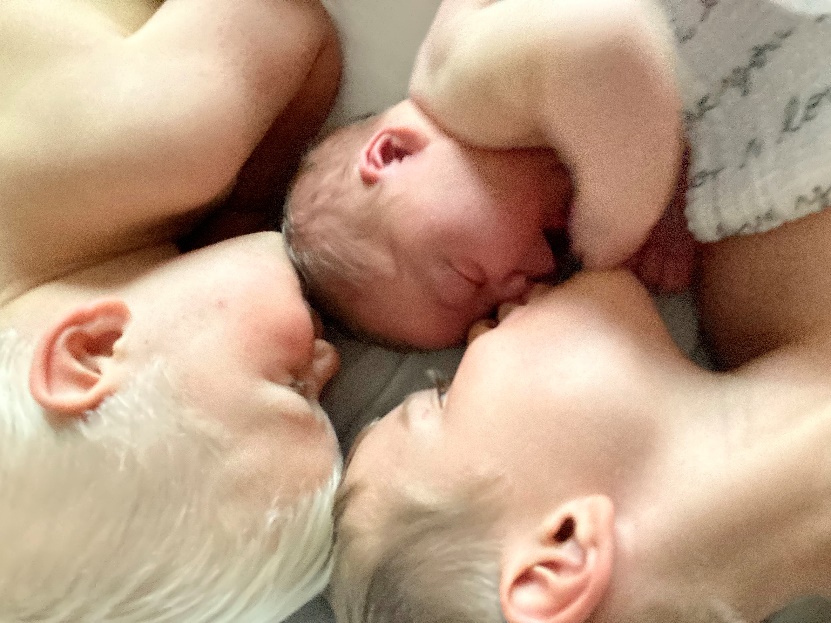
Photos of my three sons (Joshua, Caleb, and Simeon).
In the spring of 2020, Dr. David Szymanski contacted me and told me about an opportunity to design and teach a graduate-level strength and conditioning course for the Tulane University Kinesiology Department. The department chair while I was a graduate student at Louisiana Tech University was Dr. Lanie Dornier. After I graduated with my Master’s degree, Dr. Dornier assumed a the position of Department Chair in the Kinesiology Department at Tulane University. Dr. Szymanski was one of my mentors and professors while I was a graduate student in Health and Exercise Science (now called Kinesiology) at LA Tech. So, there is the connection. I designed the course in the summer of 2020 and taught it for the first time in the fall semester of 2020. I am currently teaching this course.
Soon before I lost my job at SFCC, I met one of my best friends and research partner, Zachary Mang. He was finishing his doctoral studies at UNM, and he taught a class in our department at SFCC. He and I talked about an idea for a research study, and I told him that one of my strengths is statistics and that I would be happy to help you and your fellow graduate students with the statistical analyses for their research so that it can get published. I ended up helping three doctoral students publish three research studies in 2022. After Zachary graduated from UNM, he stared a post-doc position at the LANL wellness Center (where I currently work). He told me about a position that was opening, and I applied. I received and started my position as an Occupational Safety and Health Professional in January 2022.While Dr. Mang was a post-doc at the wellness center, we designed and completed five research studies. We published three research articles regarding firefighter training academy fitness programming, one article on slow and fast tempo squatting, and one article on pyramid resistance training. We also published four research review articles. The link to my Google Scholar and Research Gate accounts are below if you are interested in learning about my research.
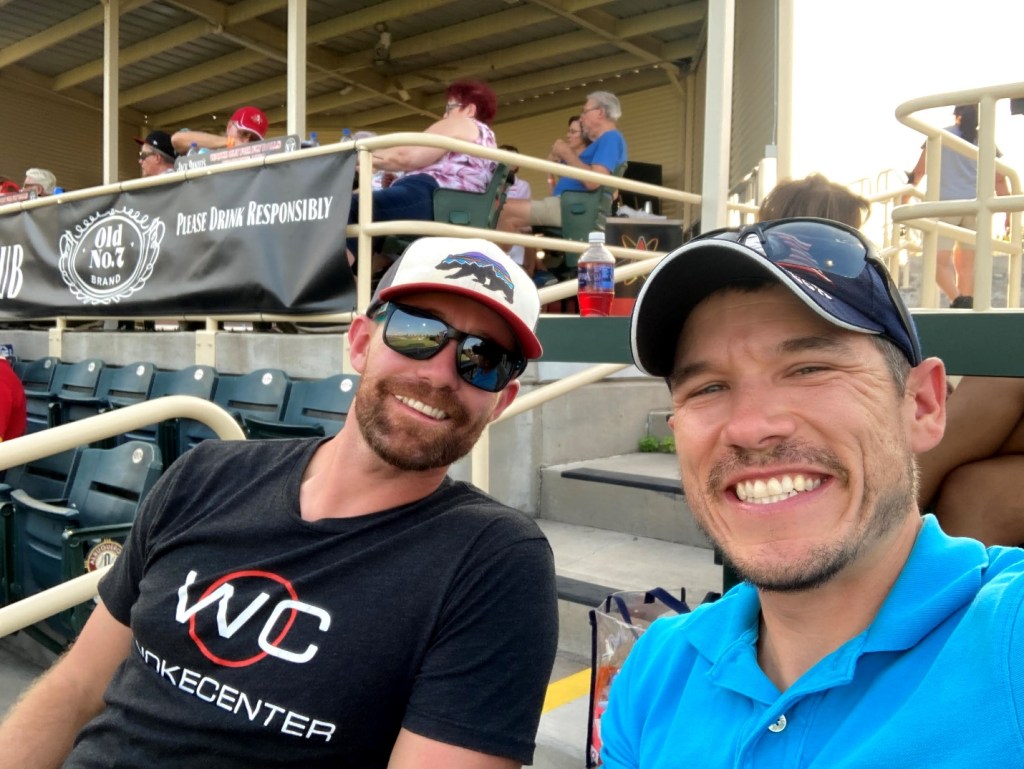
My friend and research colleague (Dr. Zachary Mang) and I hanging out at a baseball game in Albuquerque, NM.
I moved to Albuquerque, NM in 2008 to start my doctoral studies at UNM. I grew up most of my life in Bossier City, LA. My dad was in the Air Force and stationed at Barksdale AFB. I graduated from Parkway High School in 2001 and started college in the fall of 2001 at Northwestern State University(NSU) in Natchitoches, LA. I wanted to go there so that I could be in the marching band and on their drumline. I played the snare drum at NSU for two years. My original major in college was physics, but I changed my major to mathematics in 2002.After my second year of college, I decided that I wanted to become an officer in the Air Force. I particularly wanted to be a pilot in the Air Force.
OLYMPUS DIGITAL CAMERA
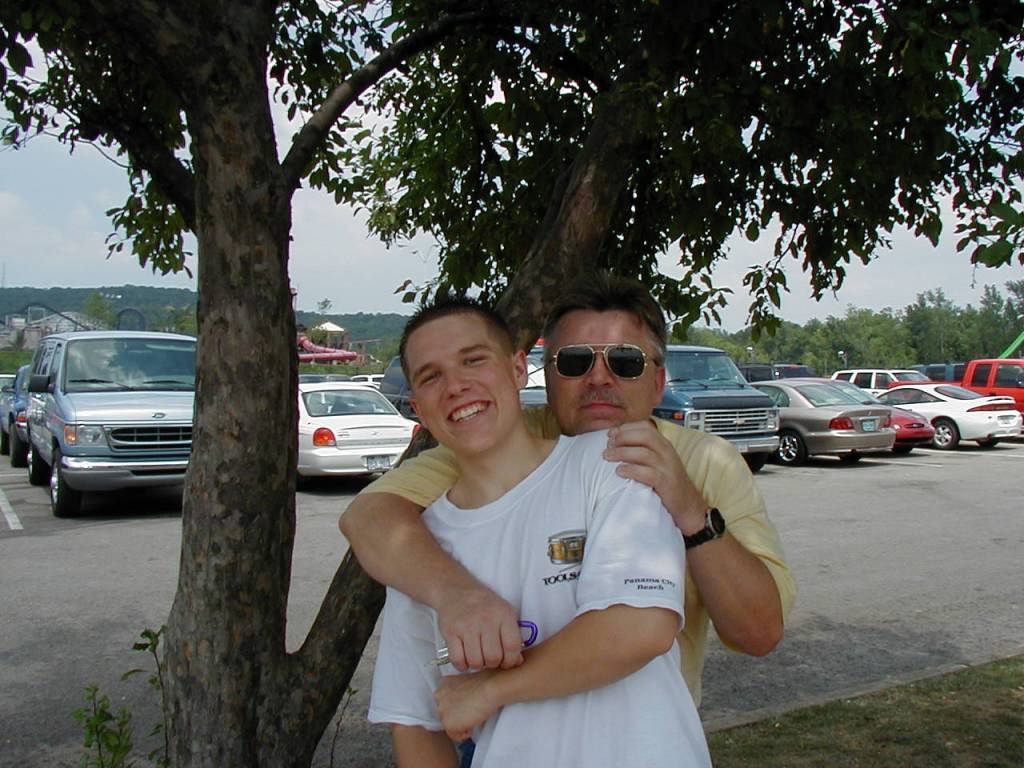
My dad and I at Six Flags in St. Louis, MO in 2002.
I transferred to Louisiana Tech University in 2003 to join Air Force ROTC. I was also in the marching band at LA Tech and played the snare drum for three years from 2003-2005. My major was still mathematics. During the spring of 2004, I learned that I was chosen for a pilot slot in the Air Force, and I was so excited to achieve my lifetime dream. However, I still had one more year to complete in ROTC before I graduated and started pilot school. During the summer of 2004, I went to basic training for ROTC cadets. It is called field training. It was at Lackland AFB in San Antonio, TX. It was supposed to last two months, but I only stayed for a few weeks. I had bad anxiety from the high-pressured environment and decided to leave. As a result, I had to pay back my ROTC scholarship, and my dream of becoming a pilot in the Air Force was crushed. After I got back home during the summer of 2004, I started having very bad thoughts of hopelessness. I even had thoughts of suicide run through my head. However, I was not going to let the devil steal, kill, and destroy my life! I am so glad that I was filled with the Holy Spirit of Jesus Christ when I was 12 years old. I would not be here today if it was not for the life of my precious savior, Jesus Christ, living in me.
AppleMark
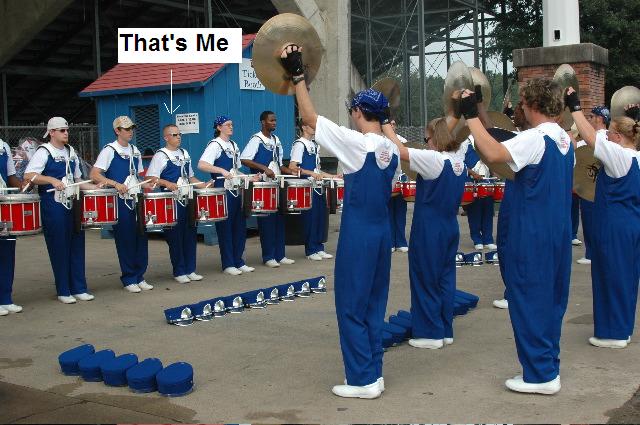
Photo of the LA Tech drumline in 2004. I am the fourth snare drummer from the left.
OLYMPUS DIGITAL CAMERA
Photo of my ROTC class in at the 2004 Dining Out Ceremony.
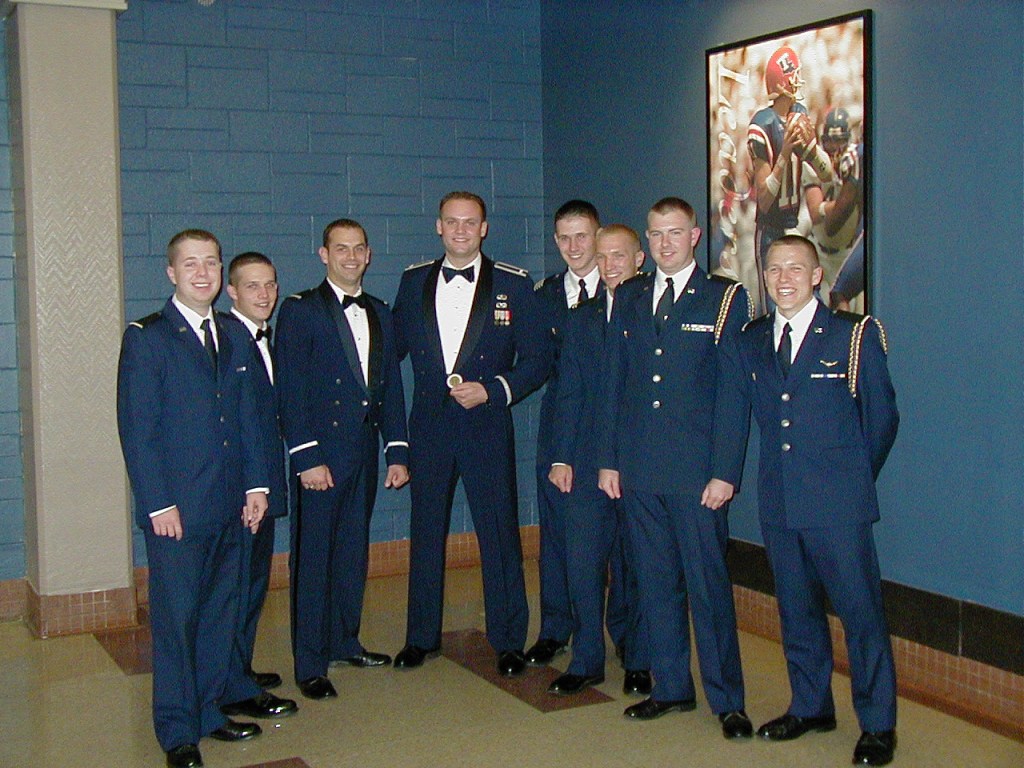
Photo of me and four other AFROTC cadets with our commander at the 2004 Dining Out Ceremony.
As a result of the above, I went to see a psychiatrist and he prescribed depression medication. I took this medication for about six months until I started having weird side effects. I decided to wean myself of the medicine at the end of 2004. Since I was no longer going to be in the Air Force, I needed to decide what I wanted to do with my life. My college major was still mathematics, and I was over halfway complete with my coursework. My degree plan for mathematics required me to take several technical writing courses, so I just decided to declare a minor in technical writing. During the winter quarter of 2005, I took an advanced technical writing course. One of the projects we had to complete in this course was to create a technical manual. I did not know what to create, so I sat down with my professor to discuss some options. She asked me what some of my interests were. I told her that I enjoy playing sports, percussion instruments, and flying airplanes. She told me that there was a sports department on campus that taught classes in health and exercise. She said that there may be a professor in that department that has a project you can help with. So, she made some calls to the Health and Exercise Science department to see if this was the case. Sure enough, there was a professor in the department that was working on a project, and she needed help. The professor’s name was Dr. Wendy Miletello (now Thomas). Her and I sat down to chat about the project, and we connected so well on many aspects of health and fitness. She told me that I should consider starting a dual-enrollment program where I start my Master’s degree while currently working on my Bachelor’s degree. I took her suggestion and was accepted into the Master of Science degree program in the Department of Health and Exercise Science in the Spring of 2005. I completed my degree requirements for mathematics in the winter semester of 2006 and graduated with a B.S. in Mathematics. One year later, I completed my degree requirements for the M.S. in Health and Exercise Science and graduated in the Winter semester of 2007.
OLYMPUS DIGITAL CAMERA
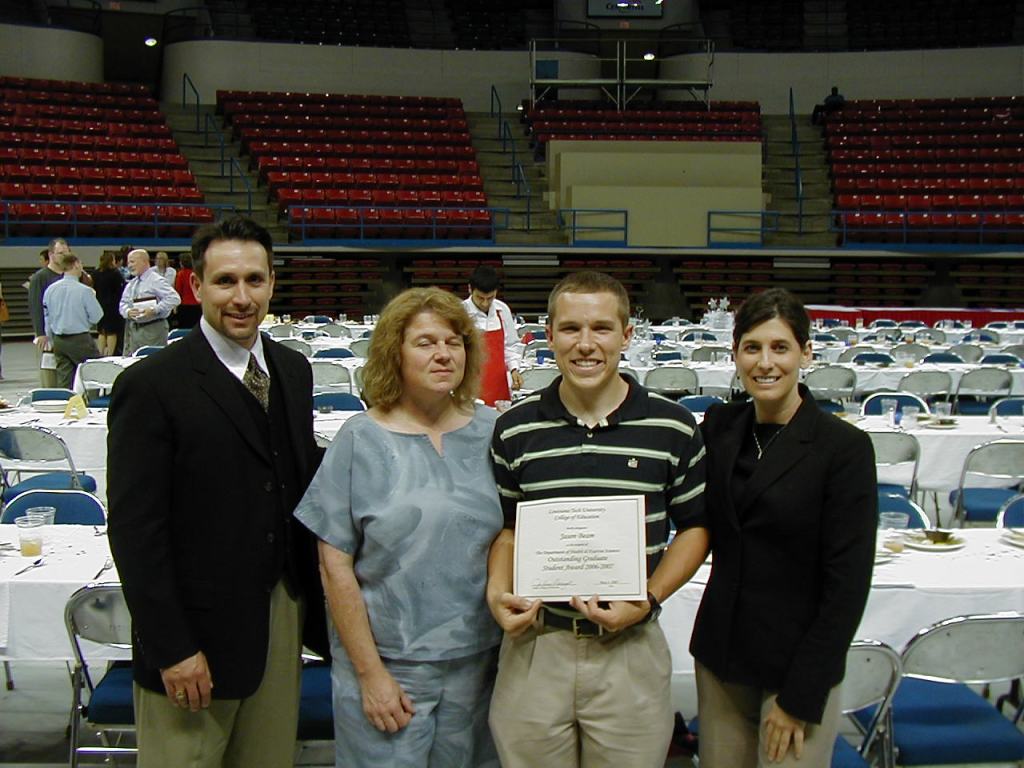
Photo at the 2007 LA Tech College of Education Banquet. I received the outstanding graduate student award for 2006-2007. From left to right are Dr. David Szymanski, Janine Dreckman (my mom), me, and Dr. Wendy Thomas (then Miletello).
OLYMPUS DIGITAL CAMERA
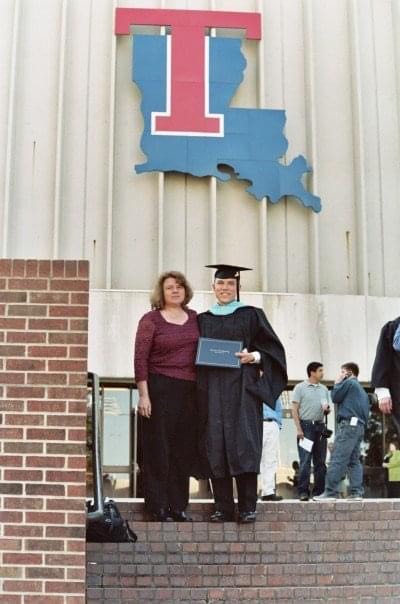
My mom and I after graduating with my M.S. in Health and Exercise Science in the winter of 2007.
Between the time I graduated in February 2007 and when I moved to New Mexico in August 2008, I was employed by Dr. Wendy Miletello to help her with two grants. One grant was to provide a summer camp for high school students that taught them kinesiology but also tutored them in subjects they needed help. I was the math tutor. I was also Dr. Miletello’s grant coordinator. At the same time, we were working on another grant for an NIH research study on obesity hosted at the Pennigton Biomedical Institute in Baton Rouge, LA. Dr. Miletello and I were responsible for teaching elementary and middle school teachers how to teach their students about nutrition and fitness.
I am blessed to be where I am in life and to have a wonderful family and career. I have learned during my life that God has a purpose for life, but that it is not always straightforward. I thought I wanted to be a pilot in the Air Force, but His thoughts were different. I probably would not have met my wife and have the three handsome boys I do if I followed through with my dream. I am so glad that I listened to God and followed his path for my life. I will end quoting a Bible verse that my friend and Christian mentor, Linda Douglas, brought to me when I was going through my difficult time in 2004. Linda Douglas (my mother’s co-worker) was also the lady who invited me to watch an evangelistic drama called “Heaven’s Gates & Hell’s Flames”at her church in Shreveport, LA in 1995. This is where and when I gave my life to Jesus Christ! “Trust in the Lord with all your heart and lean not on your own understanding; in all your ways acknowledge Him, and He shall direct your paths (Proverbs 3:5-6).”
Kevin Winn, Louisiana Tech University Kinesiology and Health Promotion (2009)
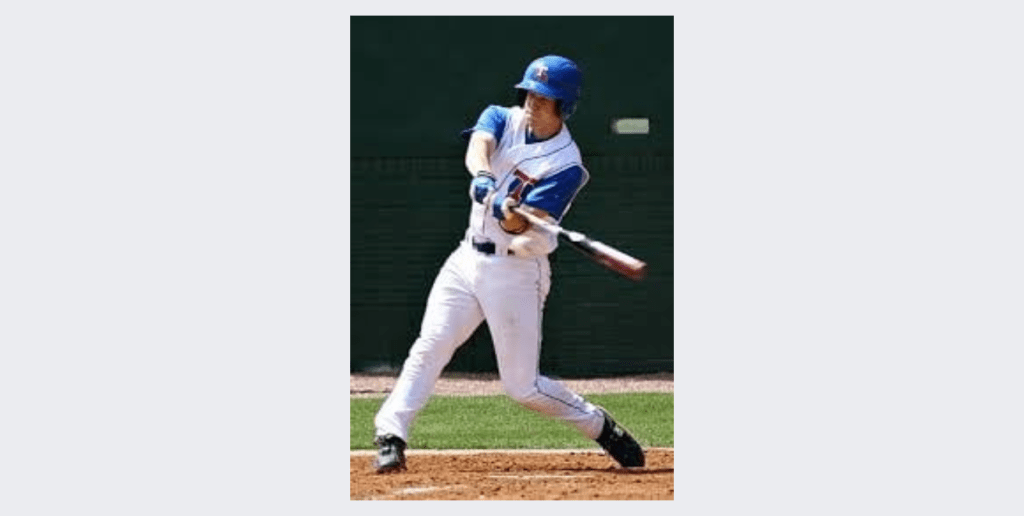
In March of 2010 I was sitting on a picnic table in Arizona crying because my life changed in an instant and everything that I had been working for my entire life up to that point was taken. I had just been released from the San Diego Padres as a minor league baseball player and didn’t know what I was going to do next. If you would have asked me at this time, being a Christian, I would have told you that my identity was in Jesus Christ. However, once my career as a baseball player was taken, I realized that my “true” identity was tied to baseball.
I was fortunate enough to have a great family, a supportive family and a great network of friends that helped me through this difficult life transition. Looking back, I can also see my time as a student athlete at Louisiana Tech as one of the greatest building blocks to my current career. You see, I always thought that once I finished playing baseball, I would then transition into coaching baseball. I did this for a period of time, but eventually realized that I couldn’t be the man, husband and father I wanted to be by pursuing a career in professional sports.
Upon starting my freshman year in the fall of 2005 at Tech, I naturally majored in Kinesiology and Health Promotion because I thought it worked well with playing sports. I wanted to use the information I gained in classes to be able to apply to my athletic career in order to maximize performance. After graduating, I thought I could then use the skills I learned to one day coach other athletes once I transitioned into baseball coaching. I never in my life thought that I would one day use this information to build a corporate wellness company and lead thousands of non-athletes to become the best version of themselves.
I believe it was no coincidence that another individual stepped foot for the first time on the Tech campus that same fall as an assistant professor in the Kinesiology department. Dr. David Szymanski had just arrived on campus after finishing his Doctorate at Auburn University and spending a brief stint in Oklahoma as the director of a sports performance facility. At his previous post at Auburn, Dr. Szymanski was the assistant coach and director of sport performance for the baseball team where he helped lead the Tigers to a berth in the college world series. His passion and intensity for growth and knowledge was contagious. In addition to working in the classroom, he VOLUNTEERED his time 3-4 days per week to train our baseball team at 5:30 AM. He also applied his research to our team and I was able to participate in many studies over the years. Dr. Szymanski’s passion and enthusiasm changed my life. I began to fall in love with Kinesiology and wellness and loved his exercise physiology classes and strength and conditioning. For the first time, I began to enjoy academics and started to develop passion for something other than sports. Although it took me until 2015 to start applying this knowledge outside of the sport realm, I am grateful for the experiences I had at Tech- it was a pivotal building block for me.
Kevin and wife Amanda 2009
After being released from the Padres in 2010, I took what I THOUGHT would be a “temporary” job as a technician at a physical therapy clinic in Bowling Green, KY (my home town). My wife Amanda (Tech alumni 2009!) were married that October and she began her career as a teacher in the local school system. In addition to my job in the physical therapy clinic, I started coaching baseball at local high schools. Although my dream was to coach collegiately, I tried unsuccessfully to land a job in college coaching for 5 years. I remained a physical therapy technician during this 5 year period and was making a very limited income. I was not growing with that company because I was putting all my focus STILL into a career in baseball. In 2015, we were blessed with the birth of our first daughter, Ava (we have 4 children now!), and my wife Amanda felt called to quit her job as teacher to stay home with Ava. This more than cut our household income in half and I realized that I needed to focus less on baseball and focus more on supporting my family. It was the best thing that ever happened to me!
I decided I wanted to begin “applying” myself in something outside of baseball. I was looking for opportunities in my company outside of becoming a physical therapist. At this point in my life I didn’t feel like PT school was something that I wanted to pursue and I knew financially it would be too difficult for our family. However, I did notice that there was one area for growth: corporate wellness. My company was starting to do some work with various employers throughout Kentucky and the need for wellness services within industry was apparent. I realized that the majority of our community were performing physically demanding jobs and sustaining musculoskeletal injuries with limited to no support to help them through it. I realized that oftentimes the reason they didn’t seek the care needed was because it was too expensive. I started thinking back on my experiences as an athlete.
When I played baseball at Tech and in the minor leagues, I had an entire team of people that helped me feel and perform my best while avoiding and recovering from injuries. This included athletic trainers, physical therapists, strength and conditioning specialists and registered dietitians. I realized these individuals were essentially “industrial athletes” and that they should receive the same care as athletes on the playing field. I began working very hard to develop programs for these companies. This included ergonomics to improve work stations, job testing to ensure proper job placement, early intervention programs to catch injuries before they become worse, and pre-work stretching routines. Additionally, we developed ongoing coaching programs as well to make sure we were alongside to help people in their wellness journeys by providing training and dietetic coaching. This was a pivotal time of development for me and I began to fall in love with corporate wellness. I realized that the thing I loved the most about baseball coaching was helping people reach their goals. Corporate wellness programs allowed me to do this same thing on a much larger scale.
In addition to growth in my career, I began to focus on my faith. As my relationship with Christ grew, I began to have more clarity in all areas of my life. I started clearly seeing that I was called to business ownership and to create a product that was Christ centered and relationship driven. At the time, I didn’t know anything about business, but I set a goal in 2017 to be self-employed within the next three years. Not by chance, and through a series of events, I was connected to the right people and the right opportunities presented themselves.
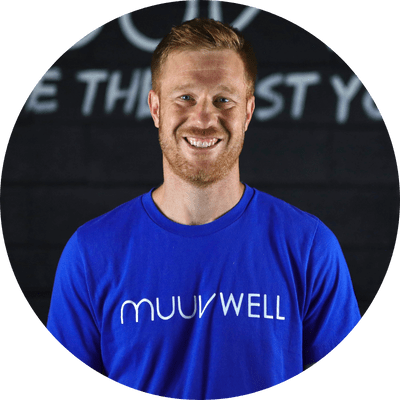
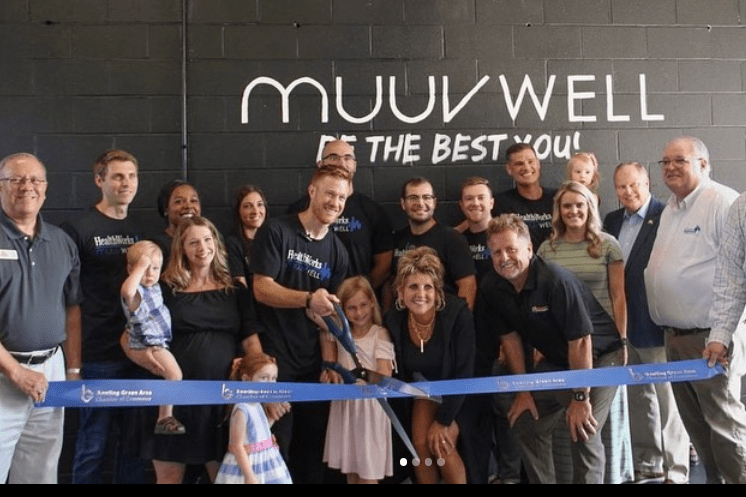
In 2020, I was able to leave the physical therapy clinic that I worked for to start/own my current company, MuuvWell. Business ownership had been a long-term goal and making the leap into entrepreneurship has been scary but also rewarding. MuuvWell now employs 11 people and we are headquartered in Bowling Green, KY. We work with many different types of clients all over the southeast such as barge transportation companies, manufacturing, banking, city governments and municipalities. We have developed our own mobile app, MuuvWell, and deliver most of our services virtually through our platform. With MuuvWell, every client has access to free one-on-one coaching on an unlimited basis with physical therapists, registered dietitians and personal trainers. We also offer various on-demand programs through our app as well as quarterly challenges and onsite services.
MuuvWell HQ Ribbon Cutting 2023
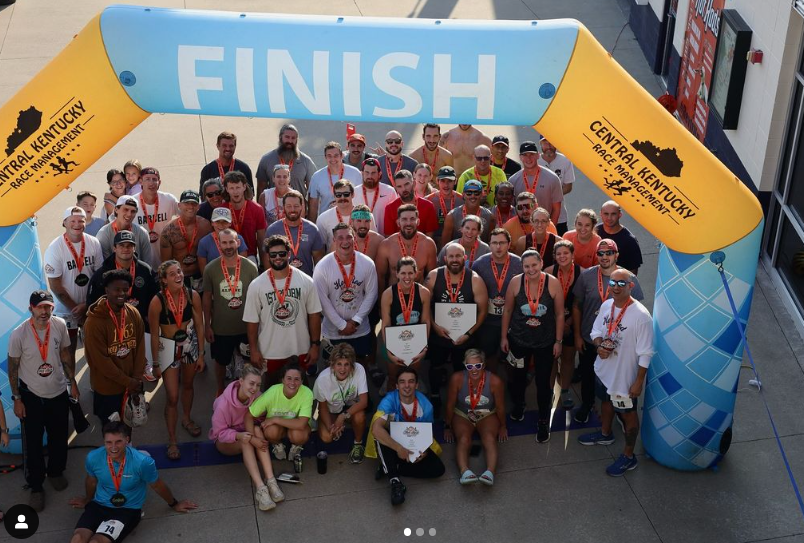
The last few years, I have been able to replace my passion for baseball with a new passion, ultra running. I have competed in many ultra marathons and will be toeing the line at my second 100 mile race this November. Four years ago, I also found the “Hot Rod Ultra Marathon” in Bowling Green, KY. This is a 24-hour race that takes place in the concourse of a minor league baseball stadium around a .31 mile loop. We just had our fourth race this past weekend and had 149 runners from all of the country and the world attend! All of the money raised from this event supports a local ministry, Curbside Ministries. This year, we were able to raise close to seventy thousand dollars for this amazing non-profit! You can learn more about the race by visiting http://www.hotrodultra.com.
I feel incredibly fortunate to do what I do. I can honestly say that without my time at Tech, I would not be doing what I am doing today. Dr. David Szymanski and all of the professors I came in contact with at Tech were a HUGE inspiration in my career. They taught me love and passion for Kinesiology and also instilled a work ethic in me by leading with their example. I am so thankful for my time in Ruston and excited to see where MuuvWell continues to go.
Kevin, Amanda and their 4 children: Ava (9), Everly (4), Asher (3), and Ella (1)
The Health Coaching Undergraduate Certificate in the Department of Kinesiology at Louisiana Tech University was recently granted NBHWC Approved Training Program status in August 2024. This means that students who complete the Health Coaching Certificate at LA Tech are eligible to sit for the National Board of Health & Wellness Coaching Board Exam and earn the credential NBC-HWC (National Board Certified Health and Wellness Coach). To be eligible to sit for the NBHWC Board Exam, individuals must complete an NBHWC Approved Training Program, complete 50 health and wellness coaching sessions, and have an associate degree or higher or 60 college credits.
Health coaches help support their clients to make sustainable and healthy lifestyle behavior changes. Health coaches are trained in behavior change theories, motivational concepts, health education and health promotion, as well as the link between health behaviors and health outcomes. This skillset that combines evidence-based behavior change strategies, communication tactics, motivation tools, and health knowledge puts health coaches as a prime player to help individuals live healthier lives. Health and wellness coaching is a growing field, and coaches can work in many different settings. The most popular employers for health coaches are: worksite or insurance programs, fitness settings, healthcare settings, digital health, community-based programs, or self-employed.
During the 2024 summer quarter, three undergraduate students – Connor Hill, Brandon Jackson, and Jada Turner – completed their Internship in Health Coaching and became the first students to complete the Health Coaching Certificate at Louisiana Tech University. As a part of the certificate program, within the internship, these students conducted over 50 coaching sessions and are now eligible to sit for the NBHWC board exam. The students gained a lot of real-world experience through managing their own caseload of clients through a 9 week program. Brandon Jackson’s favorite part of the internship was “observing in real time how different each client’s life is. It helped me understand that everyone has their own life going on outside of what we might only see on a surface level.”
While the Health Coaching Certificate is a new program in the Department of Kinesiology at Louisiana Tech, it has already provided new career path options for students. Jada Turner indicated that “completing the health coaching certificate has motivated me more than ever to have a set plan for when I graduate. Once I take the board exam to become an NBHWC after graduation, I plan to pursue my RN degree in hopes of working with both my health coaching and nursing degree simultaneously.” Connor Hill saw that the coursework and skills developed in the Health Coaching Certificate allowed him “to be able to assist those looking to make or improve healthy lifestyle choices. My passion is serving others, particularly in a healthcare setting, and this certificate allows me to live that out and use my knowledge to promote health and wellness for everyone.”
For more information, please contact the Director of Health Coaching Certificate, Dr. Alison Reichter, NBC-HWC at reichter@latech.edu
Rhonda Boyd, M.Ed., Instructor and Social Media Coordinator
Last fall we embarked on a new series to educate potential students, counselors, parents, the general public on ALL the many different things you can do with a degree in Kinesiology. I never thought when this series started that it would be become so huge and be so popular!
Over the past ten months we have featured 30 blogs contributed by faculty and our wonderful alumni. The blog series has had almost 5200 views with over 3800 visitors. The blog itself has had over 13,000 views with over 9,600 direct visitors since it began in 2017. Thank you to everyone who has contributed, read, followed and shared these stories. It is our hope that it has shed light on just a fraction of the careers a student can pursue once they complete their undergraduate work in Kinesiology.
In case you missed one of the blogs or if you are a new reader here is the list in the series: Kinesiology? What Is It and What Can I Do With It? Smiley Reeves: Clinical Exercise Physiologist Katie Alexander: Ph.D/College Professor Christopher Watson: Sports Performance Junhai Xu: Follow Your Heart and Keep Running! Stephanie Smart: Athletic Training Alison Richter: Health Coaching Tamara Childers Canales: Health Coaching Lacey Deal: Be Who You Needed When You Were Young Vishesh Singh: Human Performance Laboratories Managing Director (all the cool stuff) Andrew Parks: Sport and Exercise Psychology Jordan Blazo: From Insight to Impact: MiML’s Trailblazing Research Adventure Thaddeus Light: Tech Consultant Daniel Johnson: Military Cognitive Training Dee Flemming: Business Development/Therapy Awareness Manager – Boston Scientific Deep Brain Stimulation Tyler Griggers: Medical Device Sales – Stryker Trauma and Extremities Division Jesse Wendt: Cardiac Rhythm Management Dylan Snowden: Global Trainer with PROCEPT BioRobotics Annie Crain Johnson: Ceritified Prosthetist/Orthotist Kaila Manshack: Chiropractic Aaron Gootzeit: Rugby to Rehabilitation and Performance Chiropractic Bobby Gragston: NFL Assistant Athletic Trainer/Physical Therapist Taylor Stahly Reed: Women’s Basketball Coaching Stine Emrick: Strength and Conditioning Coach Nick Fulco: Business Owner and Sports Physical Therapist Alex Paille: Track and Field Coach Matt Thorne: Collegiate Athletics Administration Joshua Sparks: Contract Senior Research Physiologist at Leidos William Sanders: Physician Jeremy Sutton: Concierge Physical Therapy and Wellness
We will be taking a break over the summer and will start this series back in the fall. Stay tuned for many more exciting, unique and rewarding careers that can be achieved with a degree in Kinesiology. If you are interested in a specific career that we have covered and would like more information please email me at rboyd@latech.edu and I can give you the contact information for the individual that wrote the blog so that you can communicate with them directly. We have so many amazing alumni that are making a difference in people’s lives on a daily basis. If any alum is reading this and would like to write a blog for the next series please do not hesitate to contact me by text at 318-243-0985 or by email rboyd@latech.edu. I would love to share your story to inspire up and coming students to become passionate about their career choice!
Jeremy Sutton, B.S. Kinesiology and Health Promotion (Clinical Track), 2004 Doctorate of Physical Therapy (DPT) – University of St. Augustine for Health Sciences (St. Augustine Campus 2009)
My name is Jeremy Sutton and I am from Arcadia, LA. My love for physical therapy began when I injured my leg playing football at the age of 15. I was fortunate enough to meet one of my PT heroes then, Danni Jones. She made such an impression on me that I knew from then on that I wanted to be a physical therapist. I enrolled at Louisiana Tech in 2000 and by 2001 I was working as a physical therapy technician at Green Clinic in Ruston. I was very fortunate to learn how to actually be a physical therapist before I learned the why behind the treatments we use every day to help people reach their potential.
During my sophomore year at Louisiana Tech, I worked a ton of hours and my grades started to suffer. By the end of that year, I realized I was not going to make it in my education experience if I kept working the hours I was during the week. Thankfully, I had some not-so-gentle mentoring from a veteran PT who told me to make better grades or else. I decreased my hours working and started focusing more on my education.
I graduated with a 3.1 GPA, so I struggled to get into physical therapy school in-state. By the end of my senior year at Tech I decided to move to Texas to get a Master’s degree for strength and conditioning. I moved to Wichita Falls, Texas for that degree. After about 1 month there I knew I wanted to go back to my original plan of becoming a physical therapist. I moved back to Ruston and began applying to physical therapy schools again and was accepted into St. Augustine.
I moved to St. Augustine, Florida in April of 2006. This was the 2nd time in a year I had moved out of state for my education. To be honest, I really struggled being away from home and went through monthly phases of doubting whether or not I should be a PT or not. I also struggled in PT school with my grades. I actually had to retake 2 classes and graduated about 6 months later than I should have. This caused me great stress and I struggled with depression and had a really difficult time during my last year of PT school.
I’m including my struggles in this as well as my successes, because I want people to know that you can go through difficult times and still be successful. In fact, I don’t know too many people who have not failed in life that are successful now. If you’re not failing, you may not be trying.
Initially, I wanted to be a pediatric physical therapist, but after treating my first 10 year old with an orthopedic injury I knew I wasn’t cut out for that work. Instead, most of my career has been focused on adults and even more so on the geriatric population. My career started out back in Ruston at what was then, HealthSouth. After being back in Ruston for a few months I started dating my wife, Monica, and moved to Bossier City, where we lived for 14 years before moving to Benton, La.
I worked full time at a few outpatient orthopedic clinics, while also working PRN at home health agencies, nursing homes, and hospitals. In 2016, my wife and I purchased a physical therapy clinic in Vivian, La. After a couple of years, we closed that business.
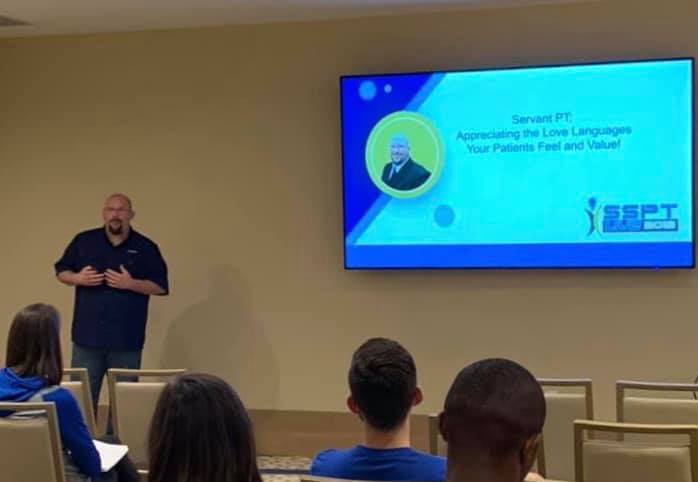
While working as a physical therapist over the years, I have become interested in many different areas. My biggest regret about my time at Louisiana Tech is that I didn’t love learning or have the work ethic that I do now. Being a physical therapist has opened many doors for me over the years. I have been able to become a podcaster, an author, and a speaker thanks to my educational background.
Not only have I become an author, but I have been able to help over 100 other healthcare professionals write and self-publish books that have helped them reach thousands and grow their businesses. Through my interests in self-publishing, business, and marketing I have been able to speak at multiple PT events, and even one hosted in Ireland. The only problem is that the event in Ireland was during COVID, so I missed an opportunity to travel.
I hope that I have shown that an education from Louisiana Tech University can open many doors as long as you keep moving forward and stay resilient. Something I once heard from someone during my time in Ruston was that I would never be taken seriously or make a difference in this world due to my southern accent and because I am from a small town. My encouragement to you is that I have been able to self-publish and help others self-publish multiple books. I have podcasts that have been downloaded on every continent. My degree has enabled me to be with people during their most difficult moments and see them reach their highest goals. I have been able to laugh, cry, and pray with people in crucial moments of their lives.
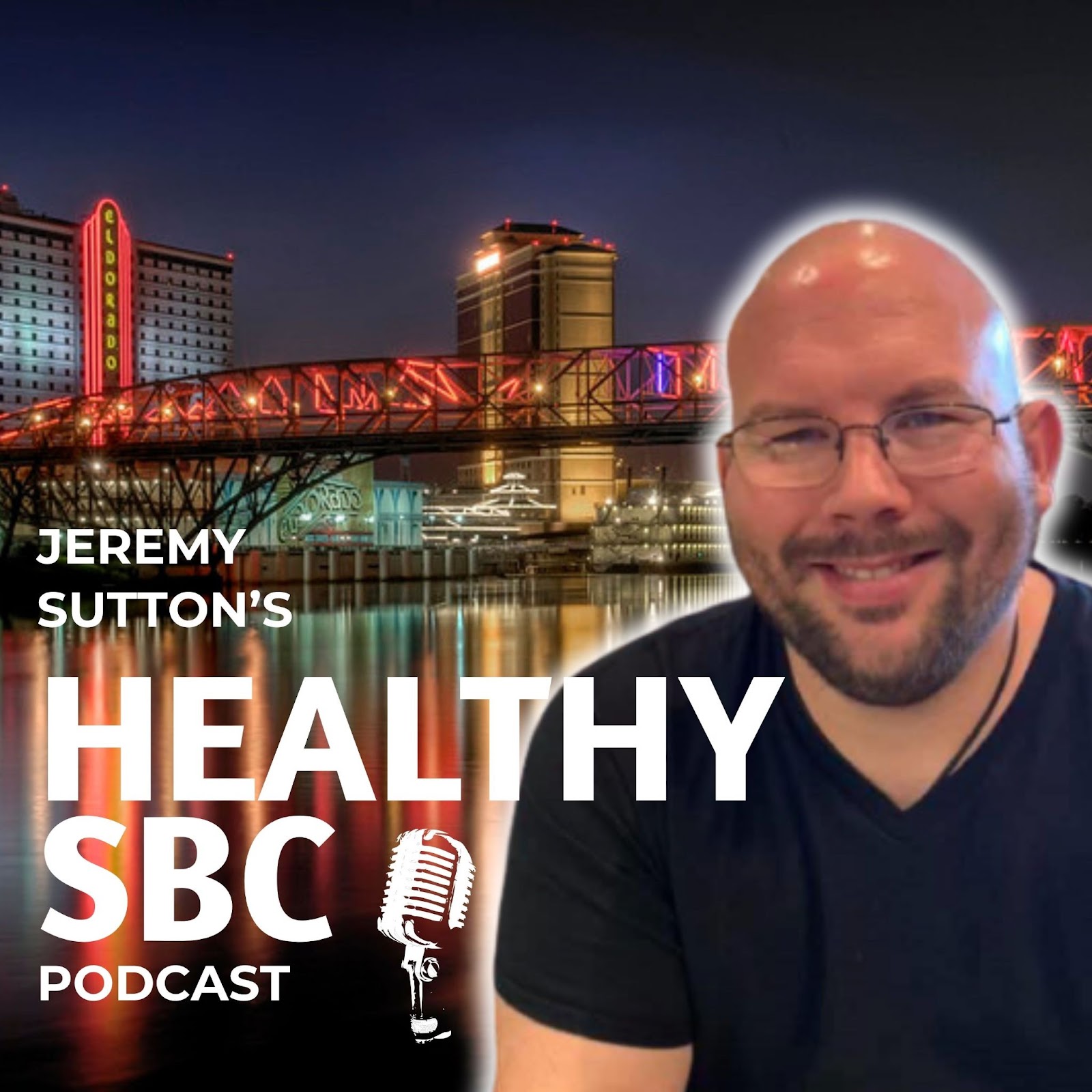
I am currently in the process of building a new business, Healthy SBC in Bossier City and getting a charity up and running, Senior Day. Healthy SBC is a concierge physical therapy and wellness business serving Shreveport and Bossier City. Senior Day is a charity geared towards taking senior citizens on adventures to enjoy the things in life they feel they cannot do anymore. I have been able to combine my skills as a PT and my desire for ministry to serve people thanks to my personal experiences and educational background.
No matter who you are or where you’re from, you can make a difference in this world if you stay committed to what you have been put on this earth to accomplish.
William Sanders, DO Kinesiology and Health Promotion (2011)
My name is Will Sanders. I am from Monroe, LA. I just turned 35 (unbelievable), and I am a physician practicing internal medicine- more specifically, as hospitalist- in Greenville, SC. I have fond memories of LA Tech, both because i genuinely liked a lot of my coursework, and because being 18-early 20s is just a great time to be alive. I started out majoring in Biology and ended up switching to Kinesiology sometime halfway through. My original freshman plans and dreams were broad, but I landed on the possible thought of “how can I go to medical school and be some sort of muscle doctor?” I had eventually changed plans to work my way into going to physical therapy school when I made the switch to Kinesiology. The reason this seemed a perfect fit was because I always enjoyed sports and working out, and this eventually piqued my interest in the human body itself. I wanted to learn more about what was actually happening on the inside. Fortunately, I had wonderful professors at LA Tech and wouldn’t change that at all. I was able to marry my interest of health and fitness with the science of anatomy, physiology, and biomechanics. After graduating in 2011, I had a bit more free time to think about what I wanted to do with my life. I actually was accepted into a PT school in San Diego, CA in 2012, with plans to attend the following year, as is customary. I was excited, as I had never been out of our south/east region very much (with the exception of meeting my future wife, Mari, at Tech; she is from Brazil.)
I deliberated on maybe trying to get a school closer to family versus just going ahead to San Diego as planned. As time went on, I kept getting second guesses and doubts about what i was doing. I wondered if I just didn’t want to go to San Diego and be far from family, or if i knew what I was really doing at all. Sometimes it’s hard to reconcile what seems best on paper with one’s gut feeling. In a blurred series of events, I eventually tried to get closer to Louisiana, so I tried to switch to the same school (University of St. Augustine, which I’m sure has had plenty of Tech grads). I was told it may be possible but that I would have to go on a waitlist to see. During that time I thought long and hard about my initial thoughts about medical school and the opportunities it could provide. I eventually called the school and withdrew my acceptance, only to start attending post bachelor studies, again, at LA Tech. I had to retake a lot of classes in which I had done poorly. The only classes that I had to add to my existing Kinesiology curriculum were Biochemistry and Organic Chemistry. I made all A’s for the next 2 school years and brought my GPA up significantly. Roll the clock forward to 2013 summer and I studied long and intensely for several months for the MCAT. There was a different scoring system at that time, so I won’t bother giving the score out. It was decently average. I went on interviews to any medicalschool that would offer me in the US (nothing against Carribean schools; that route just wasn’t feasible for me). I eventually was accepted into PCOM in Atlanta. It turns out that a few years later, a medical school started in my hometown. I was glad that I missed out on it though, because I’m not sure I would have found Greenville had I not gone to Atlanta. However, there is always a special place in my heart for Ruston, LA.
With that long-winded premise, I aimed to make a point that most anyone can get into medical school with the right amount of effort and discipline. I will be more brief going forward. Medical school (there are two types in the US: the curricula are mostly the same, with the exception of an added class for DO students, which is Osteopathic Manipulative Medicine). It is usually 4 years. I initially thought- similar to my previous thoughts about becoming a “muscle doctor”- that I would go into something orthopedic-related. The muscle doctor field is actually a real thing, by the way. It is a niche specialty called Physiatry (not Psychiatry) and I thought it would be great for me. I also thought orthopedics would be great, but I ruled out surgery as an option in 3rd year.
Usually, in medical school, you do the first two years as course work. The bulk of 1styear is usually crude fundamental courses like anatomy cadaver labs and other sciences like biochemistry, embryology, and other basics like pharmacology and pathology/histology littered throughout. I will say ,without a doubt, that Kinesiology allowed me to have a leg up with a lot of the terminology in anatomy with respect to naming certain structures like muscles, bones, and biomechanical movements like supination/pronation. I specifically remember learning about heart physiology in a clinical kinesiology course taught at Tech. I remember being fascinated by it, so the material stuck, and it helped me even during medical school. During 2nd year, the gears change. Most people hate the second year because it usually leads into the hardest exam of an American doctor’s life: everyone will remember “STEP 1”, probably forever. More on that later. As second year progresses, one learns a lot about the different systems of the body and their functions.
As I said before, I started to understand that I would like a field where I could apply the things I liked in medical school, which was pathophysiology in the various organs of the body. As such, I did end up pursuing a career in internal medicine. In the summer between second and third year, one studies intensely for the STEP 1 exam. It is the hardest test in medicine, but if I can do well on it, anyone can. Generally it requires 1-3 months of regular studying, but everyone is different. However, when that is over, you generally don’t have to worry about the next two STEP exams, because they are much easier.
In third year of medical school, one branches out and finally gets a taste of the real world. This is a time where the student steps out of the lecture hall, lab, or small actor patient simulation experience and into the real hospital or clinic. I enjoyed some parts of third year and disliked others, naturally. One goes through all the specialties, from pediatrics to geriatrics, from surgery to family medicine and OBGYN. A good approach to steer you in the right direction early on would be to determine if you can live without working with your hands in an operating room. You will probably read other people saying this on other media or fora, such as “The Student Doctor Network.” I utilized this network a ton in my preparation to becoming a doctor. The knowledge gained in that forum is invaluable. So, back to third year. Once you finish deciding whether or not you want to operate, you can basically divide your interests in half. Personally i liked some things about surgery, but I disliked most of them. I don’t enjoy standing in one spot for hours on end. I like to move and walk around. Everyone is different. Then, if you can decide whether you want to care for kids and/or adolescents, that’s another tick to check. I love kids, but I always knew working with them was not for me. I was also never interested in OBGYN other than the physiology aspect of it, which I did find truly fascinating in the former medical school years. After this process of elimination, there are a few choices left (provided you found that you didn’t want to be in the OR on the other side of the curtain, i.e. being an Anesthesiologist). Do you like neurology? That may be for you. Do you like the emergency room? Or do you like a bit more time to think through the pathophysiology and come up with a diagnosis? This was me. Therefore, I chose Internal Medicine.
Moving on to fourth year, one cannot understate the elation of finishing boards and moving on to the last year. I took my second STEP exam just before starting fourth year, to get it out of the way. The last year consists of doing mainly elective rotations in things you like or may never get to do. Let’s be honest, you have done most of the hard work already. You are ready to get geared up for residency interviews. So, I scheduled easier rotations for that year. I even did an elective rotation in the field that I mentioned earlier in this discussion, in physiatry. It is a great field, but there was too much neurology for me and I didn’t like the idea of doing the outpatient musculoskeletal and pain work. I was glad to see how it was like though.
Moving into fall of the fourth year, you will have already sent out your centralized residency application. Don’t stress out about this process. You are happy to be doing that instead of grinding in the hospital as you did in third year. After those get sent out in late summer of third and into fourth year, you start fourth year and do a few rotations. As fall approaches, you start to get residency interviews. They are fun. You get to take a break from whatever rotation you are on and travel to wherever you were invited. It’s similar to applying to medical school, but it’s easier. There is nobody to convince that you do, in fact, want to become a doctor. It is more straightforward. They just want to make sure you can be relatively “normal,” whatever that means. (and it is okay if these situations are uncomfortable or even seemingly impossible. I am aware that we do have a sizable number of doctors on the autism spectrum or who have other general medical problems that make interviews difficult. However, I always enjoyed interviews. I’m not Mr. social Butterfly, but once you get that one interview down, it’s like muscle memory and practice. They ask the same questions. Just be honest and it will go well.
I interviewed at several places. My favorite program was actually just a few hours away from Atlanta, where I was doing medical school. It was in Greenville, South Carolina. I had never been there, but I am glad I interviewed there because I am still here, and I do not plan on moving again!
Internal medicine residency consists of 3 years. The intern year is getting used to the flow of having more responsibility as a doctor in a hospital, but also not knowing ANYTHING and being let known that fact, in a variety of ways that will build character. The hours are hard, but not impossible. Good programs are reasonable with hours, and mine was. You want it to be hard at first, so that for the rest of your career, “hard” is not really hard. I can tell you that intern year is the hardest, physically, intellectually, emotionally. I was in awe of some of my co residents who had their first kid as an intern. I don’t know how they did it. During intern year, you do basic general medicine, inpatient (in the hospital) and outpatient (in a clinic). I enjoyed the clinic to a degree, but I liked the hospital more. You also do some specialty rotations in cardiology, gastroenterology, neurology (for exposure, not for the possibility of becoming a neurologist.), rheumatology, hematology/oncology, nephrology. I went into residency with the idea that I would become a gastroenterologist. I enjoyed gastrophysiology in college and in medical school. It turns out that theory and practice can be different. I learned that the GI doctors at my residency were extremely overworked and did colonoscopies almost every day. To me, it led me back to my rationale for not wanting to become a surgeon. I didn’t want to stand in one spot and operate for a long time. Then I realized I could do a lot of non-operative GI diagnosing and treating by being a general internist. The same concept applied to all other specialties! I could diagnose and treat heart failure-something which I love to do-without having to do heart catheterizations or other procedures. I could diagnose the large variety of kidney pathologies without having to focus so much on running dialysis programs. I started to gravitate towards a career in hospital medicine.
In your second year of Internal medicine (IM) residency, you start to develop more leadership skills. You are able to run a team with interns working under you. You help them do their daily tasks and talk to problems, diagnoses, and treatment plans. The highest doctor in the group, the attending, will lead the whole group, but the second year resident is essentially the team leader. Third year is not really different. You are more skilled and efficient. You are likely presenting talks for lunch and learn activities and possibly even presenting posters for regional or national organizations as part of your residency requirements, or in preparation for fellowship applications. Fellowship is the last point in medical graduate education. It is where you specialize in the aforementioned specialties like cardiology, GI, hematology/oncology, etc. You typically apply at the end of second year of residency and you get your acceptances in December of third year. I did not apply for a fellowship because I decided to become a hospitalist.
A hospitalist remains in the hospital and does not typically work in a clinic. Long ago, a more traditional practice included going to the hospital in the morning and rounding on one’s patients, then heading to the clinic in the late morning and afternoon. This type of practice is referred to as an internist and is not as common these days. As a hospitalist, there are many different programs and types of schedules. I have the most common one where the hospitalist works one week on and one week off, typically 7 days and 12 hour shifts. There are caveats that allow one to leave earlier in the day so that it is much more palatable.
I arrive at the hospital at 7AM on Tuesday (there’s a nuanced reason why we start the week on Tuesday. I pick up the pager (yes the little black thing from the 1980s and 90s) and go sit down at my special little secret spot where I can’t be bothered for a while. I open the computer and the electronic medical record of my patient list. I typically will have anywhere from 14-20 patients on any given start. Littered throughout the day, I typically have 2-3 admissions, which is admitting new patients from the Emergency room to the hospital. I do all my chart reviewing from about 7:15 to 8:30 or 9. Tuesdays take the longest because you are typically learning a whole new list of patients. As the week goes on, you are more efficient. At 7PM I leave. Then I rinse and repeat, and Monday is my last day of the week. I work in shifts, and therefore, you can consider me never “on call.” I work half the year and fortunately hospitalists in the southeast typically get paid reasonably well. If I want to make a little more money, I can work extra shifts as well during my off week. The types of conditions I diagnose and treat range greatly and are very broad. I treat heart attacks, heart failure, bloodstream infections, gastrointestinal bleeding, liver and kidney failure, pneumonia, meningitis, strokes, and a vast plethora of other non-surgical conditions. I enjoy the variety, but of course I have my favorites. I enjoy heart failure and other arrhythmias like atrial fibrillation because there are multifaceted approaches to their treatments.
Most importantly in this journey is never forgetting where you started. That may sound cliche, but I’m serious. I can remember specifically times earlier in my college years where I thought I was extremely busy because I had a paper to write. How funny now to think of that as being busy. You may think the same, but as you grow, you realize you are far more capable than you think. You may even fantasize about taking your 30 year old brain and mind and transplanting it to your 19 year old self. The things which you could accomplish are unending.
Joking aside though, I can remember these times, thinking ‘my gosh, this is hard, but I am going to put my head down and enjoy the journey, wherever it takes me. I’m going to work hard and trust the process, and I will be able to move to wherever I want and do whatever I want in life.” This is true. I have a great job, a wonderful family, a wife and two young kids. I am busier than I will ever be in life, but I am happy to do it. The journey is as important as the destination. The strengths you pick up along the way allow you to fine tune and expand your horizons to other outlets you may have never thought of before (think hobbies, investments, etc). I hope you enjoy your journey as well.
Remember, as a stressed student, you will always look back at previous years and laugh, thinking you weren’t really “that busy,” or that material wasn’t really “that hard.” Or maybe you didn’t have to spend that much time on it. It’s all about balance. It can become a psychological tendency to feel as if you just imprison yourself at a desk- even if you aren’t actively studying- then the universe will reward your sacrifice with a better grade. Please don’t let yourself do this. Anytime you recognize that you aren’t engaged in your studying, you may as well stop and take a break, because added time will not improve the efficiency or quality. The best time to practice this is during college. If you can perfect this, you will have a much easier time in medical school and beyond. I am telling you this because I have fallen into that trap. Thinking if I was the last to leave the study hall or exam hall, somehow that would help. It may, but only if for the right reasons. Study smart and as hard as you can, but don’t waste time. You need to find a way to have balance and enjoy the present as well, because training is hard. No amount of reading material (and yes I read a ton of pre med memoir books…we all do. It’s basically a rite of passage and it gets you in “that mode”) can fully prepare you for the road, which is a long one, but a fulfilling one. Good luck. I will include a “tl;dr” version below, with my specific timeline, and generalized timelines as well.
Tl;dr:
4 years of college (usually, though some can be done in 3)
Apply to medical school after taking the MCAT in your junior year. Major in anything you like, as most of college is not especially helpful for the rigors of medical school.
Enjoy your senior year and summer after college.
4 years of medical school (DO, MD, or Caribbean MD). Some schools have a family medicine fast track for 3 years.
Anywhere from 3 years (emergency, IM, or FM) residency training. (up to 7 years if neurosurgery.
Fellowship training for any number of years. (you can subspecialize in cardiology after finishing an Internal medicine residency, and then you can even further subspecialize into things like imaging, interventional procedures, electrophysiology, etc).
Start your career. Enjoy life.
Please feel free to email me at wsanders@srhs.com for any questions or advice. Thank you. William Sanders, DO, ABIM.