Director of Title IX Compliance for Louisiana Tech University
This year marks the 50th anniversary of Title IX. Title IX of the Education Amendments was signed into law by President Nixon on June 23, 1972. Title IX of the Education Amendments of 1972 prohibits sex-based discrimination in any school or education program that receives funding from the federal government. The 37-word original statue reads:
“No person in the United States shall, on the basis of sex, be excluded from participation in, be denied the benefits of, or be subjected to discrimination under any education program or activity receiving Federal financial assistance.”
Title IX was initially written to create opportunities for women in education with its’ biggest impact being in athletics. It is one of the most important laws passed for females by Congress since women obtained the right to vote in 1920. With the inception of Title IX, the doors opened for women in all aspects of education and changed the course of women’s athletics forever. Before Title IX, women were not offered athletic scholarships and there were no women’s championships through the National Collegiate Athletic Association (NCAA). It was not until the late 1970’s that the NCAA offered women’s championships. Women athletics struggled with funding facilities and equipment, and overall experiences were far less than their male counterparts. Women did not make up much of collegiate athletics due to the lack of resources. Today, there are more than 200,000 women athletes in college which accounts for 44% of all college athletes.
Louisiana Tech University’s trailblazer in women’s sports is Mary Kay Hungate. Mary Kay serves as the Deputy Athletics Director and Senior Woman Administrator for the University. She has been an integral part of Louisiana Tech University for over 30 years and has proven to be vital in the emergence of the University’s programs on the playing field and the classroom. Mary Kay joined the Louisiana Tech staff in 1985 as an assistant women’s basketball coach. In 1990, Mary Kay created the Louisiana Tech Athletic Academic Center program. Her professional career began as Women’s Sports Coordinator and Head Coach in volleyball, basketball, and softball at Illinois’ Carl Sandburg Junior College where she guided the basketball team to a mark of 80-22 and included an 11th place finish in the 1976 NJCAA national tournament. In 1985 she was named USA Today National Coach of the Year. Mary Kay attributes these opportunities to hard work and the impact of Title IX.
With Title IX’s immediate effects to open educational opportunities to women, we observe visible benefits in classrooms – women are studying in areas where they were once all but shut out such as medical, dental, and law schools; boardrooms where men and women work together in management and other areas to solve problems, as well as fields of science and engineering, creating innovations throughout labs – curriculum – all aspects rarely seen on a daily basis.
Society has evolved over the last 50 years. Title IX, too, has made changes, to broaden the scope, in order to meet current needs. The federal law has been legally interpreted over the years to include protections for not only men but all genders; expanding to include sexual harassment and sexual misconduct as well as many elements of the LGBTQ+ communities in their struggle for equity. Ultimately, Title IX provides protection and support for everyone in our society.
In this 50th year of Title IX, let us celebrate by committing to continued assurance that the University remains in compliance with those federal mandates. We want to continue to create a more equitable future for all in education. Every single aspect of education is included in Title IX. It is more than just Sports. It is equality in Education.
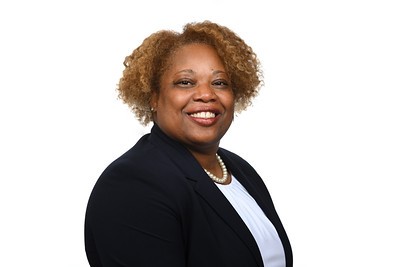
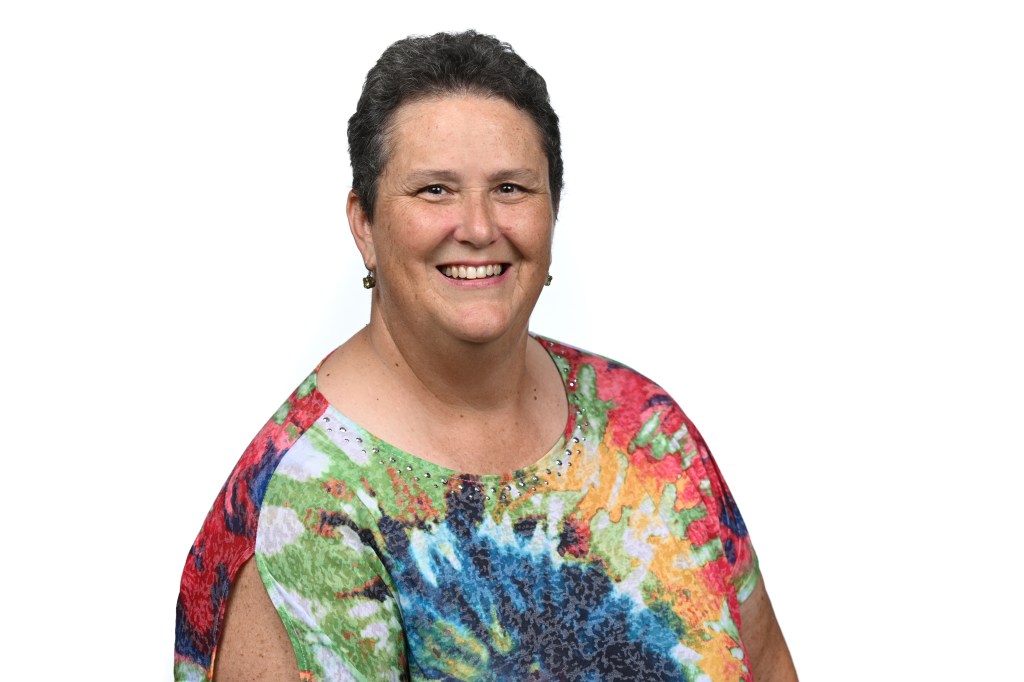
Mortissa Harvey serves as the Director of Title IX Compliance for Louisiana Tech University. Harvey comes to Louisiana Tech University from Atlanta Technical College, where she served as chair of Student Disciplinary Committee Hearings and program chair for Criminal Justice. She was the Title IX Decision Maker for the college while helping teach Atlanta’s next generation of law enforcement professionals. Prior to her transition to education, Harvey worked 11 years in the criminal justice system and has been a Certified Georgia Peace Officer for over 20 years.
Harvey is a native of Bonita, LA and is a 1995 graduate of Louisiana Tech University with a degree in Interdisciplinary Studies. She earned her Master’s degree in Criminal Justice from Clark Atlanta University and is pursuing her doctorate in Higher Education Administration.
“Happiness is not ready-made. It comes from your own actions.” (14th Dalai Lama b.1935-)
Recently, I’ve noticed increasing conversations around the topic of Happiness. While this is only an observation, these observations prompted the short journey through various ideas about Happiness described below.
The journey begins with an assumption that each of us is familiar with the “happiness clause” of the Declaration of Independence – “We hold these truths to be self-evident, that all men are created equal, that their Creator endows them with certain unalienable Rights, that among these are Life, Liberty and the pursuit of Happiness.”
So, if the pursuit of Happiness is a declared unalienable right, it might be purposeful to understand what it means to pursue Happiness. Therefore, here begins a journey, albeit brief, in search of Happiness. But, where does a search like this begin? Whom do you ask? Do you venture to Katmandu, search the Marvel multiverse to query Dr. Strange, comb the depths of ancient libraries to read the works of Aristotle, sages of antiquity, or perhaps the wisdom literature of the Bible. Well, I guess you could, but instead, I asked some modern oracles – Siri, Alexa, and Google.
Hey Siri, “who is an expert on happiness?” Response – Sean Anchor. Well. If Siri says he’s an expert, Sean Anchor must know something about Happiness. Sure enough, he even has a definition for it – “Happiness is the joy you feel moving toward your potential.” Anyone who spends most of his time studying Happiness and speaking and writing books about it must know much about it. In one of Anchor’s books, he discusses the Happiness Advantage. Apparently, it is advantageous to be happy – who knew? In Before Happiness, his follow-up to the Happiness Advantage, he informs us that one of the 5 hidden keys to success is to spread Happiness. Then, in How to Make a Shark Smile, a book for children, we learn that a positive mindset is needed to spread Happiness. So, what have we learned about Happiness on our first stop? First, there is an advantage to being happy. Second, the key to success is to spread it (Happiness) once you get it, and a positive mindset is required to spread it effectively. With this knowledge, the search continued.
Next stop – Imagine my surprise in learning there is a man named Hector who has already pursued Happiness – there’s a movie about it, Hector and the Search for Happiness. IMBD describes it as, “A psychiatrist searches the globe to find the secret of Happiness…the disillusioned psychiatrist, Hector, confesses to his girlfriend that he feels like a fraud for dispensing recommendations to patients who never seemed to improve or get happier. He considers breaking out of his lackluster routine. Summoning up some courage, Hector embarks on an international quest to find the right formula to bring him joy and vitality.” Sidenote – Simon Pegg plays Hector.
After his journey, Hector reviews his journal and summarizes his search results with 15 observations. I’ve included the Top 10. At least, these are the ones I thought were the top 10.
Making comparisons can spoil your Happiness.
Many people see Happiness only in their future.
Sometimes Happiness is not knowing the whole story.
Avoiding unhappiness is not the road to Happiness.
Happiness is answering your calling.
Happiness is being loved for who you are.
Fear is an impediment to Happiness.
Happiness is feeling completely alive.
Happiness is knowing how to celebrate.
Nostalgia is not what it used to be.
*Lagniappe – Sweet Potato Stew! (Watch the movie, then you’ll understand.)
Next stop in search of Happiness – Psychology Today
A search of Psychology Today produced the wonderfully happy (tongue firmly in cheek) post – The Search for Happiness: A brief look at destination addiction. Considering Hector’s globe trotting and then this post, my thought – traveling must have something to do with Happiness. However, on further reading, in fact, the next paragraph included a warning, “Beware of Destination Addiction – a preoccupation with the idea that Happiness is in the next place, the next job, and with the next partner. Until you give up the idea that Happiness is somewhere else, it will never be where you are.”
By the way, while not mentioned earlier, this was also Hector’s conclusion, that Happiness was not out there somewhere, at the next destination, dependent upon something external.
Next stop on the Ask Siri, Ask Alexa, Ask Google search – The 2022 World Happiness Report, the 10th-anniversary edition. If you are not aware of the World happiness Report (WHR), you may want to check it out as it contains an abundance of fascinating and valuable data and information. Meanwhile, the bits below provide small samples from the 158 page 2022 report.
From the “bet you don’t know this category, “- much of the growing international interest in Happiness, exists thanks to Bhutan. They sponsored Resolution 65/309, “Happiness: Towards a holistic approach to development,” adopted by the General Assembly of the United Nations on 19 July 2011, inviting national governments to “give more importance to Happiness and well-being in determining how to achieve and measure social and economic development.” (p. 3)
World Happiness Report 2022 Ranking of Happiness by Country 2019-2021
1. Finland 2. Denmark 3. Iceland 4. Switzerland 5. Netherlands 6. Luxembourg 7. Sweden 8. Norway 9. Israel 10. New Zealand 11. Austria 12. Australia 13. Ireland 14. Germany 15. Canada 16. U.S. 17. UK 18. Czechia 19. Belgium 20. France
Note that Finland holds the top spot (5 consecutive years), one of five Nordic countries in the top ten. From this, are we to assume that there is an association between Happiness and living somewhere that is very cold? If that is accurate, I may never be happy, at least not top spot happy.
Some good news – WHR researchers looked at positive and negative effects associated with sustained emotions. They found that the most striking feature is the extent to which the results continue to buttress a finding in psychology that positive emotions matter much more than the absence of negative ones when predicting either longevity or resistance to the common cold. For example, smiling or laughing a lot is the most common of all the components of either positive or negative affect. Also, when considering positive emotions as a whole, they remained more than twice as frequent as negative ones. (page 23.)
Considering negative emotions, although overall anger presented at low global levels, the regional differences are striking with anger being far more prevalent and at a constant level in the Middle East and North Africa (MENA) than in the rest of the world. Moreover, evidence of stress is greater now than ten years ago in every global region. (page 32)
Returning to a review of positive emotions and measures of prosocial behavior, three measures —donations, volunteering, and helping strangers—all showed increases in 2021 in every global region, often at remarkable rates not seen for any of the variables tracked before and during the pandemic. In fact, as measured by these prosocial behaviors, Global Benevolence increased dramatically in 2021, nearly 25%. If this is pandemic benevolence, let’s hope the trend continues after the globe returns to “normal”. (page 45)
For more information on topics like -Causes of differences in Happiness between people – Why are some people happier than others, even if they live in the same country under more or less similar circumstances? – Using social media data to capture emotions before and during COVID-19 – Exploring the biological basis for Happiness – and Insights about balance and harmony – download the 2022 World Happiness Report at https://worldhappiness.report/ed/2022/.
As we near the end of our travels in search of Happiness, I’ll leave you with a list – because it is required that every blog post include a list. Below is a list of actions you can take to increase your happiness quotient.
1. Do More Physical Exercise
2. Get More Quality Sleep
3. Put down your cellphone – I think this means, do NOT use it!
4. Take More Social Time – spend more time with your friends and family.
5. Spend More Time Outdoors
6. Help others for two hours per week
7. Meditate
8. Practice Gratitude
9. Spend money on experience, not things
10. Practice Your Spirituality Or Faith
Source: Happiness Hack: 10 Ways To Be Happier, Backed By Science
While not all-encompassing (obviously), this very brief journey in search of happiness found –
There is little or no need to travel worldwide to find it. Most likely, it is as close as where you are. The next thing, the next destination, the next job, the next whatever, is probably not the source of happiness. There is a growing interest globally in factors influencing happiness. Positive actions like smiling and laughing have a significant impact on happiness. Prosocial behavior, which contributes to happiness, is rising (dramatically) globally. Apparently, Finland and other Nordic countries are very happy places; there might be a connection between happiness and living somewhere very cold 😊 Most likely, other factors currently being studied contribute to the Nordic effect.
*Lagniappe(2) – not mentioned previously – An extensive study conducted by researchers at Harvard University could be summarized by the title of a 1967 Beatles tune, All You Need is Love. Positive well-being is closely related to the duration and the positivity of our relationships with people. So perhaps our first investment should be in humans. Try to laugh and smile as much as possible – for your sake and for your neighbor. Be active in prosocial behavior – volunteering, donating in some form, and helping strangers. With that, may all your days be joyful and happy.
Post Script – paraphrasing a verse from the Book of James – To all my brothers and sisters, find joy in ALL things, even the trials of life.
Que up the music: Rossini’s William tell Overture to begin and end the “Lone Ranger. “ When I was a child, a few decades ago, that music announced the show as we gathered to listened to the “ Lone Ranger” on that old vacuum tube radio (we had no electricity back then). I loved the show and the adventures and heroic deeds of the Lone Ranger and Tonto. That show began on radio in 1933 and morphed to TV in 1949 and the big screen in 2013. I do hope that none of you has been deprived of the opportunity to enjoy the Masked Man.
Fast forward to 2021 and the question “Who Is that Masked Man, Woman, or Child?” takes on a whole new meaning. All of us have become the Masked Man, Woman, or Child. Our lives have been dramatically changed by the Covid pandemic. I see people all over our campus sporting masks, some coordinated with their fashion couture, some advertising their favorite sports team, some acknowledging their University logo, and some just plain. We mask up against variants— Beta, Delta, Omicron (all with their Greek to me. Sorry, I just couldn’t resist.) I just don’t like it.
My long-time habit of greeting students, friends, and colleagues with a smile and a “hello” has been challenged by all of the Masked People on campus and in the community. How can I really know who I am greeting when their identity is hidden behind the mask? How can they know my greeting? My smile is hidden behind my own mask, so I must smile with my eyes. My greeting is muffled by the mask. Communication is challenged by the mask. Some communication specialists assert that communication is just 7% in our words, 55% in our body language, and 38% in the tone of voice—all of which are “masked” by our masks. Our communication quality is compromised by our masks. I don’t like it.
It is difficult to feel good by our need to wear masks. We hear that masks are lifesaving tools to protect public health, to prevent viral spread of Covid. We hear that masks are components of social responsibility. Some of us wear masks because of peer pressure. Some wear the mask because we are risk averse. Some appreciate mask wearing because it results in great savings on cosmetics. I cannot remember the last time I had to purchase lipstick or gloss or other make-up.
We see controversy, sometimes shaming, over mask wearing. What about those people who value individual liberty? Masks sometimes make us feel out of control. Even some of the iPhones using facial recognition will not open to owners because the phones reject the recognition when the owner wears a mask. I don’t like it.
Masks enable anonymity. Apparently people wearing masks are sometimes tempted to perform deeds that they would not engage in otherwise. Note that most of the “robbers” in movies and real life have masked up. I know a lot of people on campus, but I cannot say that I recognize them when they are masked up. Of course, I greet then anyway. I am not certain that when we are able to take off the masks, I will recognize those persons whom I only know under their mask. I don’t like it.
So like the Masked Ranger who secreted his identity to perform good deeds, our masks are social symbols—tools to mitigate against spread of a deadly virus, COVID. Despite the downside of wearing our masks, we must continue to communicate through our words, tone of voice, and body language which includes mask-hidden smiles. The experts say that when we continue to smile in all of our original glory, that the smile is physically expressed in our eyes. Masks hide our regular smiles, so smile big with your eyes. That’s my plan as we continue our need to mask. And in the words of the “Lone Ranger” concluding the episode—“HI, HO, Silver, and Away.”
Fast forward to March 2022 and the question “Who is that unmasked man?” rises to the top. Even though we received permission to remove the masks, for some of us the habit had already become too strong. Many of our “creatures of habit” continue to mask-up. But others have begun to show their faces and to brandish those marvelous smiles. Unfortunately, with the rise of Omicron variants that are more highly contagious, the mask mandates may return. My hope is that the words in the concluding COVID episode will be “BYE, BYE COVID and Masks Away.
Dr. Dauzat is Dean Emerita of the College of Education and Coordinator of External Projects for Louisiana Tech University. This blog was originally written December 2021.
As President, there are always many things that need to be done to address the needs of the campus and its many stakeholders. Over the past few years, I found myself in a routine of working at the office and then coming home to work until bedtime.
When the COVID-19 pandemic hit in the Spring of 2020, we sent most of our students home, and I spent even more time at home working. Even though I was in regular communication with colleagues and friends, the isolation began to impact me. I was overweight, stressed, and tired much of the time. I didn’t know how to get out of that cycle.
Then later in the summer, a couple of our closest friends came over for a dinner. They invited me to get on a structured meal plan with them. I decided to take them up on that and began to manage the portions and types of healthy foods for meals and snacks. After a while, I began to notice that I had more energy and had the desire to get out of the house more.
I often saw different people walking around the parking lots of Joe Aillet Stadium, so I decided to try some walking myself over the Christmas holidays. Initially, I would walk up to Hideaway Park and make a loop around the park before coming home. I kept doing that walk regularly and began to notice my endurance improving and walking a bit easier. Some of my aches and pains brought on by inactivity over the years began to fade away.
Every day, I continued to walk, setting small milestones and stretch goals. I kept feeling better the more that I walked. Walking around our athletics venues gave me frequent opportunities to run into a few students, staff, and community members. Those interactions, although brief, were refreshing.
My experiences over the past year really helped me get a better perspective on how much my physical conditioning impacts my mind and body. I know that there are many others on our campus like me – those who are “too busy” to focus on their own health. I see the same signs of fatigue that I had.
Returning to campus last spring lifted everyone’s spirits as we could have more face-to-face interactions and a greater sense of normalcy. Through all of these past months, my wife Kathy has been helpful as she helps me keep my routine and get my walks in every day. Carrie Flournoy and Miki Lyons also provided encouragement and understanding. They helped prove the saying that our friends and family are most important in helping us achieve our health goals.
I invited our Kinesiology faculty, David and Jessica Szymanski and Lacey Deal, to come to my office before the beginning of the Fall Quarter to get their thoughts about organizing some activities to encourage faculty and staff health. We decided that organizing some Saturday morning walks for our Tech Family members would benefit everyone who decided to participate. Tonya Oaks Smith and Carrie joined in to help organize and publicize the walks. Everyone offered many great ideas and encouragement.
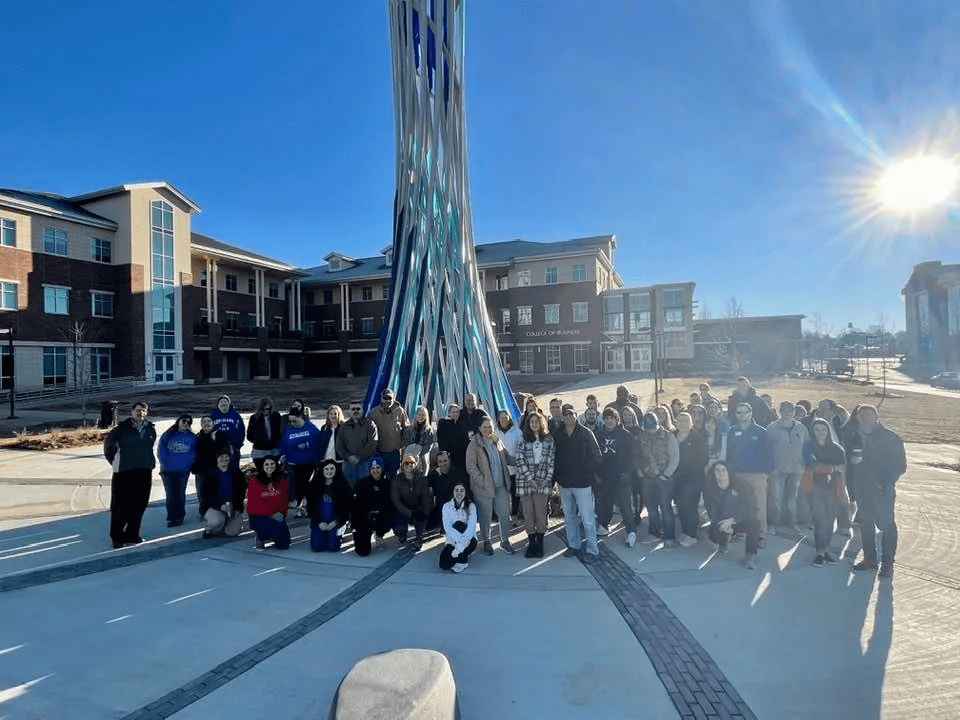
The first three Tech Family Walking Group walks were set for early Saturday mornings before September football games. I had no idea how many would show up, but was pleasantly surprised on that first Saturday morning when 50 to 60 of our friends and colleagues from every part of campus showed up at the beginning of the driveway to the President’s residence.
Jessica and Lacey had everything organized so people could choose their preferred walking distance and pace. Several of our Kinesiology students set the pace and led us on our walks to campus. It was most enjoyable to walk and chat with different people that I had not been able to get to know well beforehand. I saw many great conversations between colleagues, who quickly became friends, on the walks.
We have continued to have the Saturday Tech Family Walks every Saturday beginning at Aspire Plaza at 8 a.m. We have different students, faculty, staff, alumni and community members that show up for the walks, and we always have a great time. During our annual Legacy Day, we even invited future Bulldogs and their alumni parents to join us for a special tour of campus.
I found that walking with others is a great motivational driver. However, you first have to make a commitment to focus on yourself – on your health.
Just get out and walk. No excuses! Block out an hour for YOU! Every day!
And come join us this Saturday morning for a walk! You’ll love it!!
Legacy Day 2022- Alumni, faculty, staff, parents and students participated in the Saturday walk. Legacy Day – Alumni, faculty, staff, parents and students participated in the Saturday walk on February 19
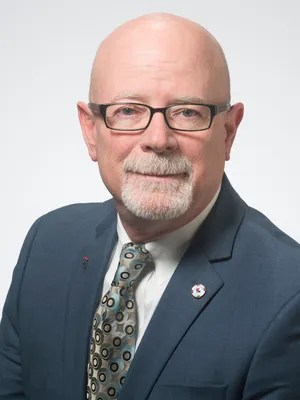
David J. Szymanski, PhD, CSCS*D, RSCC*E, FNSCA Department Chair & Professor Eva Cunningham Endowed Professorship in Education Power Lift Sport Science Educational Board Member
1. Where did you grow up and what activities were you involved in? I grew up in LaGrange, IL (southwest suburbs of Chicago) in a neighborhood with several other boys my age and older. We played outside almost every day. The sports I played in the summer and fall were baseball, basketball, football, and soccer. During the winter months, sports were awesome to play outside in the snow. Downhill skiing, cross-country skiing, and hockey were some of my favorites.
2. What did you want to be when you grew up? I wanted to be a professional baseball player. I played through college, but unfortunately, never played professionally. I never imagined being a professor, a department chair, or a strength and conditioning coach. I would like to think that if you asked my childhood friends, they would not believe what I do now.
3. What was your first job? My first job was working as a sales associate at a sporting goods store in Hinsdale, IL. I was in charge of greeting customers, assisting customers with all merchandise, and was responsible for collecting inventory of all items for the store. I enjoyed it because I got to see all the new equipment, clothing, and shoes for every sporting activity as well as received a discount on items that I wanted to buy.
4. Where did you attend undergraduate school and what was your major? In 1985, I first attended Indiana University for the fall semester before transferring to the College of DuPage in Glen Ellyn, IL (community college) where I received my Associates of Arts degree with an emphasis in Commercial Art. During that time, I was the starting short-stop for two years. I left Indiana University because the Head Baseball Coach punched me in the chest during a practice to “get my attention.” After junior college, I attended Texas Lutheran University (TLU) in Seguin, TX from 1987-89. I was the starting short-stop for the 1988 and 1989 seasons and received a Bachelor of Arts degree in Fine Art. In 1992, I went back to TLU to serve as the Assistant Baseball Coach and earned my second Bachelor of Arts degree in Kinesiology in 1993.
5. Where did you attend graduate school and your activities during that time? While serving as the Assistant Baseball Coach at TLU, I attended Texas State University in San Marcos, TX and received my Masters of Education degree in Sports Management. The main activity I was involved with was lifting weights.
6. Where did you get your PhD? I went to Auburn University in the fall of 1996 to begin my Ph.D. in Exercise Physiology and served as the Volunteer Assistant Baseball Coach for the 1997 season. After that season, I stopped coaching baseball and focused on my academics and GTA position. However, after training the baseball players in the summer of 1998, I was asked to be the Volunteer Assistant Baseball Coach so I could train the Auburn baseball players for the 1998-1999 year. At the end of the season, I was hired as the full-time Baseball Exercise Physiologist. In that position, I designed and implemented all of the resistance training and conditioning programs for the players as well as have them perform various sports performance tests. I finished my Ph.D. in 2004.
7. What brought you to Louisiana Tech? In 2004, I was the Sports Performance Director at Velocity Sports Performance in Broken Arrow, OK, outside of Tulsa, OK. After working 12-hour days, Monday through Friday, 5 hours on Saturday, and not seeing my family very much, I decided to apply for academic positions. One of the colleges that I applied to was Louisiana Tech University for an Assistant Professor position. I was offered the job in July and moved to Ruston in August 2005 a week before Hurricane Katrina devastated south Louisiana.
8. What are your research interests? My main research interest is in baseball performance. After reading articles by Dr. Coop DeRenne on weighted implements (bats) to enhance baseball bat swing velocity in 1992 while a master’s student, I became interested in this topic due to my personal experiences in playing and coaching baseball. I wanted to look more closely at bat swing velocity and began formulating ideas on how I could research this topic. I also became interested in under and overweighted ball training as Dr. DeRenne demonstrated that balls ± 20% (4-6 oz) of the standard baseball (5 oz) enhanced throwing velocity. As I have mentored numerous graduate students at LaTech over the last 16 years who have been interested in other sport areas, sport science or sports performance research would be my general overall theme.
Dr. Coop DeRenne
9. What organizations are you affiliated with? I have been a member of the National Strength and Conditioning Association (NSCA) since 1992. I am a certified strength and conditioning specialist with distinction, a registered strength and conditioning coach emeritus, a Fellow of the NSCA, and was elected to serve on the Board of Directors (BOD) for 2 terms (6 years). While serving on the BOD, I served 1 year as the Vice President of the organization. I have also been a member of the American College of Sports Medicine.
10. Tell us about your family. Both of my parents were born in Chicago, IL. My mother, Rose, was a crafter and created handmade ornaments and jewelry out of bread dough and then later, clay. I consider her a sculptor. After my mother retired from that business, she began her online businesses “On Stone Avenue”, “On Winston Lane”, “On Holiday Lane” on Etsy, which have become very good businesses for her and my father. My father, Norbert, was a musician (percussionist) and worked at a dinner/theater playhouse where he played numerous percussion instruments for different musicals. I grew up going to the theater and enjoyed it very much. He is now retired and works with my mother on the Etsy businesses. I have a younger brother, Steven, and a younger sister, Anna. Steven and his wife, Colleen, live in Palatine, IL and he has his undergraduate degree (BA) in business from Northern Illinois University and his master’s degree in business (MBA) from the University of Chicago. Anna and her husband, Andy, live in LaGrange, IL and have 2 children, Colin (20 yr) and Emma (12 yr). Anna received her undergraduate degree (BA) in Journalism from Ohio University and her master’s degree in marketing (MBA) from Loyola University Chicago. She and Andy own Grizz Pest Management in LaGrange, IL.
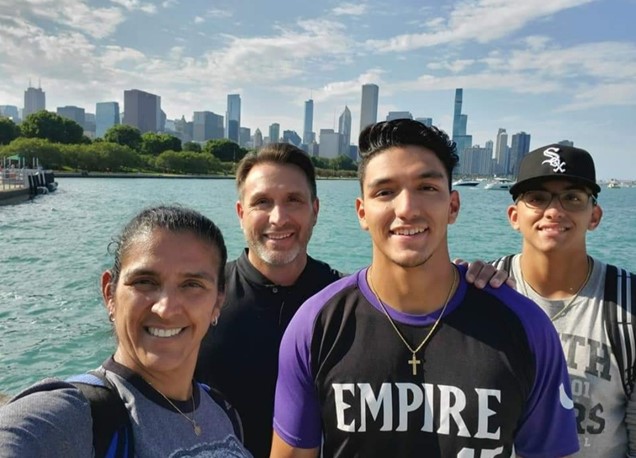
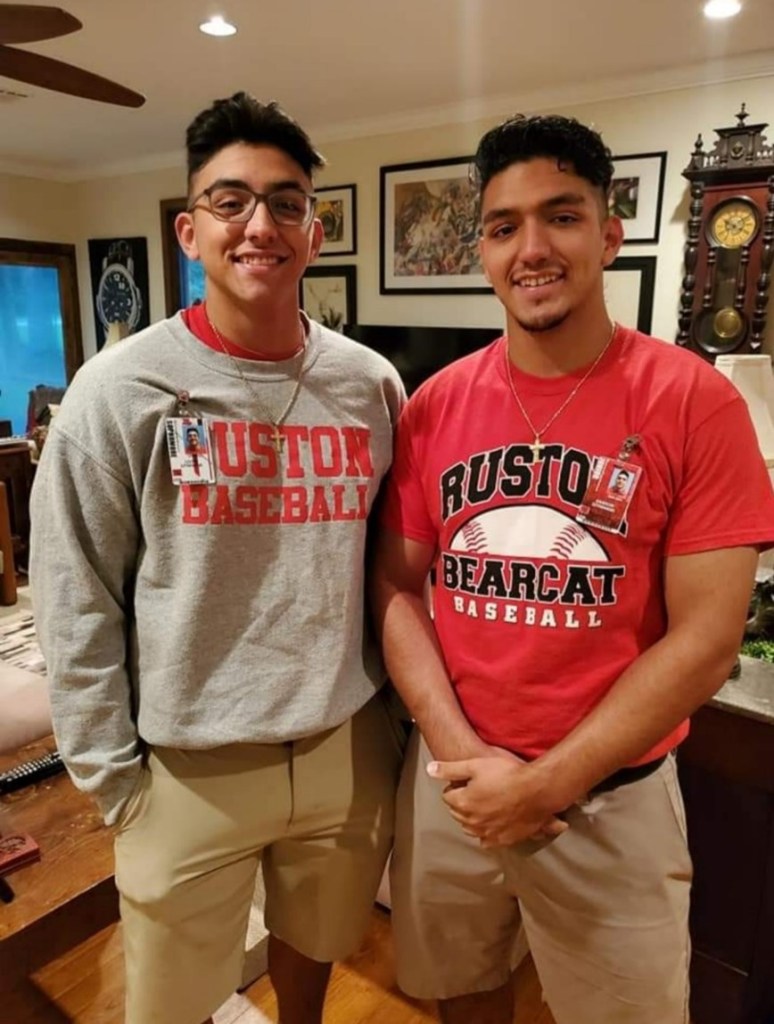
11. What do you like to do in your spare time to unwind? I love spending time with my wife Jessica and our 2 boys, Dawson (17 yr) and Justin (16 yr), in my spare time. Being outside with them (especially in our batting cage or on the baseball field) just makes me very happy. I love that they want to put in the extra time to practice and that I can be a part of their athletic development. My wife and I also love traveling to see family in Chicago, IL and Seguin, TX as well as taking the boys with us when we travel to conferences or go on vacation. It is very special to experience a new place with them for the first time.
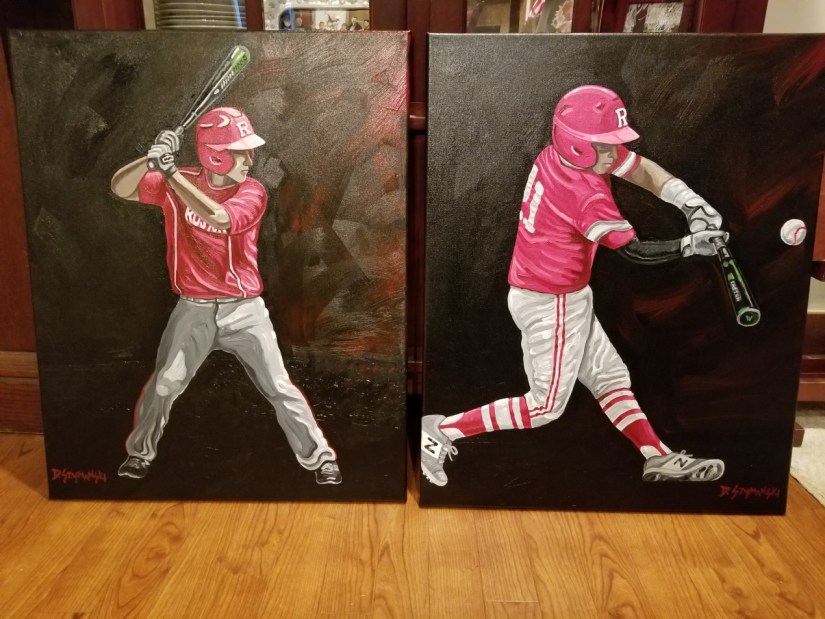
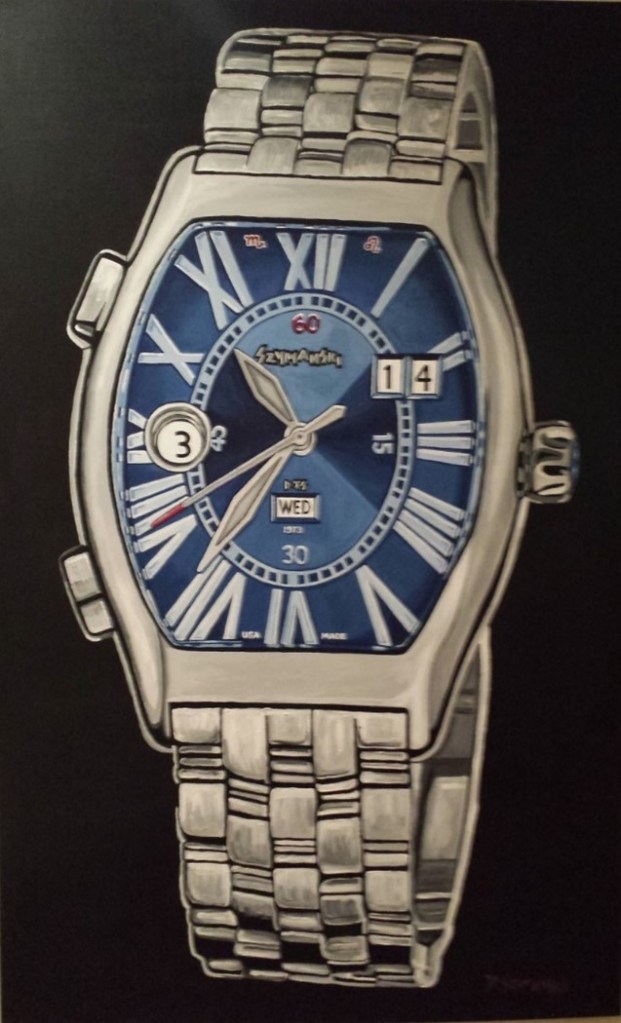
Another activity I really enjoy doing in my spare time is art work. With my first degree being in fine art, I try to either draw or paint a few pieces throughout the year. As Department of Kinesiology Chair and the Director of Baseball Performance, I do not have a lot of spare time to paint; however, I completed two paintings of our boys hitting when they were younger as well as a portrait (watch painting) of my wife. Drawing and painting take me to another world where time does not exist. I highly recommend that people find something that allows them to feel the same way. It is very relaxing and rewarding.
12. Why did you want to be department chair? I’ve had conversations in the past about being a department chair at some point in my life, but I did not know when it might happen. I’ve held leadership positions in the past and enjoyed those roles because of the people I was working with at the time and the ability to implement improvements. When this opportunity presented itself in 2017, I felt as though it was the right time to accept the Interim Department Chair position. After serving in that capacity for a year, I was offered the full-time position and as of February 2018, became the Department Chair. My reason for wanting to continue serving in this position is because I look forward to furthering our growth and success in this department and working with our faculty, staff, and students to see this happen.
13. What is your vision for the Department of Kinesiology? My overall vision for the Department of Kinesiology is for it to be an outstanding department that has a strong identity on campus (within the College of Education and at Louisiana Tech) as well as off campus for teaching, research, and service. I want us to have excellent undergraduate and graduate academic programs that educate our students and prepare them for life after Louisiana Tech. To me, that means preparing them for graduate programs or jobs. I want our faculty to be recognized for the outstanding work they do with our students, the department, college, university, the community, and their research. This will raise awareness of the Department of Kinesiology around the state of Louisiana and hopefully beyond. I want to actively recruit students for both our undergraduate and graduate programs so they can be informed of all that we have to offer in our department. I want to create partnerships with outside organizations to improve service, teaching, research, and funding opportunities. Most recently, I have proposed that the Department of Kinesiology have a Sports Performance Institute where faculty and students work with athletic teams at Louisiana Tech to assess and monitor the various sports performance skills of athletes. This should help with athletic and academic recruiting, enrollment, research, and partnerships. I have also proposed the creation of a Sports Performance business run by the Department of Kinesiology to test, monitor, and train local and regional athletes. This would provide real-world experiences for students as well as provide revenue to maintain the Human Performance Laboratories in the Department of Kinesiology and pay faculty and students for their services.
14. What is your favorite quote? Quoting movies in class is something I do on a regular basis. As I get older, students do not always know what movie quote I am saying, but I enjoy providing quotes or analogies because I believe it makes class more interesting while at the same time providing another way of explaining a challenging exercise physiology topic, for example. Some may even wonder if I do have a favorite quote. I can honestly say that I don’t think about favorites all that often, but if I were to pick one quote that stands out in my head it would be from the movie “Gladiator” with Russell Crowe. “What we do in life echoes in eternity.”
15. Anything else you would like for us to know? When I first came to Ruston, LA in 2005, I lived in my office for 4 months until we purchased a house in December after Hurricane Katrina. I was away from my family and worked 12-14 hour days. It was an interesting way to start my professional academic career at Louisiana Tech.
I haven’t paid for a haircut in 39 years. I figure that I have saved anywhere from $8,000 to $12,000. You might ask yourself “Why would you cut your own hair?” The answer is simple. When I was 15 years old, I didn’t want to pay for a haircut anymore because I felt I could do it myself. Needless to say, I did not do a good job the first time because I did not use the guards that come with electric shears. Once I learned how to use the guards properly, I did a much better job and was happy with the results. When I was in college, I even made some extra money because I cut some of my teammate’s hair on a regular basis. As of today, I still cut my own hair, but I now have 2 new clients. Every 3-4 weeks I cut our boy’s hair because they want a “cool fade”. I enjoy doing it because I get to spend more time with them and there is something artistic and satisfying about giving a good haircut.
Because of my art background, I also have a great appreciation for architecture and interior design. Often, when I step into a room, I find myself redesigning the entire space in my mind to make it more functional and appealing to the eye. I have recently designed a contemporary home that we hope to build some day.
Finally, I just co-edited and co-authored my first book titled “Strength Training for Baseball” published with Human Kinetics. It took 1 ½ years to complete. It was a very fulfilling accomplishment and collaboration with 12 other authors. I am proud of what we produced. I hope it is well received and used by those who train baseball players.
Where did you grow up and what activities were you involved in? I am from Baton Rouge, LA. I played baseball my whole life.
What did you want to be when you grew up? I wanted to be a professional baseball player and then later a Physical Therapist.
What was your first job? I was a party host at a skating rink. I accepted the job the week I turned 15.
Where did you attend undergrad and what was your major? I attended Louisiana Tech as a Kinesiology major.
Where did you attend graduate school and your activities during that time? Ph.D.? I attended Louisiana State University for my masters and then Texas Woman’s University for my Ph.D. While at TWU my research interests were glycemic response in healthy people, and individuals with type 2 diabetes and cardiovascular responses in healthy, obese, and type 2 diabetics.
What brought you to Louisiana Tech? It’s home to me. I know the faculty, I’m invested in the future of the department and University.
What classes do you teach at Louisiana Tech? Exercise Prescription (407) Test and Measurements (509) Recent Literature and Research in Kinesiology (518) Exercise Physiology (526) Ethics in Kinesiology and Sport (528)
What are your research interests? Health and Fitness in Law Enforcement and Emergency Responders
Dr. Todd Castleberry mentors Meredith Fisher in the Kinesiology Department’s Human Performance Lab. Photo by Emerald McIntyre/Louisiana Tech University
What organizations are you affiliated with? National Strength and Conditioning Association American College of Sports Medicine – ACSM Diversity Action Network Committee member
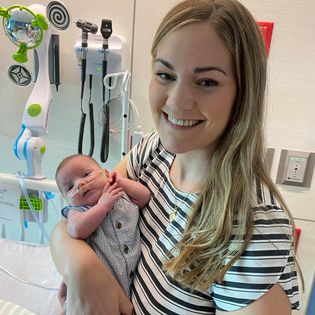
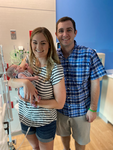
Tell us about your family. My wife is also a Tech alumnus and is a Physician Assistant (now called Physician Associate). We recently had a baby boy named Rhett and we have a Golden Retriever named Sasha.
What do you like to do in your spare time to unwind? Hunt, Fish, Run
What is your favorite quote? ”What if I fall”? “Oh, but what if you fly”?
Anything else you would like for us to know. I love mentoring students through research projects!
Where did you grow up and what activities were you involved in? I grew up in Quincy, Illinois and was very active in sports and the arts. I played soccer and hockey prior to middle school, then began playing football and continued that into college. I also played piano, saxophone, and guitar taking lessons in each from a young age (~5 years old). From grade school through high school I was in the school bands (marching, jazz, & concert), the school choirs (concert & show choir), and was active in the school and community theatre for both plays and musicals.
What was your first job? I started two jobs right before high school. I worked as a bagger at a grocery store (HyVee) and at a concessions stand at a local racetrack.
Where did you attend undergrad and what was your major? St. Ambrose University – Major: Exercise Science, Minor: Biology
Where did you attend graduate school and your activities during that time? Ph.D.? Miami University (Ohio) – M.S. in Exercise & Health Studies: During this time taught classes in the department and worked as a research assistant on multiple research studies examining the role of physical activity on child development and academics, and also on productivity and health in the workplace. Michigan State University – Ph.D. in Kinesiology with a Concentration in Cognitive & Motor Neuroscience, and a Specialization in Cognitive Science: During this time I worked in the Health Behaviors & Cognition Laboratory to examine how health behaviors can impact cognitive function and development in children with and without special needs.
What brought you to Louisiana Tech? The department and the region. Having spent my entire academic career at universities that were very supportive, collaborative, and student driven, I was looking for something similar and Louisiana Tech had that. Additionally, the community reminds me a lot of where a grew up, with a similar support system between the university and the community, and that was very intriguing to me.
What classes do you teach at Louisiana Tech? KINE 333: Motor Learning KINE 403: Neural Basis of Movement KINE 514: Quantitative Data Analysis in Kinesiology KINE 530: Psychophysiology of Sport KINE 537: Cognitive Kinesiology KINE 541: Exercise Psychology
What are your research interests? My primary research interest is in the exploration of health-related behaviors and their impact on higher-order cognitive processes during preadolescence, specifically in individuals with developmental disabilities and/or cognitive impairments. Currently, this research includes the application of these health-related behaviors to improve cognitive and physical health, classroom performance; and to better understand their effect on the specific cognitive components equated with the neuroelectric and behavioral impairments associated with autism spectrum disorder and attention deficit hyperactivity disorder.
What organizations are you affiliated with? North American Society for the Psychology of Sport and Physical Activity (NASPSPA) Society for Psychophysiological Research (SPR)
Where did you grow up and what activities were you involved in? Hartland, Michigan; I loved playing all kinds of sports but really focused on soccer.
What did you want to be when you grew up? I’m not sure I ever really had one thing I wanted to be when I grew up. I liked learning how things worked so my parents thought an engineer, and I love technology so then something with computers, then a coach or a counselor. And here I am…a professor.
What was your first job? I worked at Dairy Queen
Where did you attend undergrad and what was your major? Michigan State University – Major: Psychology, Specialization: Coaching
Where did you attend graduate school and your activities during that time? Ph.D.?
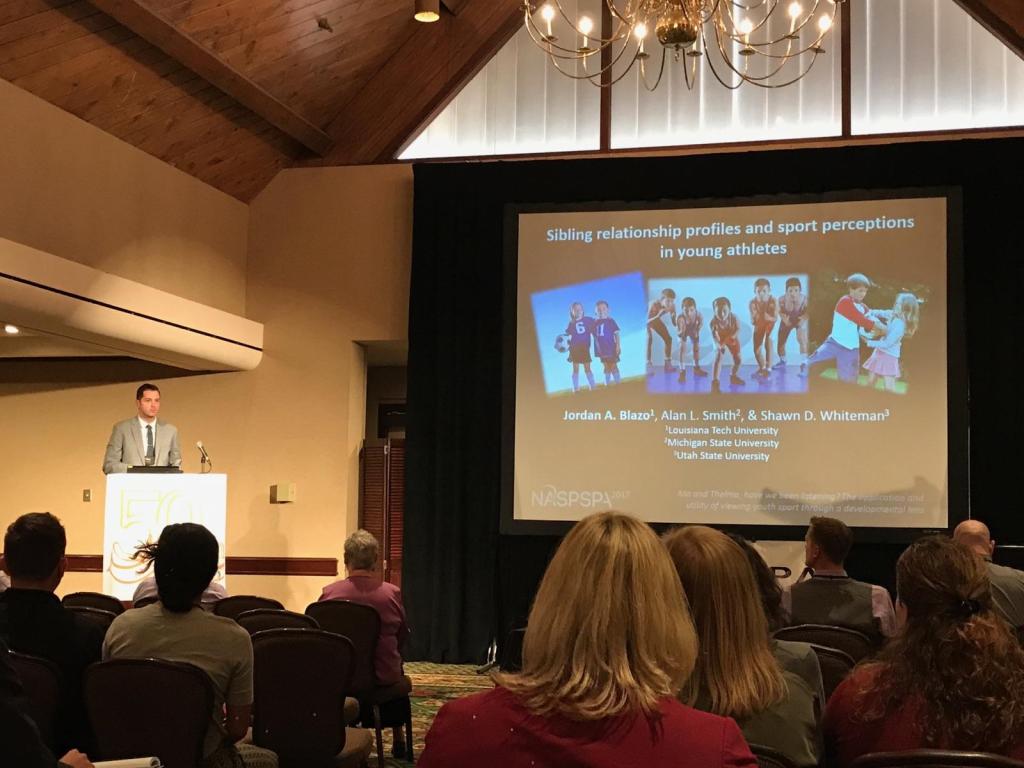
Masters: Georgia Southern University; Activities – I was a graduate assistant, so I taught activity classes and I was a sport psychology consultant for university teams and athletes. My research interests really began at Georgia Southern when I completed my thesis on Sibling Sport Achievement Experiences.
Ph.D.: Purdue University/Michigan State University – I started at Purdue University and followed my mentor to Michigan State University when he accepted a new job. While I didn’t finish at Purdue, it was an amazing experience. Activities: Most of my time in my Ph.D. I was a research assistant working on multiple studies to understand the role of physical activity on ADHD in children. I continued researching sibling relationships in sport when I completed my dissertation looking at sibling relationship dynamics in youth sport experiences.
What brought you to Louisiana Tech? Louisiana Tech was a great opportunity. The department had a great deal of energy and clearly held many of the same values as I do. I also knew that I wanted to come to a smaller school where I could foster relationships with students and see the impact my classes and research could have on them.
What classes do you teach at Louisiana Tech? Undergraduate: KINE 316 – Exercise and Sport Psychology; KINE 420 – Sports and Society Graduate: KINE 508 – Research Methods; KINE 531 – Youth Sport Psychology; KINE 538 – Motivation in Physical Activity; KINE 539 – Sport Psychology; KINE 540 – Sport Impact on Society
What are your research interests? Youth Sport and Family Dynamics, specifically how siblings help shape and inform our early sport experiences.
What organizations are you affiliated with? North American Society for the Psychology of Sport and Physical Activity (NASPSPA)
What do you like to do in your spare time to unwind? Much of my spare time is spent with my family simply trying to relax. We’ll spend time walking and goofing around outside with our little one.
What is your favorite quote? “The seasons do not push one another; neither do clouds race the wind across the sky. All things happen in their own good time.” ― Dan Millman
Rhonda Grafton Boyd, M.Ed. Social Media Coordinator
Where did you grow up and what activities were you involved in? I was born and raised in Ruston. I lived in Monroe for about 5 years and then moved back to Ruston. Growing up, as long as I had a bicycle, Barbie doll and a basketball I was set! My best friend and I would play outside most nights until it was too dark to see. I took dancing from Mrs. Martile Mathewes (tap was my favorite) for 7 years then piano from Miss Margaret Moffett for 7 years. I attended Bethel Christian School and graduated in 1982. In school, I played basketball and softball. I had a scholarship offer to play basketball at Louisiana College, but wanted to go to Louisiana Tech
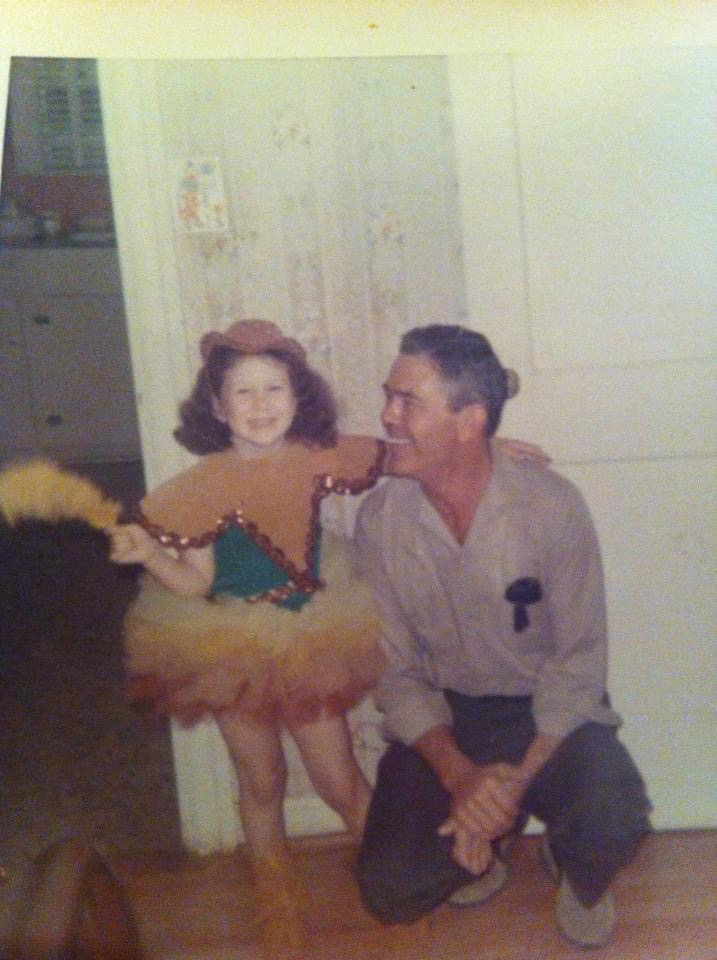
My Daddy and me 1967
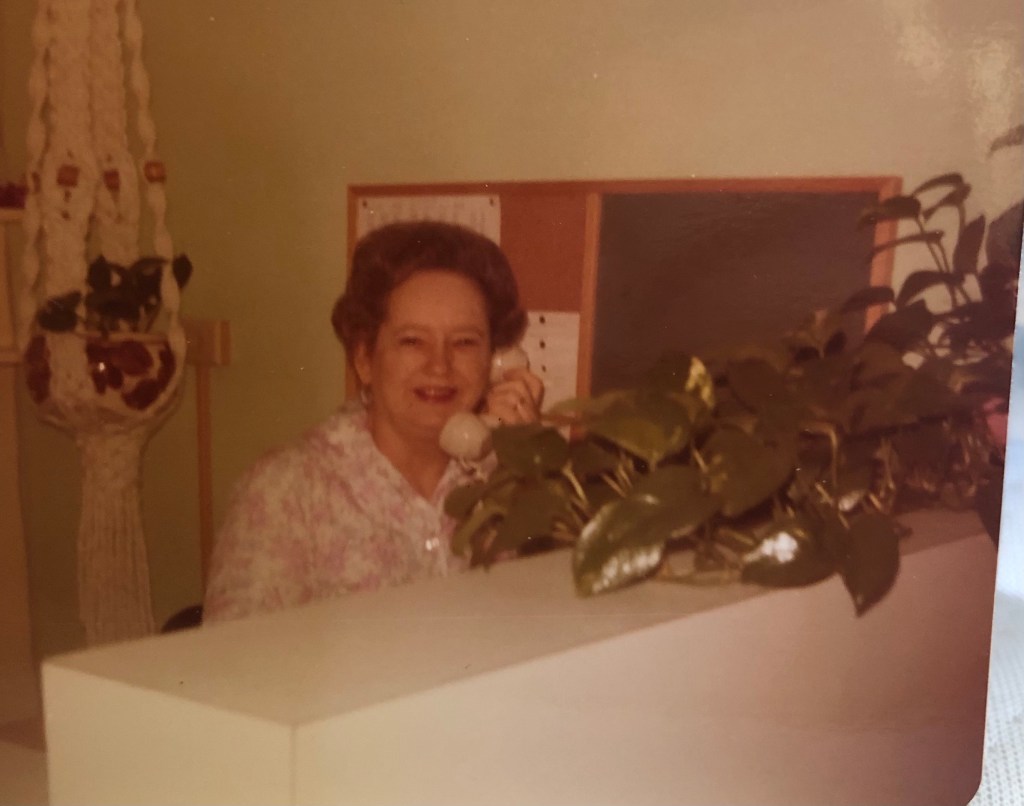
My Mama at her new desk and switchboard at Green Clinic 1980
What did you want to be when you grew up? As early as I can remember I wanted to be a veterinarian. By the time I was in high school this had changed to wanting to become an accountant. I was going to be a CPA and move to Dallas!
What was your first job? My first job was at Green Clinic working in the basement of the old Clinic building on Vienna in Medical Records. My mother worked and retired from there after 30 years. They had a summer work program for employee’s teens. I was very fortunate in that not only did I work there summers from the time I was 13 but worked there while I was in college.
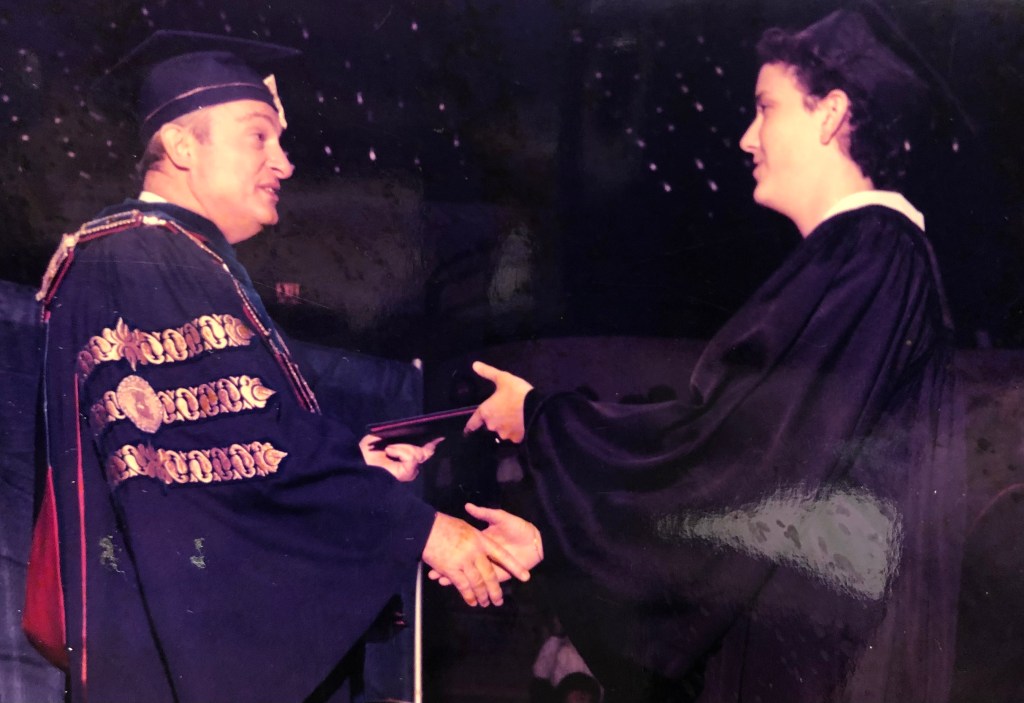
Where did you attend undergrad and what was your major? I started out in Accounting at Louisiana Tech but after a couple of years decided that was not the major for me. I switched to Marketing. I am a 1986 Louisiana Tech graduate with a B.S. in Business Administration with a Marketing concentration. This degree has and continues to serve me well!
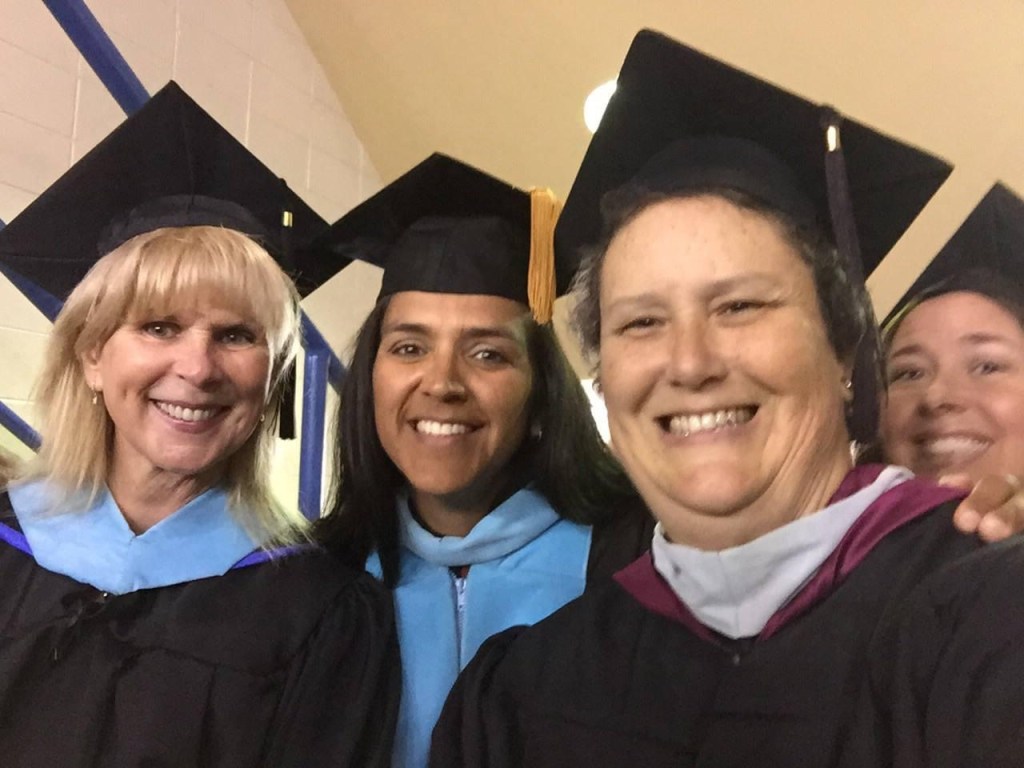
Winter Graduation 1986 Dr. F. Jay Taylor
Where did you attend graduate school and your activities during that time? In 1988 I received my M.Ed. in Exercise Science and a Post-Bacculareate Certificate in Gerontology from Northeast Louisiana University. As usual, there is an interesting story here. After graduation, I decide to go back to school to become a teacher so I was going to get my certification to teach business and physical education. While pursing this I was still working at Green Clinic. At that time the Clinic conducted clinical trials for pharmaceuticals. At this particular time there was a trial for older people who might contract the flu. Mary Ellen Bass, the Clinical Coordinator at the Clinic, hired me to do marketing for this clinical trial. My job was to present to as many organizations and clubs which had older members. One day I was telling Dr. Sylvia Stroops (a former professor in the Kinesiology Department) about this and she suggested that I speak to the members of the Senior Citizen Exercise Program (now the Adult Fitness Program) which at this time was in its infancy – 8 years old. Long story short, I asked Lou Ann Albritton (another former instructor in the department) if I could speak to her classes. I loved it so much that I decided that was what I wanted to do career wise – work with older adults. At the time my future husband was at Northeast Louisiana University (now ULM) and told me about the gerontology program they had there. I was really excited because the closest program was in Florida. I took classes at Tech that I needed to make up the deficiencies I had in order to enroll at NLU in the Exercise Science Masters graduate program. While I was doing that I did four practicums in the Adult Fitness Program assisting Mrs. Albritton and Dr. Gail Clark.
What brought you to Louisiana Tech? It was not a what, but a couple of whos that brought me to Tech. Dr. Gail Clark, my friend and mentor is the main reason I am at Tech. The department was in need of an adjunct instructor to teach two satellite classes of the Adult Fitness Program. These classes met on Tuesday and Thursday and were at the Arcadia Senior Center and the Ringgold Senior Center. In addition to this, Dr. Tommy Grafton, hired me a Health Educator for Project Northland, an underage alcohol prevention program for 6th, 7th, and 8th graders. I was the Health Educator in Union Parish and Lincoln Parish. Little did I know that I would eventually teach Health classes at Tech. Dr. Grafton gave me some great advice when I began teaching that I have never forgotten: “When it comes to health (alcohol, drug and sex education), you will not be able to save everyone, but if you save one, if what you share and teach causes one person to live better and make healthy decisions, then you have been a success.” He was a source of encouragement and inspiration to me for many years. After a couple of years I became fulltime thanks to Dr. Joann Dauzat and took over the Adult Fitness Program Coordinator when Dr. Clark retired. Never in my wildest dreams would I have ever thought I would be teaching at Louisiana Tech University! What an amazing adventure it has and continues to be! I cannot imagine doing anything else!
Dr. Gail Clark
Dr. Tommy Grafton
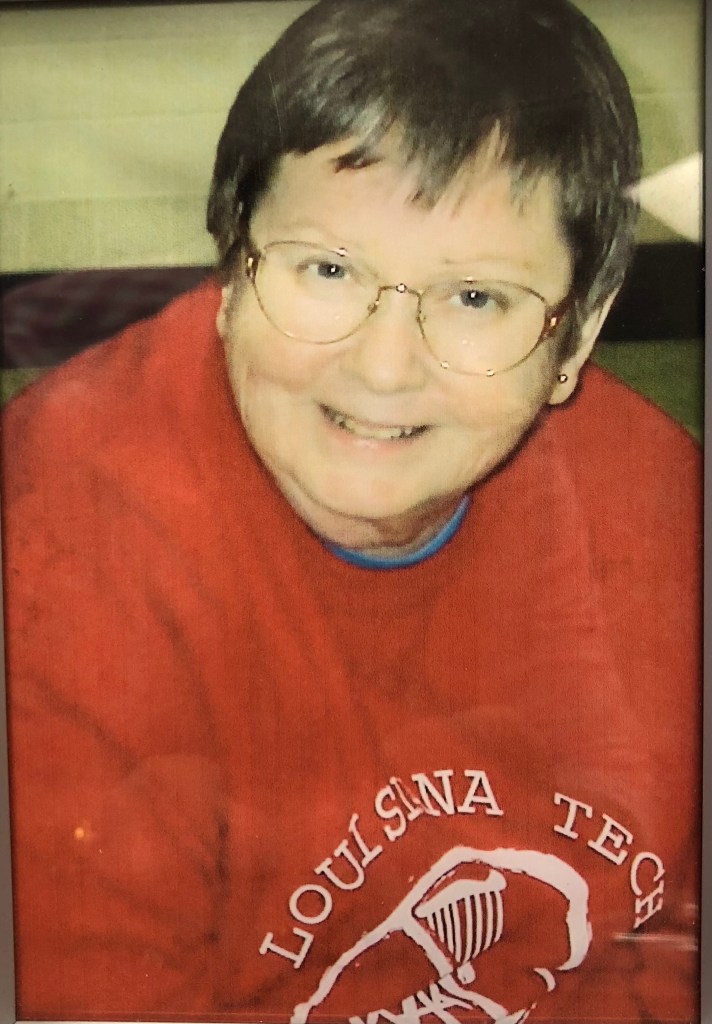
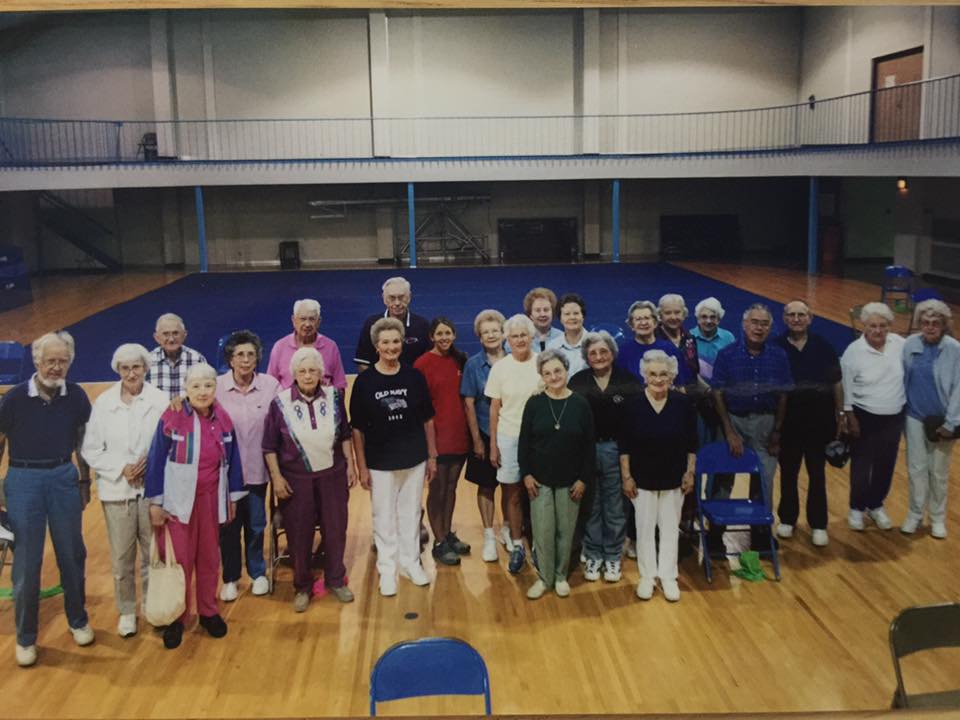
One of my first Adult Fitness Classes (2002)– notice the student in the red t-shirt – that is Mrs. Deal who was my TA my first year at Tech. My parents were also members of my class.
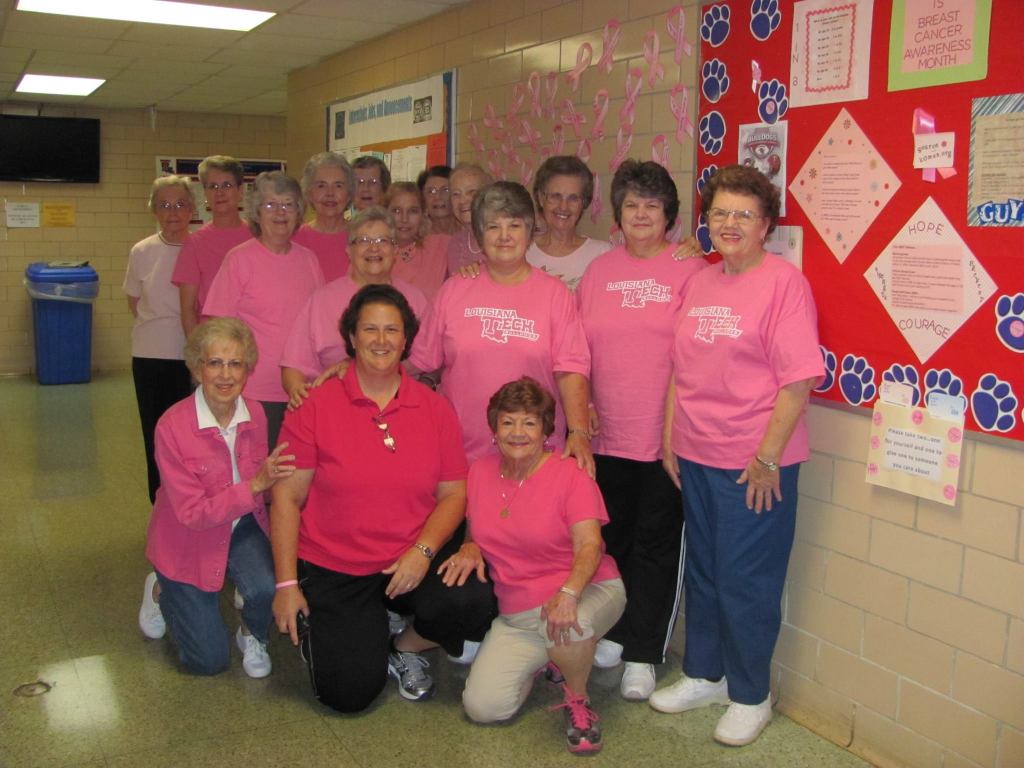
My 7 AM chair exercise class (2012)
What classes do you teach at Louisiana Tech? I currently teach KINE 290 Personal and Community Health or as it is known on campus: Sex, Drugs and Rock & Roll, KINE 406 Health Aspects of Aging, and KINE 280 Dance Appreciation. I have also taught for years in the Adult Fitness Program at the pool, chair classes and the After 5 class. In addition, I have taught KINE 292 Fitness and Wellness, Running, Beginning Golf and have taught for many years FYE (First Year Experience) for incoming freshmen.
What are your research interests? Balance and Fall Prevention
What organizations are you affiliated with? Louisiana Association for Health, Physical Education, Recreation and Dance
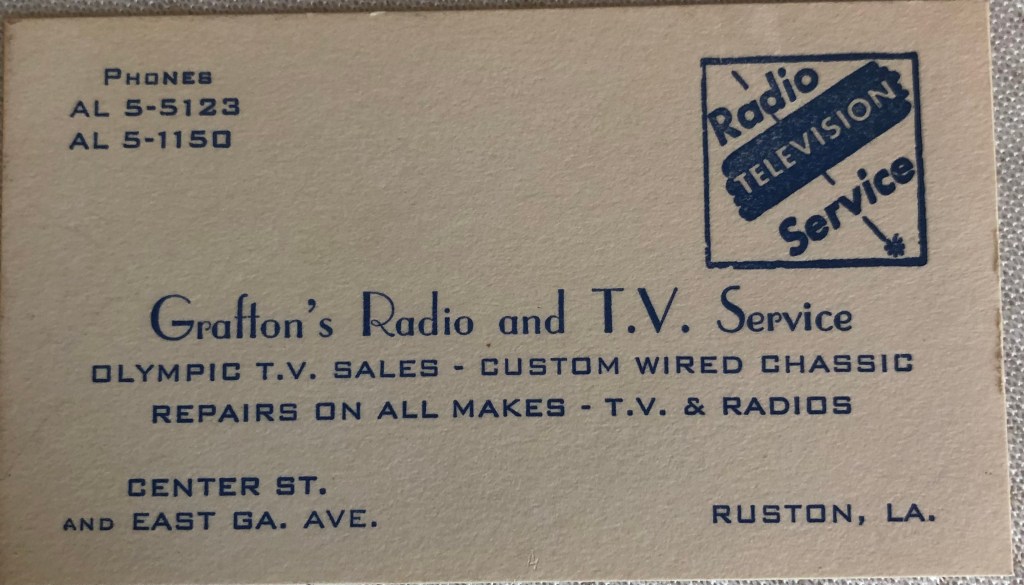
Tell us about your family. I am Ruston born and bred. My Daddy (Pat Grafton) owned his own business, Grafton’s TV Repair Service and my Mama (Lurline) was the PBX operator at Green Clinic. We took a vacation every summer either to visit family in Illinois, go fishing, go to see the Kansas City Royals play baseball, visit Branson, or go to Panama City Beach. We never missed a Lady Techster BB home game from 1978-1982. My Daddy passed away in 2010 and my Mama in 2014. My son Patrick is a 2013 graduate of Louisiana Tech with a double major in Journalism and English. He was the editor of the Tech Talk his senior year. After Tech, he moved to Chicago to attend Second City Comedy School. While there he opened for Lena Dunham on her book tour. In 2016 he applied and was accepted to graduate film school at UCLA in Los Angeles. I was fortunate to have him home for several weeks the summer of 2019 with a film crew and cast of 28 to film his graduate film thesis. It was incredible to see the intricate workings of an actual film shoot. He graduated with his MFA during the height of the pandemic in 2020 while the film industry was totally shut down. This past spring he was hired by Nickelodeon as a production coordinator. He and his roommate Sining (my bonus son) live in Los Angeles.
My parent’s 60th wedding anniversary
Patrick and friends home for film shoot. (2019)
Patrick and Sining Christmas 2019
Even though I was an only child, I have lots of extended family, many of whom are Tech graduates and huge supporters of Tech athletics. One of my Daddy’s older brothers, Ben Grafton taught Agronomy at Tech.
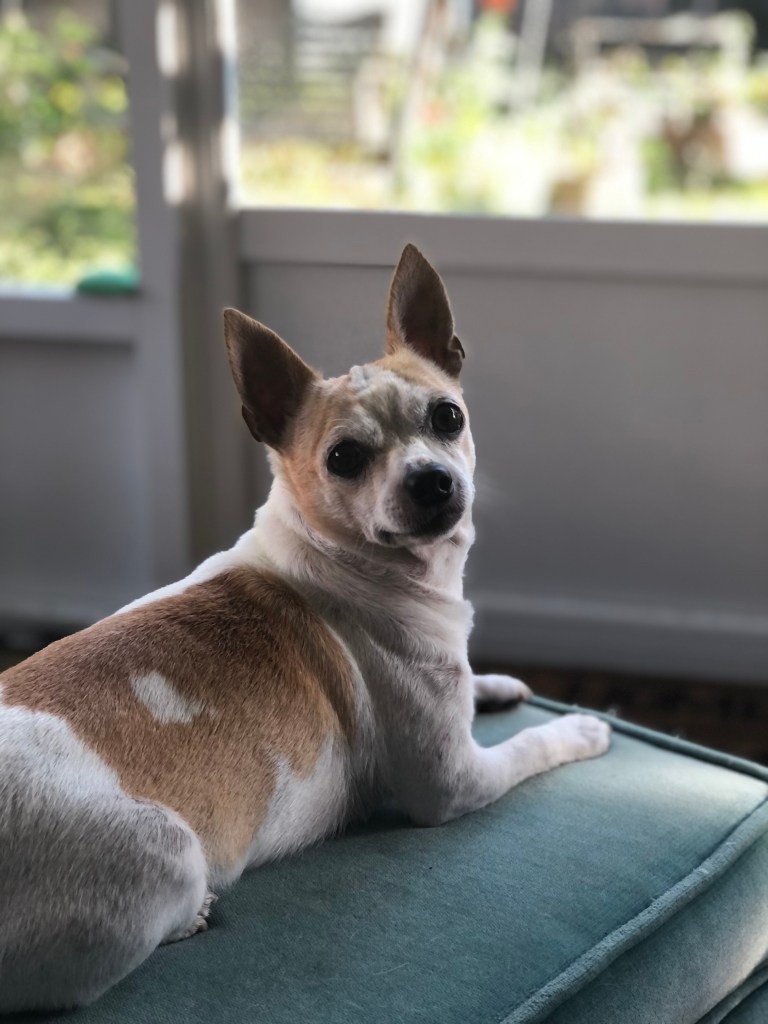
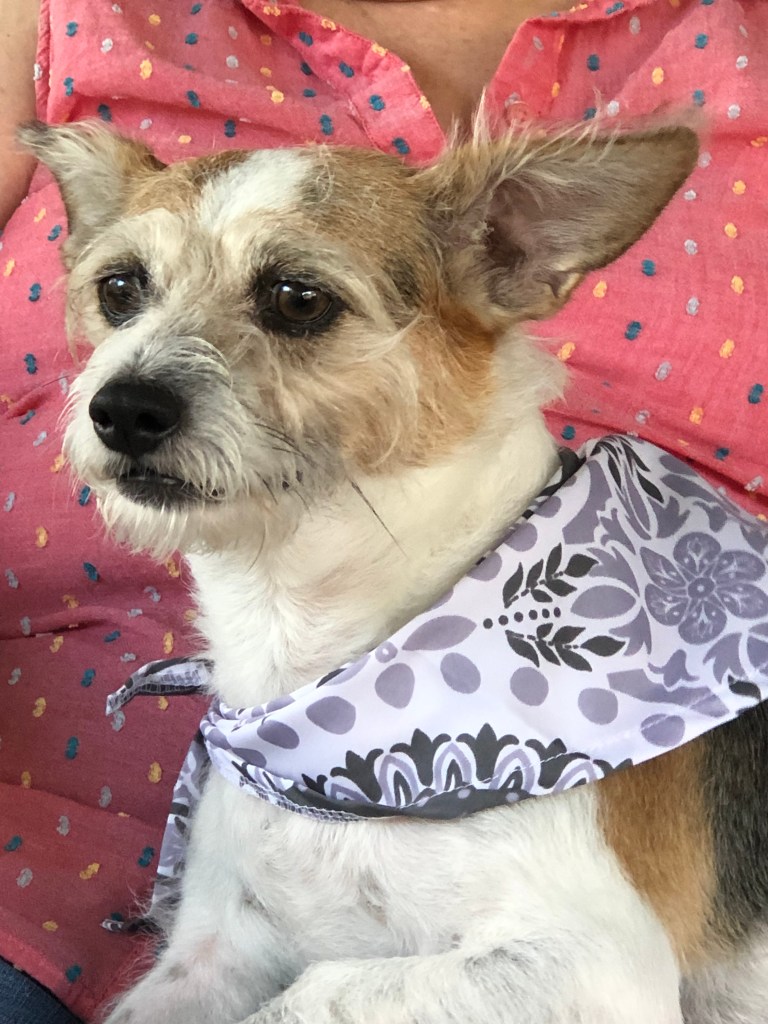
I have two fur babies, Felix an 8 year old Chihuahua and Oreo a 5 year old Jack Russell/Wire Hair Terrier.
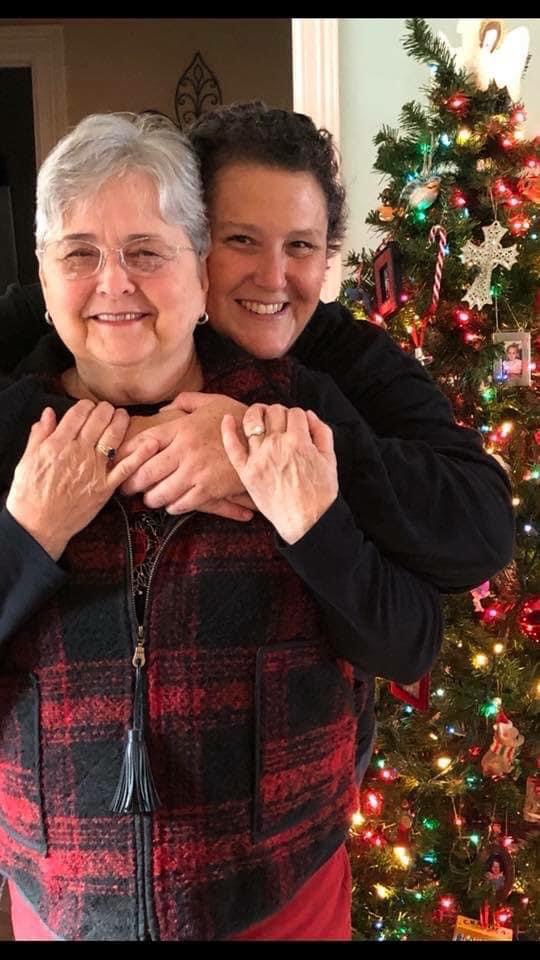
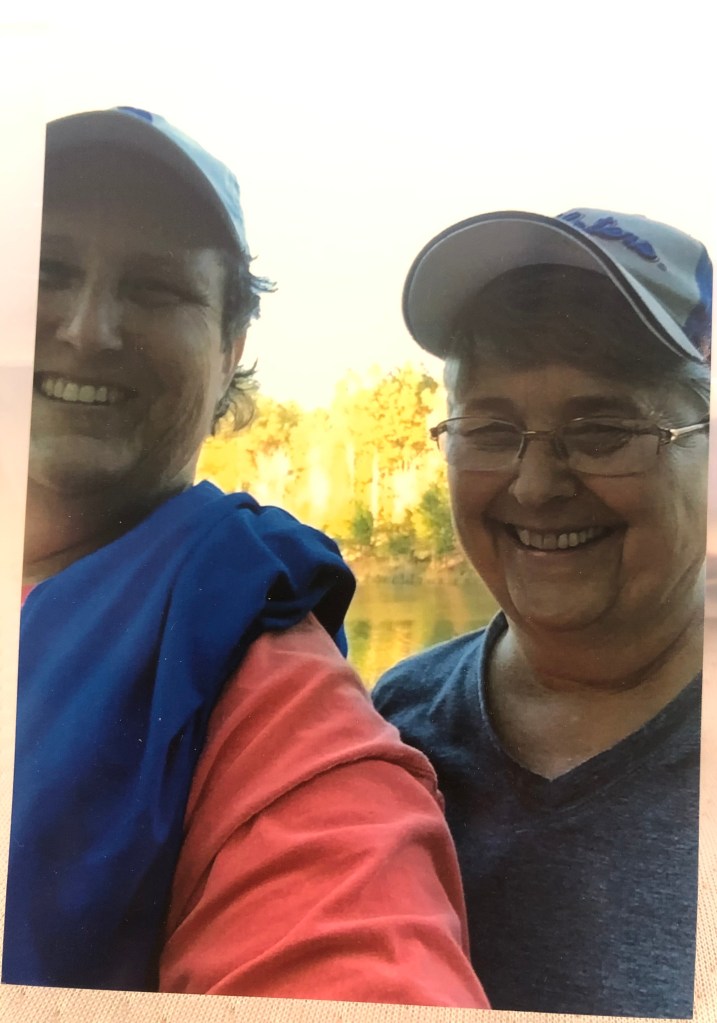
And then there are friends that become family. Besides my work family, I am very blessed to have a bonus mom, Kathie Farmer who I call Honey. She has one of the biggest hearts I’ve ever known. Many of our alumni and current students know Honey and love to visit with her. Many times we would meet at Starbucks or my office to have coffee. She has had many of them to her home over the years. For so many it is like having a grandmother away from home. We love to ride bikes, travel and visit with friends. Needless to say we have binge watched ALOT of TV series these 18 months. Some of our favorites have been Everwood, Royal Pains, Call the Midwife, White Collar, Monk, Good Witch, Yellowstone, and Unforgettable just to name a few.
Honey
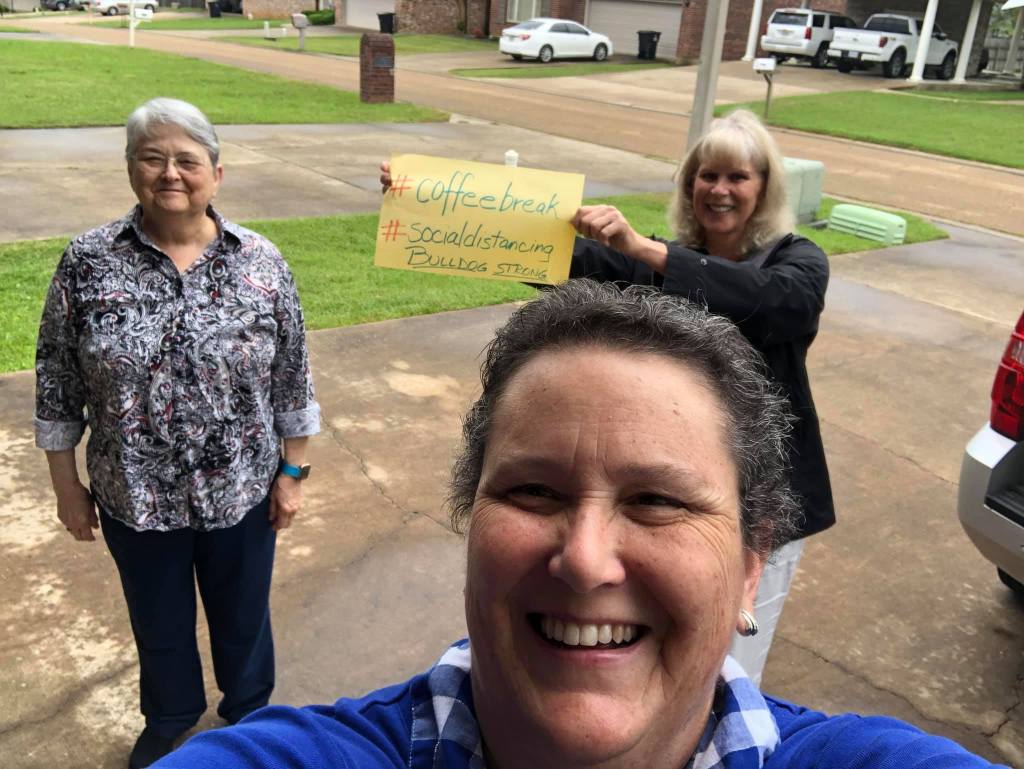
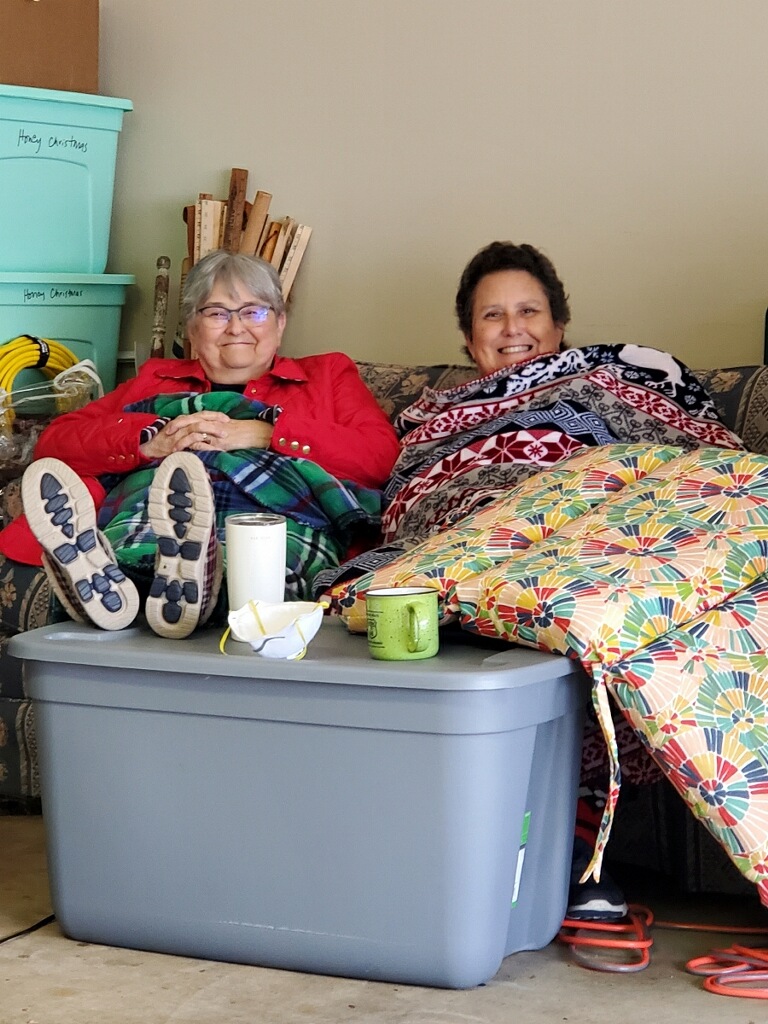
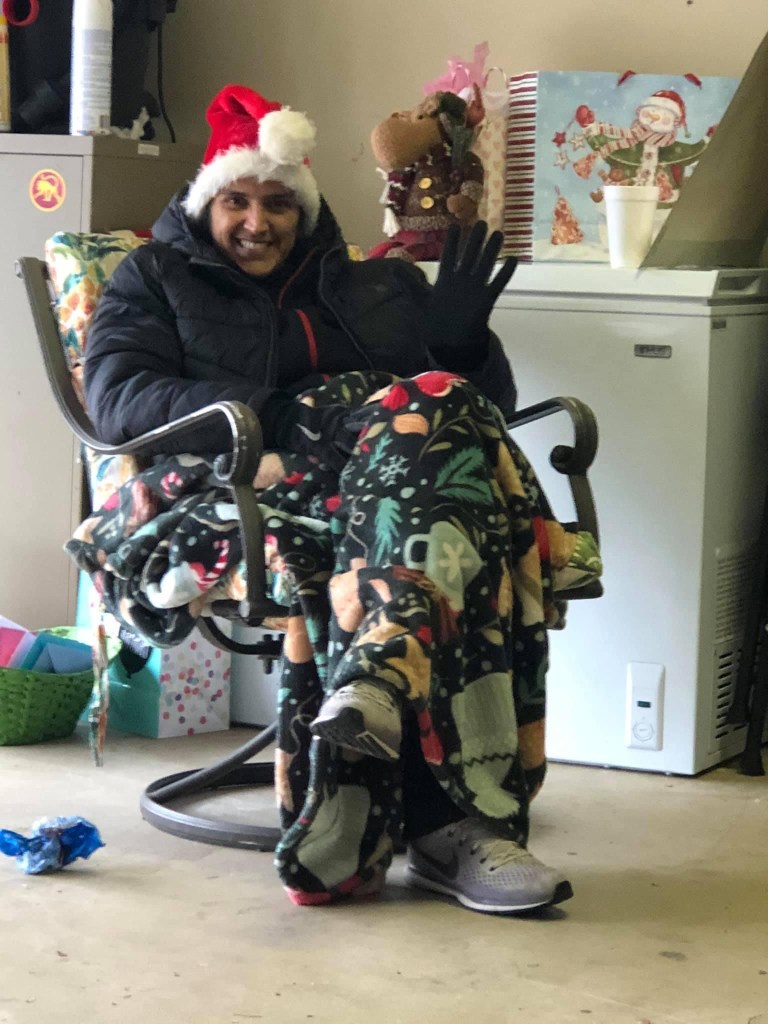
What do you like to do in your spare time to unwind? I love to cook! I love to grill! I don’t necessarily like to bake! I love trying new recipes and feeding people. It is not uncommon for me to try a new recipe and serve it to several guests. I also love to travel, ride my bike (old school with foot brakes), walk my doggies. I love to visit with friends! Fortunately, I am blessed to work with some of my best friends – we enjoy having coffee and visiting outside of work. This was so important during COVID to still be able to visit so we came up with Driveway Coffee – friends and family members would bring their own coffee or tea and we would socially distance on the driveway with fans going and umbrellas up or with the heater and coats on.
Pre-Covid, of course– Honey, Smiley Reeves, Jessica Szymanski and Earlene Jackson
What is your favorite quote? “Life is a measurement of the problems we seek to solve and the people we help along the way” Colossians 3:23 – “Work willingly at whatever you do, as though you were working for the Lord rather than men.”
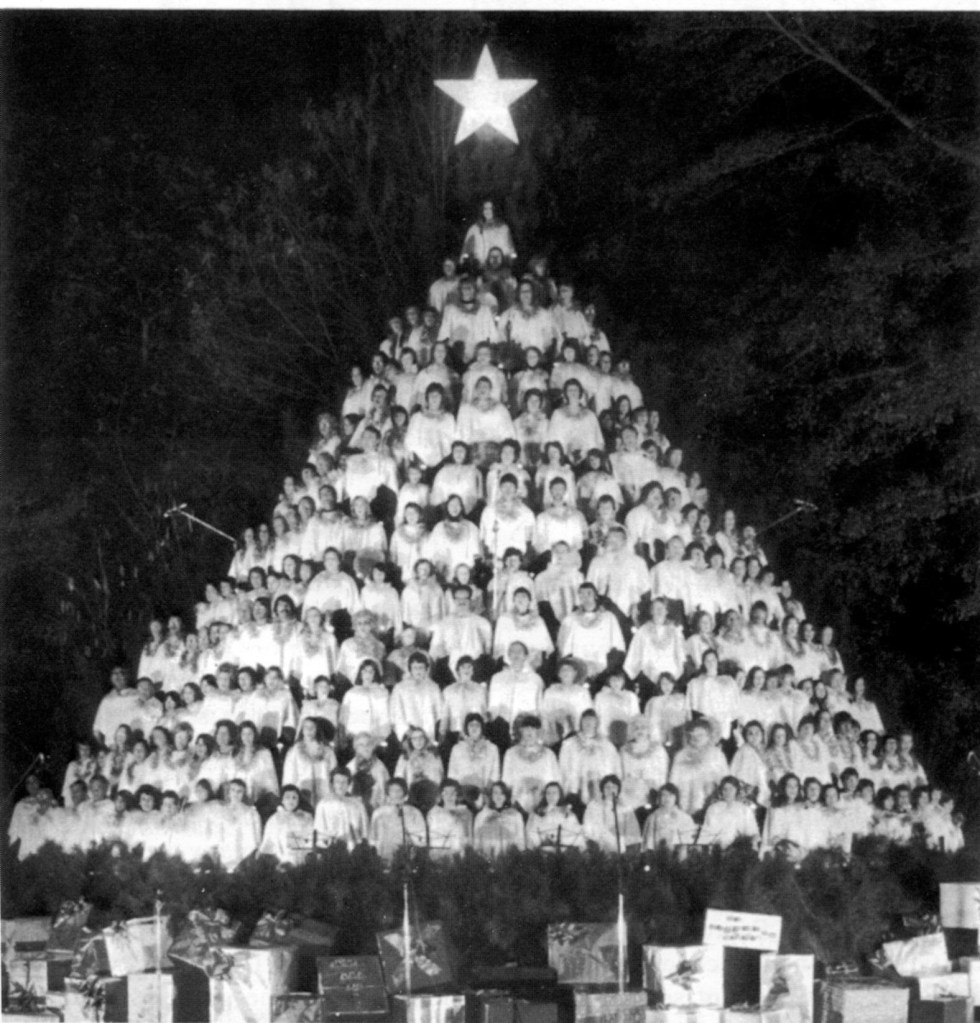
Anything else you would like for us to know. For 4 years I sang on the Temple Baptist Church Singing Christmas Tree.