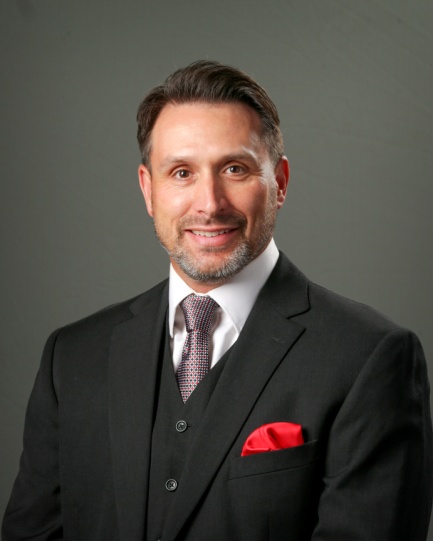

Getting to Know Doc: Q & A with Dr. David Szymanski

David    

1. Where did you grow up and what activities were you involved in?
I grew up in LaGrange, IL (outside Chicago) in a neighborhood with several other boys my age and older. We played outside almost every day. The sports I played in the summer and fall were baseball, basketball, football, and soccer. During the winter months, sports were awesome to play outside in the snow. Downhill skiing, cross-country skiing, and hockey were some of my favorites.

2. What did you want to be when you grew up?
I wanted to be a professional baseball player. I played through college, but unfortunately, never played professionally. I never even imagined being a professor or a department chair. I am sure if you asked my childhood friends, they would not believe what I do now.

3. What was your first job?
My first job was working as a sales associate at a sporting goods store in Hinsdale, IL. I was in charge of greeting customers, assisting customers with all merchandise, and was responsible for collecting inventory of all items for the store. I enjoyed it because I got to see all the new equipment for every sporting activity.

4. Where did you attend undergraduate school and what was your major?
In 1985, I first attended Indiana University for the fall semester before transferring to the College of DuPage in Glen Ellyn, IL where I received my Associates of Arts degree with an emphasis in Commercial Art. I left Indiana University because the Head Baseball Coach punched me in the chest. After junior college, I attended Texas Lutheran University (TLU) in Seguin, TX from 1987-89 and received a Bachelor of Arts degree in Fine Art. In 1992, I went back to TLU to serve as the Assistant Baseball Coach and earned my second Bachelor of Arts degree in Kinesiology in 1993.

David 2

5. Where did you attend graduate school and your activities during that time?
While serving as the Assistant Baseball Coach at TLU, I attended Texas State University in San Marcos, TX and received my Masters of Education degree in Sports Management. The main activity I was involved with was lifting weights.

David 3

6. Where did you get your PhD.?
I went to Auburn University in the fall of 1996 to begin my Ph.D. in Exercise Physiology and served as the Volunteer Assistant Baseball Coach for the 1997 season. After that season, I stopped coaching baseball and focused on my academics and GTA position. However, after training the baseball players for free in the summer of 1998, I was asked to be the Volunteer Assistant Baseball Coach so I could train the Auburn baseball players for the 1998-1999 year. At the end of the season, I was hired as the full-time Baseball Exercise Physiologist. In that position, I designed and implemented all of the resistance training and conditioning programs for the players. I finished my Ph.D. in 2004.

david 4

7. What brought you to Louisiana Tech?
In 2004, I was the Sports Performance Director at Velocity Sports Performance in Broken Arrow, OK. After working 12 hour days, Monday through Friday, 5 hours on Saturday, and not seeing my family very much, I decided to apply for academic positions. One of the colleges that I applied to was Louisiana Tech University for an Assistant Professor position. I was offered the job and moved here in August 2005 after Hurricane Katrina.

8. What are your research interests?
My main research interest is in baseball performance. After reading articles by Dr. Coop DeRenne on weighted implements (bats) to enhance baseball bat swing velocity in 1992, I became interested in this topic due to my personal experiences in playing and coaching baseball. I wanted to look more closely at bat swing velocity and began formulating ideas on how I could research this topic. I also became interested in under and overweighted ball training as Dr. DeRenne demonstrated that balls ± 20% of standard baseball (5 oz) enhanced throwing velocity. As I worked with numerous graduate students at LaTech who were interested in other areas, research in sport science was a general overall theme.

david 5Dr. Coop DeRenne

9. What organizations are you affiliated with?
I have been a member of the National Strength and Conditioning Association (NSCA) since 1992. I am a certified strength and conditioning specialist, a registered strength and conditioning coach emeritus, a Fellow of the NSCA, and was elected to serve on the Board of Directors (BOD) for 2 terms (6 years). While serving on the BOD, I served 1 year as the Vice President of the organization. I have also been a member of the American College of Sports Medicine since 1996.

10. Tell us about your family.
Both of my parents were born in Chicago, IL. My mother, Rose, was a crafter and created handmade ornaments and jewelry out of bread dough and then later, clay. I consider her a sculptor. My father, Norbert, was a musician (percussionist) and worked at a dinner/theater playhouse where he provided the percussions for numerous different musicals. I grew up going to the theater and enjoyed it very much. I have a younger brother, Steven, and a younger sister, Anna. Steven and his wife, Colleen, live in Palatine, IL and he has his undergraduate degree (BA) in business from Northern Illinois University and his master’s degree in business (MBA) from the University of Chicago. Anna and her husband, Andy, live in LaGrange, IL and have 2 children, Colin (16 yr) and Emma (9 yr). Anna received her undergraduate degree (BA) in Journalism from Ohio University and her master’s degree in marketing (MBA) from Loyola University Chicago.

11. What do you like to do in your spare time to unwind?
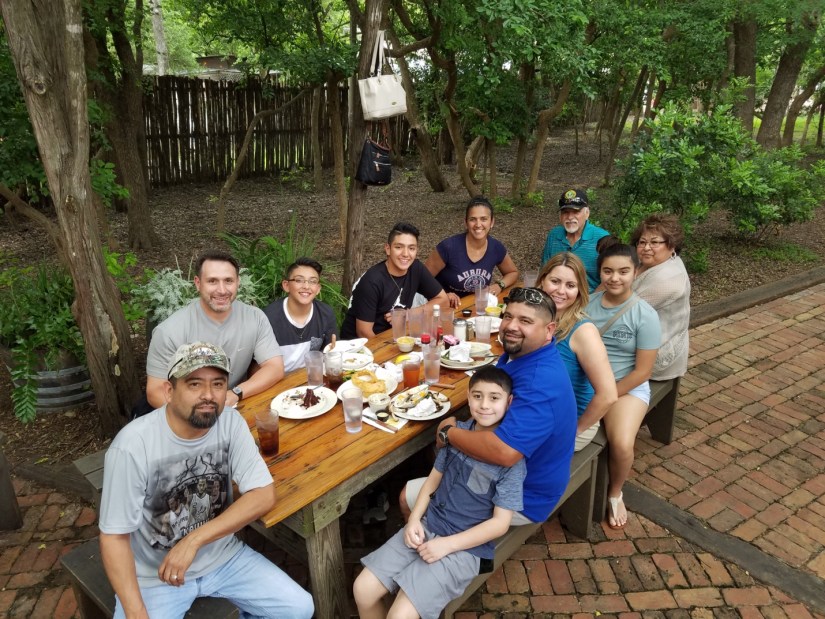
I love spending time with my wife Jessica and our 2 boys, Dawson (14 yr) and Justin (12 yr), in my spare time. Being outside with them (especially in our batting cage or on the baseball field) just makes me very happy. I love that they want to put in the extra time to practice and that I can be a part of their athletic development. My wife and I also love traveling to see family in Chicago, IL and Seguin, TX as well as taking the boys with us when we travel to conferences or go on vacation. It is very special to experience a new place with them for the first time.

david 9david 10

Another thing I really enjoy doing in my spare time is art work. With my first degree being in fine art, I try to either draw or paint a few pieces throughout the year. Recently, I completed two paintings of our boys hitting. Drawing and painting take me to another world where time does not exist. I highly recommend that people find something that allows them to feel the same way. It is very relaxing.

david 11

12. Why did you want to be department chair?
I’ve had conversations in the past about being a department chair at some point in my life, but I did not know when it might happen. I’ve held leadership positions in the past and enjoyed those roles because of the people I was working with at the time and the ability to implement improvements. When this opportunity presented itself, I felt as though it was the right time to accept the Interim Department Chair position. After serving in that capacity for a year, I was offered the full-time position and as of February 2018, became the Department Chair. My reason for wanting to continue serving in this position is because I’m looking forward to furthering our growth and success in this department and working with our faculty to see this happen.

13. What is your vision for the Department of Kinesiology?
My overall vision for the Department of Kinesiology is for it to be an outstanding department that has a strong identity on campus (within the College of Education and at Louisiana Tech) as well as off campus for teaching, research, and service. I want us to have excellent undergraduate and graduate academic programs that educate our students and prepare them for life after Louisiana Tech. To me, that means preparing them for graduate programs or jobs. I want our faculty to be recognized for the outstanding work they do with our students, the department, college, university, and the community. This will raise awareness of the Department of Kinesiology around the state of Louisiana and hopefully beyond. I want to actively recruit students for both our undergraduate and graduate programs so they can be informed of all that we have to offer in our department. I want to create partnerships with outside organizations to improve service, teaching, research, and funding opportunities.

14. What is your favorite quote?
Quoting movies in class is something I do on a regular basis. As I get older, students do not always know what movie quote I am saying, but I enjoy providing quotes or analogies because I believe it makes class more interesting while at the same time providing another way of explaining a challenging exercise physiology topic, for example. Some may even wonder if I do have a favorite quote. I can honestly say that I don’t think about favorites all that often, but if I were to pick one quote that stands out in my head it would be from the movie “Gladiator” with Russell Crowe. “What we do in life echoes in eternity.”

david 12

15. Anything else you would like for us to know?
When I first came to Ruston, LA in 2005, I lived in my office for 4 months until we purchased a house in December. I was away from my family and worked 12-14 hour days. It was an interesting way to start my professional academic career at LaTech.

I haven’t paid for a haircut in 36 years. I figure that I have saved anywhere from $6,000 to $10,000. You might ask yourself “Why would you cut your own hair?” The answer is simple. When I was 15 years old, I didn’t want to pay for a haircut anymore because I felt I could do it myself. Needless to say, I did not do a good job the first time because I did not use the guards that come with electric shears. Once I learned how to use the guards properly, I did a much better job and was happy with the results. When I was in college, I even made some extra money because I cut some of my teammate’s hair on a regular basis. As of today, I still cut my own hair, but I now have 2 new clients. Every 2 weeks I cut our boy’s hair because they want a “cool fade”. I enjoy doing it because I get to spend more time with them and there is something artistic and satisfying about giving a good haircut.

Because of my art background, I also have a great appreciation for architecture and interior design. Often, when I step into a room, I find myself redesigning the entire space in my own head to make it more functional and appealing to the eye. I have recently designed a contemporary home that I hope to build some day.

How A Gem-of-a-Program was formed – creator Sybil Leachman

A good many things have changed since 1978. Gasoline cost less than $0.65 per gallon, the average income was $17,000 per year and the average cost for a house was $54,800.  Olivia Newton John and John Travolta were hot at the box office in the movie Grease and disco music and dancing was in with the Bee Gees and the movie Saturday Night Fever.  Happy Days and Little House on the Prairie were popular shows on television.

Things were happening at Louisiana Tech that would have a substantial impact many years later. A young grad student named Les Guice received his master’s degree in Civil Engineering and after graduating became an assistant professor in Tech’s department of Civil Engineering.  The Lady Techsters led by Sonja Hogg went 34-4 in the 1978-79 season encountering the Volunteers of Tennessee for the first time in 1978. They earned their first ever national ranking that year. The Bulldogs football team won the Independence Bowl beating East Carolina. The Department of Kinesiology was known as the Department of Health and Physical Education and the Senior Adult Fitness Program was known as the “Come Alive at Sixty-Five” Program.  The Come Alive at Sixty-Five Program began that year -1978.

Some things never change though. “Aging is inevitable, and inside each one of us dwells much the same person we will always be – persons who need to feel loved, needed and useful.  It therefore, behooves each of us to be vitally concerned with the opportunities, policies and legislation involving the aged – for the senior adults of tomorrow- are the rest of us today.”  This quote by Sybil Leachman, the founder and first director of the Come Alive at Sixty-Five Program, was written almost 40 years ago.

As we look forward to the 40th anniversary of one of the most successful fitness programs in the United States, take a step back in time with us as we learn a little about the beginnings of the program and the history that has gotten us to today.

The following is taken from an article written by Sybil after the program creation:

“In 1974, the Louisiana legislature passed a law decreeing that any individual 65 or older could attend tuition free, any state supported educational institution. This is a unique provision as only a very few state to date have provided a similar opportunity for their aged.

As a result of this legislation, at Louisiana Tech University, in the fall of 1978, a “Come Alive at Sixty-Five” program was initiated with the purpose of revitalizing the senior adult who was lonely or simply bored with a lifestyle that was largely devoid of meaning. In the words of one senior citizen, “I dreaded each week and the week-ends even more.”

It is hoped that this program can gradually evolve into one whereby not only will the senior adult be able to involve himself or herself as a student, but can continue to broaden his or her horizons to the extent that his or her hours of leisure can become hours of valuable service to others in various community capacities.”

The article continues, “The response to this program has been slow in numbers, but tremendous in enthusiasm. As this enthusiasm spread to friends, the numbers are expected to grow by leaps and bounds.  The program is presently directed toward involving the senior adult in an academic program of study of his or her own choosing.  The individual may choose to pursue a degree or in the case of most, choose random courses of special interest.  A class may be taken for college credit or the person may choose to audit it.  At any rate, the individual finds him or herself at age 70 or 80, classified as a student, seated in class beside a jean clad coed.  Both ages think it is a super idea.

The Physical Education Department has developed a special class for the over 65 group, entitled, “Fitness for the Senior Adult”. It was initiated as an experimental class to determine what specific sociological, psychological, and physiological benefits were to be derived from a class of this type, and what activities the older adult could safely participate in to achieve desirable outcomes.

In this special class, taught in the Fall of 1978, an effort was made to stimulate all the body systems by exercises which were executed in chairs, behind chairs, and on the floor. Joints and muscles were special targets each day as the exercise period began.  The number of repetitions per exercise was gradually increased throughout the course.  Isotonic and isometric exercises were utilized as a major factor in achieving desirable physiological improvements.

Everyone was encouraged to exercise until the body began to tire—no more and no less. All were constantly reminded that exercise is not competitive, and that each person was to be concerned with satisfying the needs of their own individual body, which may be very different from the needs of others in the class.

Rhythm balls were used with music and proved to be an added dimension to the exercise portion of the class, giving variety as well as fun. Walking was also a vital part of the planned activity and all were encouraged to gradually increase the distance and the speed in which that distance was covered.  One 75 year old lady set the pace for walking and proved to be a challenge to others in the class.

Various sports activities were utilized for physiological and sociological betterment. A great deal of enthusiasm was displayed by all for each activity introduced.

Swimming was a class favorite, but the cold weather forced a hasty return to the gymnasium after only two weeks. A few class members chose not to swim, but others were reluctant to return inside.  Several felt their arthritis was benefited by the warm water.  One participant learned to float and one healthy 70 year old did jack knives off the diving board.  Several used their student identification cards and swam on their own in the late afternoons.

On several occasions, campus field trips substituted for the walking portion of the class. Visits were made to the observation tower, art gallery, track, nature trail, and other areas of special interest.  These were instigated as a means of exposing the class members to the total campus facility and to additional opportunities that were available to them.  They also had an opportunity to observe the many changes evident on the university campus today, and to marvel at the contrast between the campus and the student of today and yesteryear.

A portion of class time was devoted to lecture and discussion on various health topics. Diet, nutrition, and exercise for the aged proved a basis for many learning experiences together.  There were several verbal commitments toward need changes in daily diet and exercise habits.

Class members were ecstatic in evaluation their experiences. Most were surprised at the range of motion that was still theirs and all were interested in pursuing the limit of this range.  Many expressed what they referred to as “a sense of well-being,” feeling they possessed more energy than before they began to exercise.  Others commented on the social aspect of companionship.  It was noted that most of them lived alone.  The competitive aspect of games was a factor they had not recently experienced and it proved to be a source of real fun and provided much self-satisfaction.  All class members indicated a desire to repeat the class during the spring quarter and many have encouraged friends to enroll.”

Over the last 40 years, the program has only had four directors, Sybil Leachman, Gail Clark, Rhonda Boyd, and Lacey Deal. There is a rich and unique connection between the directors and several of the instructors in the program. Under Mrs. Leachman’s leadership, Smiley Reeves, a current Department of Kinesiology faculty member and program instructor completed her practicum. Under Gail Clark’s leadership, I (Rhonda Boyd) served as a practicum student and then later became a faculty instructor and director of the program.  Under me (Rhonda Boyd) Lacey Deal served as a teaching assistant while she was in graduate school. Lacey later became an instructor in the program and now serves as the program director.

What a privilege it was for me to have had an opportunity to recently sit down with Sybil and reminisce about the program. At 87, she is still a lovely lady with a lively and vibrant personality.  Sybil never thought she would teach at Louisiana Tech University much less start a program that would have the longevity this one has had.  While teaching and coaching softball at Downsville High School, Sybil brought her team to a rally being held at Tech.  The Women’s Department Chair at the time, Edna Yarbrough, encouraged Sybil to get her master’s degree in the new program at Northwestern State University and then come back and teach at Tech.  She did just that.  After several years of teaching activity and lecture classes, Sybil was given the task by Dr. Jay Akers, the Department Chair at the time, of starting an exercise class for seniors.

I asked Sybil how did she know what to do and her response was, “I had no idea! I researched books and there was nothing!” Not knowing what the activity levels of the participants would be, what limitations they may have or what they could or could not do, she had to use trial and error. There was no internet, no Google to assist in this effort. She decided to use exercises that could be done sitting and standing using a folding chair to provide stability.  Sybil said, “There were few participants, “students” at first, but word quickly spread around the community and the program grew from one class to eventually 4 chair classes and 3 water classes.  The water classes were taught at the Ruston City Pool at the time”.

I asked Sybil “When you began the program in 1978, did you ever imagined that it would be a community and university success and still be around 40 years later?” She quickly responded, “No, I would not have believed it.”  We talked about how many thousands of older people have come through the program including two generations in several families.  We talked about how many thousands of kinesiology students have done their practicums, giving them the hands-on experience they need which helps set them apart when they apply to physical therapy, occupational therapy, and physician assistant programs.  We even talked about how it was a career changer for me when I did my practicum in the program 31 years ago.

The “chair” land based exercise classes still remain as do the water classes. An “After Five Fitness” section was also added to the class schedule about 12 years ago.  Through the years there have been dance and bowling classes, and even satellite classes taught at the Arcadia and Ringgold senior centers.  The Winter Games held in February and Fish Fry in April have become annual events.

Even though there have been many changes through the years with directors, instructors, members, students, classes, and special events, one thing remains the same, the quality of the program. The program is one of the longest running and most successful programs in the country.  Smiley and I have done several national presentations about the program through the years.  Instructors from other universities, rec centers, and senior centers are constantly amazed at the level of activities we teach. Even though we cannot control the quantity of years our members live, we strive to impact the quality of their years through exercise and socialization.

The members and students alike still enjoy the interaction of “playing” together. The community impact is phenomenal when you think that weekly hundreds of older individuals come to the Tech campus to work out with and next to college students. Even on non-class days, it is not uncommon to see an older adult on a treadmill, using a weight machine, or swimming in a lane in the pool with a college student on the adjacent machine or lane.  Special relationships are made that carry over to Tech sporting events and even into former student’s careers as many have returned to Ruston to practice as physical and occupational therapists, physician assistants, and personal trainers.

What a privilege it is for me to be a part of this special program, first as a student, then as a director, and now as an instructor. What a joy it was to sit down with Sybil and relive some of the special memories of the program.  What a legacy, what an impact this program and the Department of Kinesiology makes in the lives of so many young and older individuals.  I cannot wait to see what the next 40 years holds for this special gem of a program.


Are You A Renter or An Owner?

Interesting thought – Do you rent or do you own? We understand this from perhaps a housing, equipment, or vehicle perspective, but what about in our personal lives?  John Ryan is president of the Center for Creative Leadership previously serving as chancellor of the State University of New York and superintendent of the U.S. Naval Academy in Annapolis, MD.  He retired as a vice-admiral following a 35 year career as a pilot with the Navy.  In an article written for Forbes, entitled “Owners or Renters:  Which Is Your Workforce?” he tells a story that took place early in his career as a U.S. Navy pilot.  He received an unexpected opportunity, the privilege to fly a $100 million, state-of-the-art airplane and lead a 12 person crew.  He writes, “As a brand new lieutenant, I was surprised but delighted by the opportunity.  What had I done to deserve it?”

He goes on to write, “‘It’s because you’re an owner, not a renter,’ my hard-charging commanding officer said. Every organization, even the U.S. Navy, had both types, he explained.  Owners accept full responsibility even when it is not formally assigned, believe deeply in their mission, collaborate with others, take initiative and hold co-workers accountable to the same high standard.  Renters, meanwhile, approach their work with an ‘it’s just a job’ mentality, tend to make statements like ‘that’s not my problem’ and point the finger at others when things go wrong.  ‘Stack the deck with owners!’ my commanding officer proclaimed.  And also work hard, he cautioned, at remaining an owner.  It was a label we needed to earn every day.  His advice stays with me 40 years later, and I’ve shared it recently with the women and men in my organization.  I believe that all workers should strive to see themselves as owners, no matter where they are in an organization.  Give of yourself as if you owned the company.”

Several years ago the faculty in the Department of Kinesiology made a commitment to each other and to our students to “raise the bar” on professionalism encompassing all areas including teaching, service learning opportunities, research, our presence within the university and the community.  This did not only apply to faculty, but “raising the bar” on the expectations we have for our students – holding them to a higher standard as well.

Freshmen need to learn how to become owners and not just renters of their time here at Louisiana Tech University. In FYE, the First Year Experience class that all incoming freshmen are required to take, the Kinesiology instructors spend time allowing students to get to know each other, after all they will be spending the next 3-4 years in classes together, many going on to professional programs together such as physical and occupational therapy, physician assistant, or graduate school.  They are given opportunities to make a connection with each other, many of which will become lifelong friendships.  In this class they are given the tools and learn the resources available to them to allow them to be successful in their tenure here at Tech.  This enables them to become owners, not just renters of their time here. 

Owners have a vested interest, a stake in the outcome so they work hard to accomplish goals and strive for success. They make life happen! According to Ryan, owners model passion, accountability, and collaboration.  Renters rely on others to take care of things for them, they sit back and watch life happen.  Renters drain morale and creativity.  As a Kinesiology major, how do you become an owner?  (This applies to all students regardless of major.)

  • Realize this is not just school. You are here to develop your passion by becoming the best professional you can be. Each class you take is preparing you to be the best you can be. Make the most of each and everything you learn. You never know when information you think is not pertinent actually is something you use down the road.
  • Go to class, but don’t just sit there. Be involved. Prepare before class by reading the material that will be discussed. Ask questions. Make sure your professors know you are interested.
  • Get the most out of your practicums in the Senior Adult Fitness Program, out of your student teaching, or your internship. Make connections. Remember, people regardless of their age don’t care how much you know until they know how much you care.
  • Join and become actively involved in your professional student organizations. Run for office or class representative. Go to and assist with events that the organizations host or assist with. In Kinesiology we have ESPE (Exercise Science and Physical Education majors club) and PEK (Phi Epsilon Kappa honor fraternity). ESPE host an annual 5K – The Mustache Dash, and participates in The Big Event – a community service event. This year ESPE will be assisting with events sponsored by the Children’s Coalition of NE Louisiana.
  • Attend as many of the seminars hosted or sanctioned by Kinesiology. Learn as much information as you possibly can about a variety of topics. You may even change your career path just because you didn’t know of some areas that exist.
  • Get to know your professors and instructors in your major. Make sure you are a positive presence that they can call you by name when they see you out of class.
  • Get to know your advisor. They are your go-to person while here at Tech.
  • Volunteer, but don’t over extend yourself.
  • Get involved in the community.
  • Make friends and network, network, network.

In closing, let me tell you a story about a young man who had a passion – a love of coaching basketball. This young man did a very risky thing.  He quit his job, a great job with Eli Lilly.  He went to work at Butler University as an unpaid assistant basketball coach.  His superiors were impressed and eventually he became a paid assistant coach and after seven years he became the head coach.  At age 33, he took Butler University, an unrated team to the NCAA Men’s National Championship game in 2010, a first in school history. The next year he once again led his team to the Final Four.  This young man inspired others to become owners because he himself was a committed owner.  Who is this man?  He is the current coach of the Boston Celtics, Brad Stevens.  His own college coach describes him as an “extraordinarily passionate and hard-working man, one of the most selfless and team-oriented players he’s ever seen”.

So take a moment to reflect on where you are right now, this moment. Are you a renter or are you an owner?  If you are an owner, keep on keeping on. Keep the passion and keep motivating others. If you are a renter, don’t let college life pass you by.  These next 3-4 years will be some of the most crucial years of your life, but also some of the most memorable.  Own them. Own your education.  Own your passion.

Time Out!

Time Out for Tech happens this Saturday.  This is a time for prospective students and their families to visit campus and check out what college is all about:  academics, activities and athletics.  Students and their families will tour the campus, visit academic departments and see the Bulldogs take on the University of Alabama.  On their website, Admissions says this is a “once-in-a-lifetime Tech experience”.  We truly hope this will be one of those experiences as students and their families see the beautiful campus, meet our amazing students and faculty, hear about our outstanding academic programs and see our loyal fans pack the Joe.

The Organizational Browse will be in the Quad  from 12-2 with informational booths set up to introduce prospective students to the many organizations on campus.   Kinesiology will be there with members of ESPE and PEK.  ESPE is the Kinesiology major’s student organization – Exercise and Physical Education.  PEK is the Kinesiology honor fraternity – Phi Epsilon Kappa.  Our students will be doing various fitness tests such as % body fat, vertical high jump and hand grip strength.

Prospective students contemplating Kinesiology as a major and their families will have an opportunity to visit Memorial Gym for a tour and presentation conducted by a faculty member, about our programs and activities. Since blog readers have heard about our social media and the history of Memorial Gym we thought you might enjoy insight as to what prospective students will see during their visit here Saturday.  Check out the presentation they will be seeing. See why Kinesiology is one of the Tech’s fastest growing programs!

Click here:   Undergraduate KINE Programs Presentation 9-26-17 short version

Stay tuned for Dr. Szymanski’s vlog tomorrow. He will have a motivational message for  the prospective students and their families.

Pictures from Spring Time Out for Tech


Dr. Les Guice checking his hand grip strength by Ravin Naquin


Bryanna Huntley, Brianna Knaus, and Ravin Naquin


For more information and to view Saturday’s schedule of events  visit the Admissions website at http://admissions.latech.edu/visit/toft.php

This Old House

This slideshow requires JavaScript.

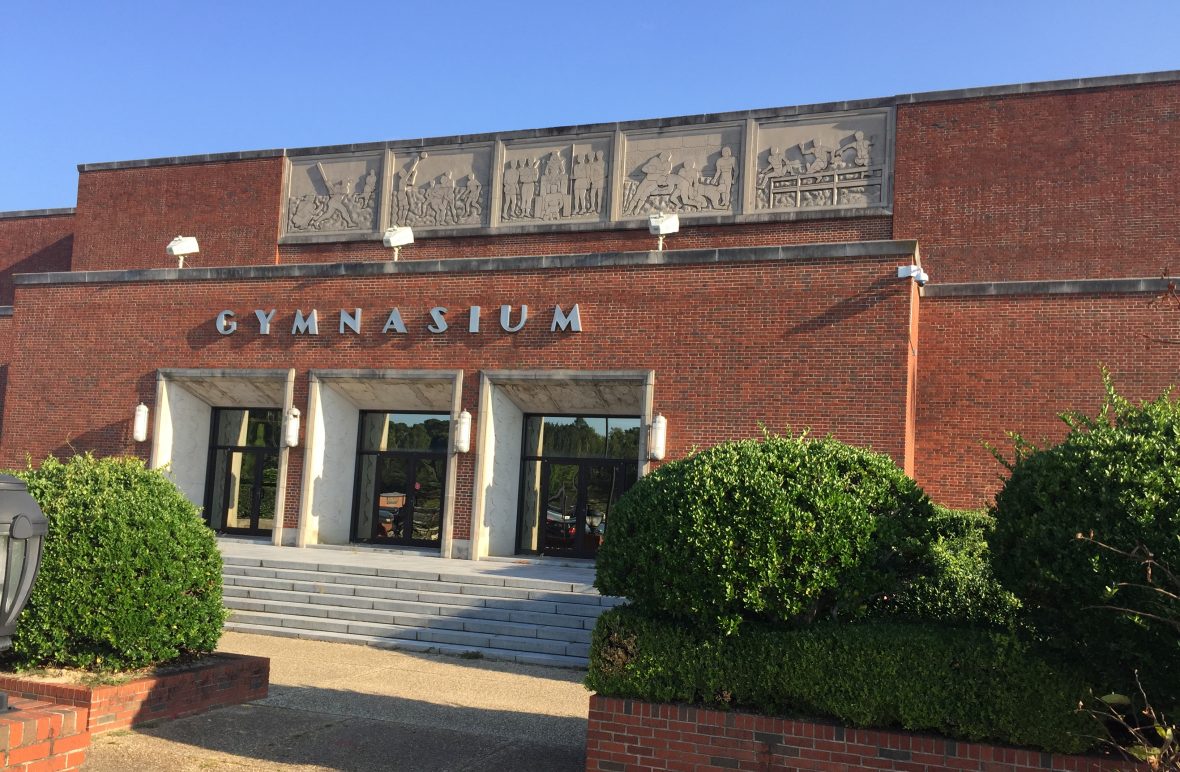
Memorial Gym, with its terrazzo floors and tiled walls, built in 1952 in Art Deco style, is rich in history and tradition.  Beautiful concrete reliefs of magnolias and the bulldog are carved above the front doors of the gym.  A magnificent carved concrete relief mural of baseball players, basketball players, football players, and track athletes adorns the front top of the building facing the newly constructed Mayfield Avenue Parking Lot.  The gym was named in memory and honor of the Louisiana Tech students who paid the ultimate sacrifice during WW II.  A bronze plaque listing the 142 former student’s names that was given by the class of June 1944 is hanging in the gym.

Memorial Gym was built as the home of the Louisiana Tech Bulldogs men’s basketball team.  Originally, the men’s team lived on the upper west side of the gym and the visiting opponents would bunk on the upper east side of the gym.  In 1974, the gym became home to newly formed Lady Techster’s basketball team.  They played here until the 1981-82 season.

The first game in Lady Techster program history was against Southeastern Louisiana on January 7, 1975.  Unfortunately, the Lady’s lost 55-59.  However, the second home game was played on January 24, 1975 and a different outcome occurred. The Lady Techsters defeated LSU 97-83.  That was the first victory in women’s basketball history for Louisiana Tech.

As the popularity of the women’s basketball team increased, so did the crowds.  During the 1979-80 season more than 5,000 fans packed Memorial Gym to see them play.  During that season attendances of 6,220 against UCLA and 6,314 against Stephen F. Austin were recorded.  After that season of record crowds, Louisiana Tech was ordered by the Louisiana Fire Marshal to not allow more than 5,200 fans into Memorial Gym ever again.  The fire marshal said that if compliance was not upheld, he would personally count the fans himself and not let more than 4,800 enter the gym.  President F. Jay Taylor took care of the seating limitation by having the Thomas Assembly Center, which seats 8,098, built the following year. 

The final game played in Memorial Gym was on March 20, 1982.  The Lady Techster’s defeated Kentucky 82-60.  The Lady Techster’s played only 8 seasons in this grand old building with a phenomenal record of 84 wins and only 6 losses at home.  This makes for a very special ranking for Memorial Gym.  The Lady Techster’s 93.3% winning percentage at Memorial Gym ranks third amongst best all-time winning facility percentages.  Tennessee at Thompson-Boling Arena is at 94.2% and Connecticut at Gampel Pavilion is at 93.7%.

Not only was Memorial Gym a basketball facility, but it hosted many of the concerts that were held at Louisiana Tech from Brenda Lee and the Lettermen in the 1960’s to Mickey Gilley and Johnny Lee in the 1980’s.  It also served as the place where class registrations took place before it was moved to the Student Center or the Tonk as it is affectionately known.  Additionally, it served for many years as home to the international and national champion Louisiana Tech Powerlifting Team.

Renovations were done to Memorial Gym in the 1980’s, converting the facility into updated classrooms and faculty offices for the then Department of Health and Physical Education (now the Department of Kinesiology).  During the renovations, pallets of water and food rations were found underneath the building as it served as a designated bomb shelter in Ruston during the Cuban Missile crisis of 1962. 

In 2012, renovations were made once again to the gym, including a new floor, new backboards, basketball rims, wall padding, and repairs made to the old-school bleachers.  The renovations were completed by Sports Floor, Inc. of Memphis, Tennessee.  This renovation project was done to honor Coach Scotty Robertson and serves as an alternate practice facility for both men’s and women’s basketball as well as women’s volleyball.  The gym now serves primarily as instructional space for the Department of Kinesiology.

The newly renovated basketball court was officially dedicated and named the Robert “Scotty” Robertson Memorial Gym on October 20, 2012.  Coach Robertson led the Bulldogs from 1964-1974 with a record of 161-86.  It was during this time that Louisiana Tech went to its first ever NCAA Tournament.  He led the Bulldogs to 3 Gulf States Conference championships, achieved the #1 national ranking in the college division, and played in 2 college-division NCAA postseason tournaments.

Memorial Gym continues to evolve as the Department of Kinesiology continues to grow.  The student numbers for Fall quarter 2017 are quite impressive: 503 undergraduate students, 24 graduate students, and 254 Senior Adult Fitness students.  Memorial Gym has 4 Smart classrooms equipped with Promethean Boards, projectors, and screens.  Two of the classrooms have colorful student-friendly up-to-date table and chair configurations purchased from Hon Furniture Company.  It also has a student computer lab.

Memorial Gym has 3 Human Performance Laboratories – a Motor Learning Lab, an Applied Physiology Lab, and the Sport and Movement Science Lab.  The Labs will be featured in future blogs, but interested individuals should visit www.latechsportscience.org to learn more.

The bottom floor of Memorial Gym houses not only the Sport and Movement Science Lab, but also a Dance Studio and a Fitness Room for faculty workout classes and student activity classes complete with weight machines, state of the art treadmills, upright and recumbent bikes, and elliptical machines.

The Memorial Gym lobby has been converted into a student lounge.  New paint and bright and colorful murals of every type of activity you can think of adorn the walls.  The 12 tenets of Tech are also incorporated into the design: Confidence, Excellence, Commitment, Knowledge, Integrity, Respect, Leadership, Loyalty, Enthusiasm, Caring, Hope, and Pride.   Two large glass cases hold antique relics from past activity classes taught in this facility.  There is a 3 phase plan for this area that you will learn more about in Dr. David Szymanski’s weekly vlog.

Currently, Memorial Gym houses 10 faculty members and 7 graduate teaching assistants.  This old house, Scotty Robertson Memorial Gym, that we call home is rich in history and tradition, but continues to evolve into a facility of excellence for all who enter its doors. If you have not been back recently to tour Memorial Gym, we welcome visitors to see all that has been done.

Strange Name?

Welcome to the new Department of Kinesiology’s blog, The Exponential Factor.  Strange name?  Not really!  In the realm of social media a post literally can impact thousands of people within a few hours, days and weeks.  Last week, our interim department chair, Dr. David Szymanski did a vlog (a blog in video form) for Facebook to welcome our students back for Fall quarter.  In 5 days over 2700 people have viewed the video and close to 6500 have been reached.  That’s the beauty of social media – information spreading exponentially because one person impacts another and they impact another and so on. And such is the nature of our department.

Students choose Kinesiology as a major because they want to help people.  They choose Kinesiology because they want to teach, coach, become athletic trainers, personal trainers, strength and conditioning coaches, sport psychologists, physical therapists, occupational therapists, physician assistants, chiropractors, and physicians…just to name a few.  We are in the helping profession. We teach, mentor and train students to be the best they can be in their chosen careers.  We guide them in finding their passion.

Exponentially speaking, faculty impact students, students impact faculty, both impact their communities and the individuals they will be working with for years to come whether as children in physical education classes and/or team sports, athletes in rehab, individuals seeking a healthier lifestyle, or as patients. “Just as ripples spread out when a single pebble is dropped into water, the actions of individuals can have far-reaching effects.”– Dalai Lama

We are excited as the new school year begins!  The Department of Kinesiology is one of the fastest growing department on campus second only to the College of Engineering.  New and progressive things are happening in this old gym we call home.  Be sure to check out the Kinesiology blog and Dr. Szymanski’s vlog weekly to stay abreast of all the amazing, awesome and creative happenings in Scotty Robertson Memorial  Gymnasium.

https://www.facebook.com/louisianatechkinesiology/