In 2014, I graduated from Louisiana Tech University, earning a Bachelor of Science in Kinesiology and Health Promotion. Building on this foundation, I pursued a Master of Science in Health Education and Promotion from Northwestern State University in 2017. My career began as an exercise physiologist in various hospital settings. Subsequently, I transitioned to a pivotal role within a major health insurance company where I specialized in consulting cardiac patients. In 2019, I underwent internal health coach training at the same esteemed insurance company, facilitating my transition to a role in case management as a dedicated health coach.
Career Potential as a Health Coach
Although the importance of preventive health measures was recognized as far back as the mid-1950s, there has been a recent surge in corporate focus on this specialty. This heightened attention is driven by the excessive costs associated with chronic disease management. Research has demonstrated that the involvement of qualified health coaches results in improved health outcomes and a substantial reduction in medical expenses.
Since the establishment of the National Board for Health and Wellness Coaching (NBHWC) examination in 2016, there has been a consistent and significant increase in the demand for certified health coaches. This trend is projected to continue its upward trajectory in the coming years. I strongly advised that students take advantage of coursework available for health coach certification, as it has increasingly become an industry prerequisite. This not only enhances their post-graduation employability, but also their career prospects.
Health Coaching during the COVID-19 Pandemic
My transition to the role as a health coach was, in part, catalyzed by the global COVID-19 pandemic. During this period, my employer saw the immediate need to expand their health coach teams, given the sudden shift toward remote work and the heightened concern for overall health. As the pandemic unfolded, my caseload swelled substantially in the early months of 2020. Many people struggled to envision strategies for maintaining their health and preventing chronic diseases. In response, my team and I stepped in to offer guidance on effective lifestyle and behavior change.
The COVID-19 pandemic not only showcased the vital role health coaches play in helping individuals navigate their health and well-being, but also highlighted the significance of health coaches in a world increasingly focused on preventive health measures. Certified health coaches are well-positioned to make a lasting impact on individuals and communities.
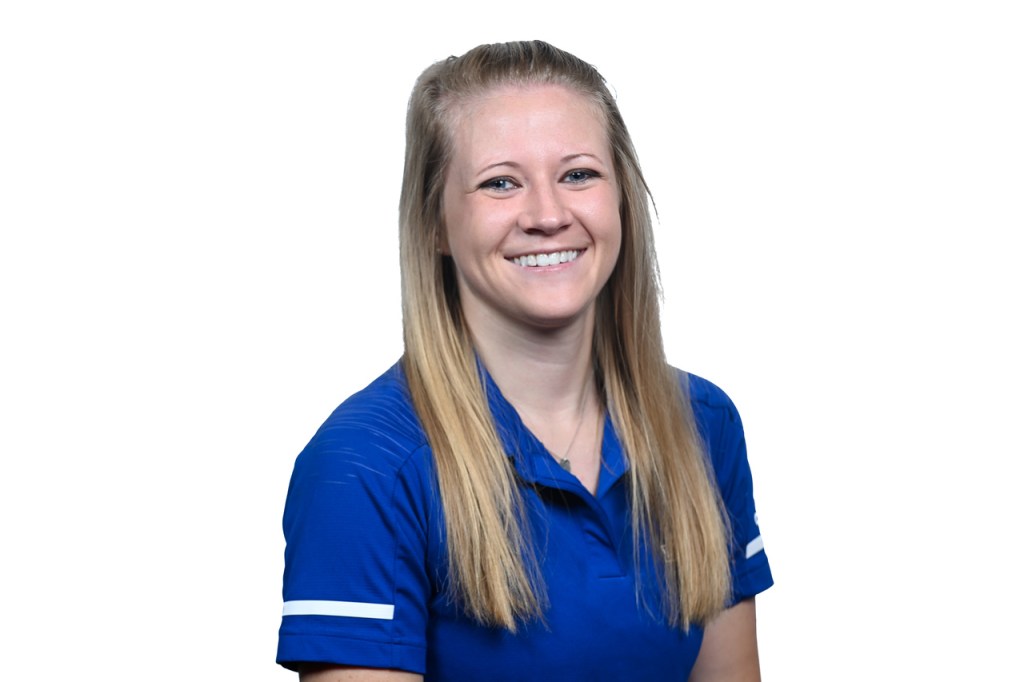
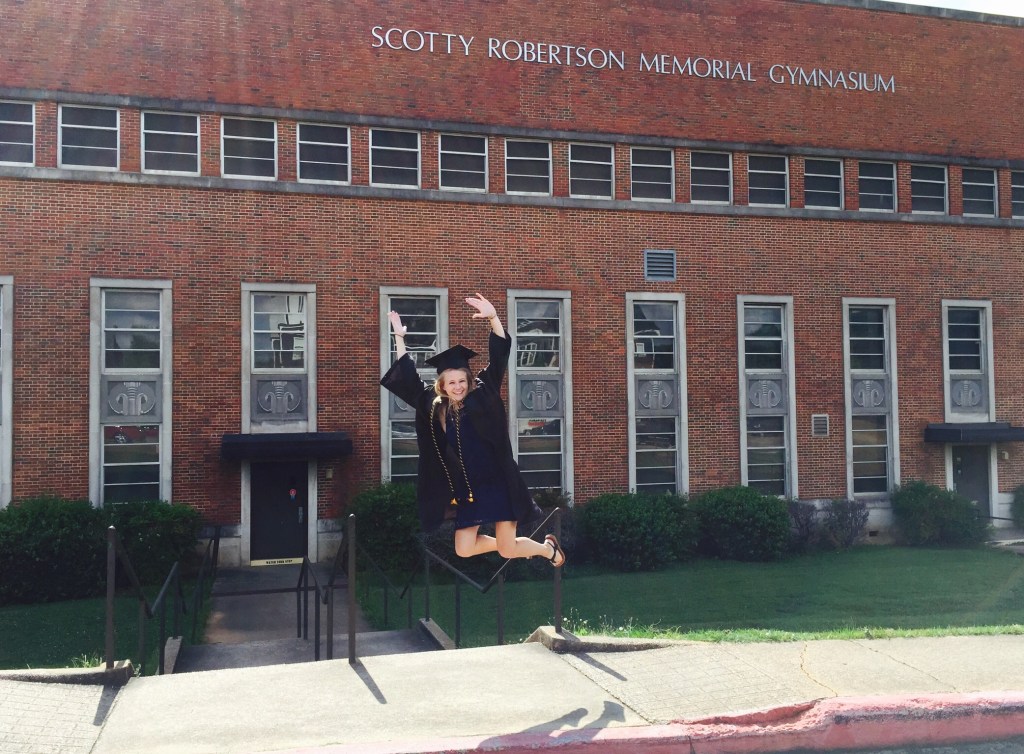
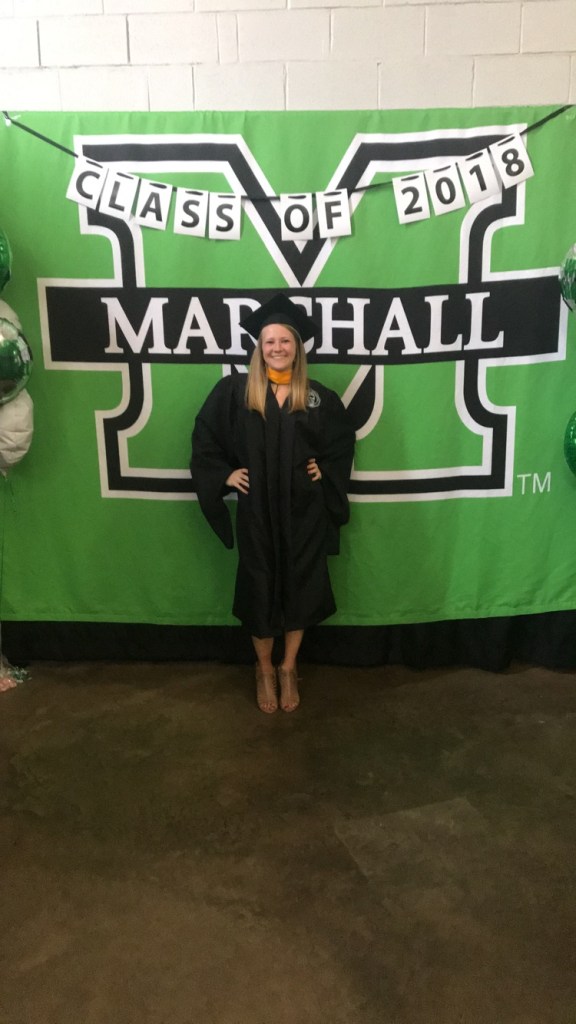
Stephanie Smart, BS Kinesiology and Health Promotion (2016), MS Athletic Training (2018)
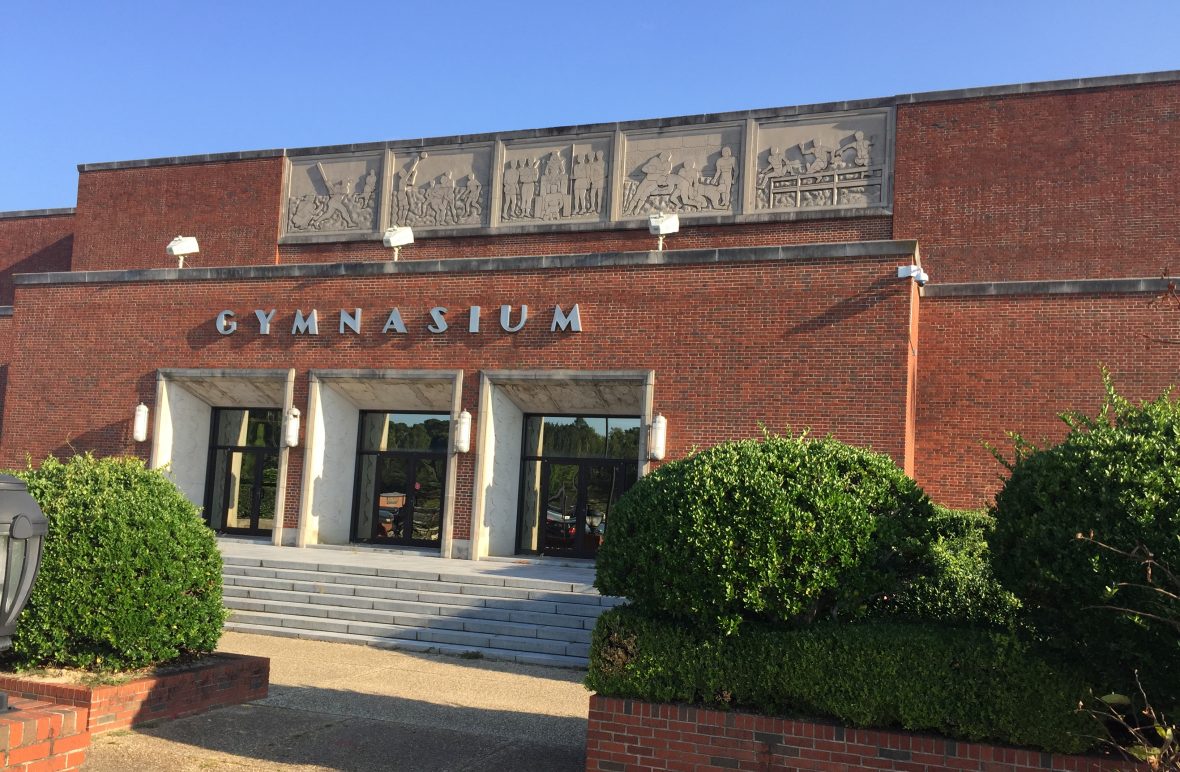
Being back at Tech is the dream I never knew I had. Louisiana born but raised in North Carolina – my family continued to loyally support Tech. My dad graduated with his bachelors and masters from Tech. He was a manager for the Louisiana Tech Bulldogs basketball team under Coach Scotty Robertson. Coach Robertson is the reason my dad switched from engineering to teaching and coaching high school basketball. With the impact from many Louisiana Tech legendary greats such as Coach Leon Barmore, Coach Tommy Joe Eagles, Coach Robertson, and more, my dad succeeded during his times at Cedar Creek, Dubach, Quitman, East Ascension, and lastly in Highlands. Fun fact: Mrs. Boyd attended one of my dad’s summer basketball camps as a camper herself!
I always knew I would end up at Tech for college. I also always knew I would continue the family business of working in basketball. But I had no idea in what capacity it would be. Initially, I declared an undecided major because I struggled to pronounce and spell “kinesiology”. But I took a couple of KINES courses and absolutely fell in love with the faculty, the other KINES students, and the course content. I knew that it was the major I needed to be in. I became vice president of PEK (Phi Epsilon Kappa- the Kinesiology honor fraternity), active with ESPE (now KINES- professional student organization for Kinesiology), and developed relationships that would grow into great professional working relationships as well as lifelong friendships.
After I graduated from Tech, I earned my Masters in Athletic Training from Marshall University in West Virginia. I was part of the inaugural class of 5 students. I was the only one with a bachelors degree – the others were part of Marshall’s 3+2 program as most AT programs are now. Having the Kinesiology degree gave me a little bit of an upper hand especially in the rehab and exercise prescription areas.
I graduated in 2018, passed my athletic trainers board of certification (BOC) exam, got my AT licensure in the state of Louisiana and did a 10 month internship at Louisiana College (now Louisiana Christian University). An internship route isn’t a popular direction to take due to the full-time responsibilities and hours and extremely low pay but it was right for me. After that I was hired at Piedmont University in Georgia where I covered volleyball, women’s basketball, men and women’s golf, and men and women’s tennis. Piedmont is where I grew the most under the guidance of some phenomenal athletic trainers. I obtained certifications in blood flow restriction, grastons technique (scraping), and became an NASM corrective exercise specialist. I also taught a couple of undergraduate exercise science courses.
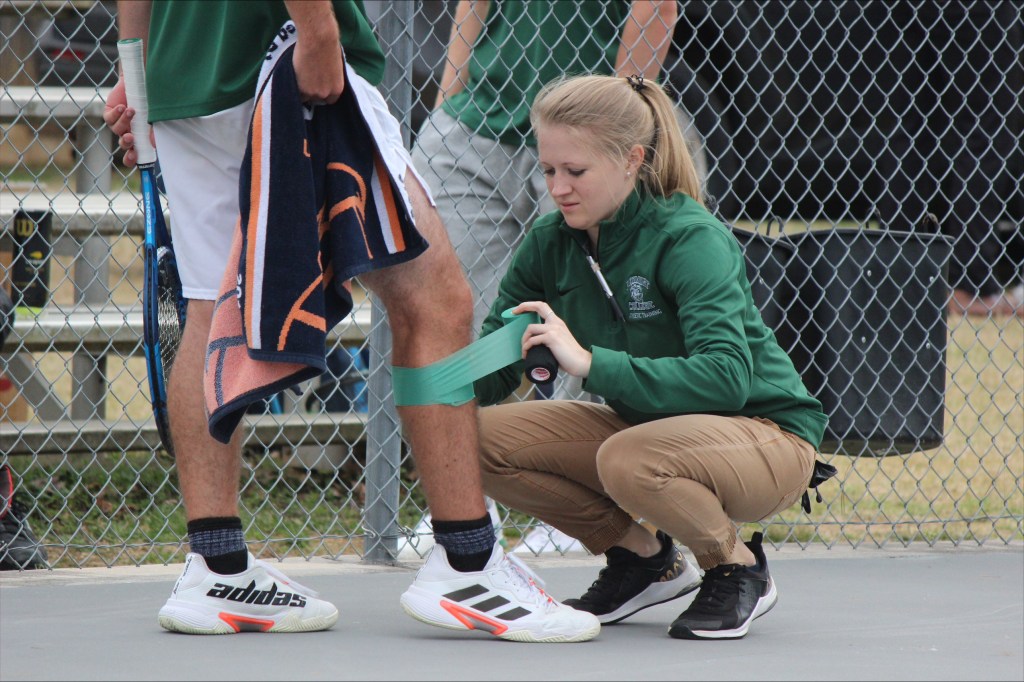
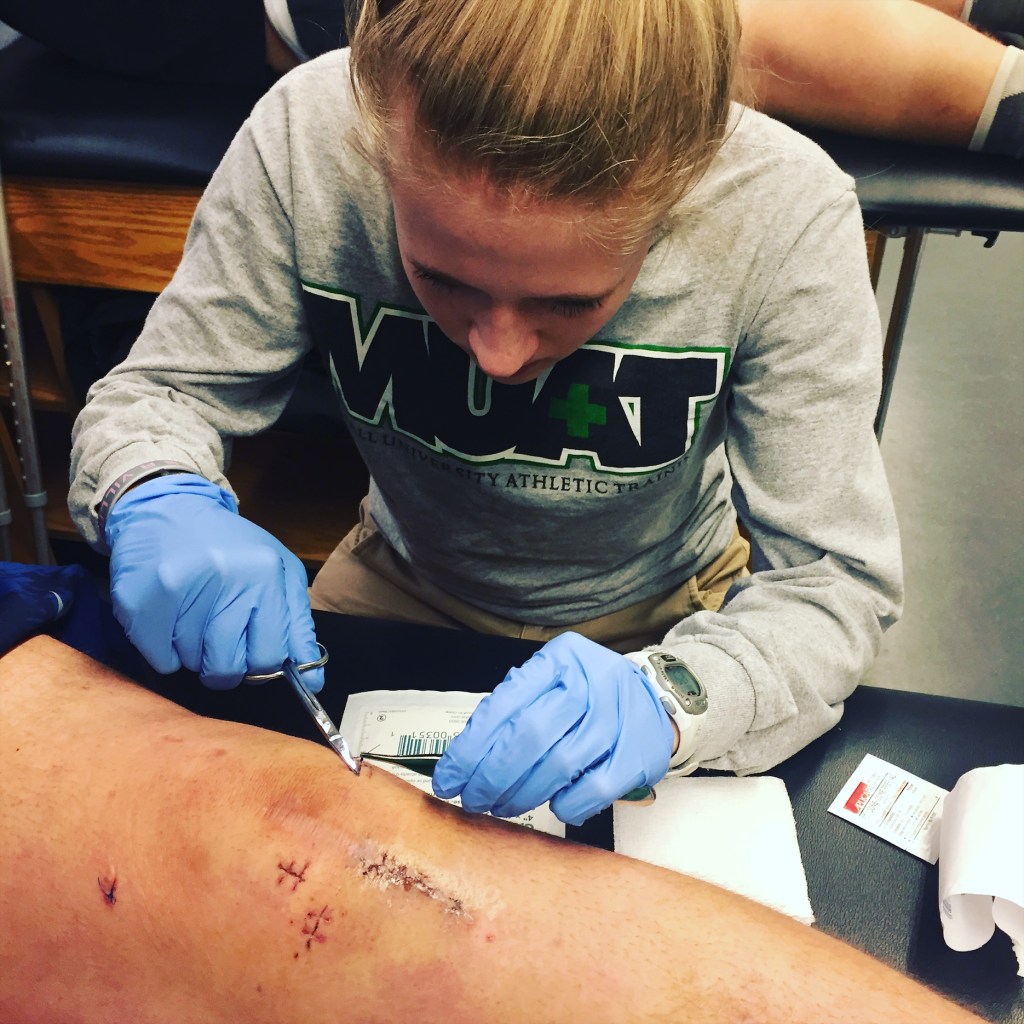
In my opinion, I believe athletic training is one of the greatest medical professions there is because of the fact that we are one of the few medical professionals to see an injury all the way through – from the moment it occurs on the court with the initial eval and diagnosis, to the acute care, treatments, and referrals necessary, to the possible lengthy rehabilitation, to the return-to-play, and last but not least the maintenance and preventative measures taken to ensure no further injury occurs. Athletic trainers aren’t just in professional, college, and secondary setting athletics. There are AT’s in performing arts, military, industrial settings, operating rooms, hospitals and clinics, PT clinics, and fitness gyms. Obviously, my passion for sports kept me in the college setting but it’s nice knowing there are so many options to choose from.
With the help from my mentor, former KINES adjunct faculty member and Lady Techsters basketball athletic trainer, Mandy Miller, I got the job here at Tech with the Lady Techsters and am temporarily covering the volleyball team. In the spring, I will be teaching KINES 405- Sports Med & First Aid. I look forward to all that is to come!
My world has truly come full circle and a lot of credit go to the amazing faculty of the kinesiology department.
Mrs. Boyd, Mrs. Smiley Reeves, Dr. Szymanski, Mrs. Szymanski, and Dr. Blazo – thank you all for being incredible educators and influencers.
Raised in Toronto, Canada I have always had a passion for baseball and hockey. While earning my BSc in Biology and playing baseball at St. Lawrence University, I also worked with the men’s and women’s hockey teams on the strength and conditioning staff. Shortly after finishing my undergrad I became a Certified Strength and Conditioning Specialist (CSCS). Working with many great strength coaches has allowed me to gain ample knowledge and led to getting to work with very talented athletes, some being in the NHL, NBA and the Olympics. When speaking with a mentor of mine, Dr. Ryan Crotin, I learned about the Kinesiology Department at Louisiana Tech and the baseball research that Dr. David Szymanski completes. The program piqued my interest and made it an easy decision to come to Tech.
At Tech, I have kept busy pursuing my graduate degree in Kinesiology Sports Performance Concentration and as a graduate teaching assistant. I work directly with the baseball team as the director of video and analytics and am also a strength and conditioning coach intern. I have created a student group in baseball analytics to further assist the team and teach analytics.
For my thesis I will combine my interests of baseball, strength and conditioning and biomechanics. I will conduct research to determine if forearm strength and mobility impacts pitchers’ performance in their pitch movement as well as their risk of injury. After graduating in the spring of 2024, my goal is to use my knowledge from my studies and experiences to start a career in baseball in the areas of player development and strength and conditioning.
My passion for baseball while having a growth mindset has made for an easy transition and sense of fulfillment in coaching. I feel extremely fortunate to have chosen Louisiana Tech for countless unique opportunities, the breadth of knowledge I have acquired, new experiences and the great people I have encountered.
Mrs. Jessica Szymanski, Graduate students Elise Bordlee, Chris Watson, Austin Reedy and Dr. David Szymanski
information about our Graduate Programs: Master of Science in Kinesiology Sport and Exercise Psychology Concentration and Sports Performance Concentration
Katherine “Katie” Alexander Location: Logan, Utah Louisiana Tech Degree and Graduation Date: BS in Kinesiology & Health Sciences and BA in Psychology, November 2020 Other Degrees: PhD in Human Development & Family Studies, in progress at Utah State University since 2021-2022 academic year with current estimated graduation of Spring 2026
I’m currently a PhD student and am planning to become a college professor. I decided to become a college professor because I love learning, researching, teaching, and mentoring students. I have always been interested in sport psychology but wasn’t sure how I wanted to get there. Sport psychologists are a diverse group, and most pathways are either more applied or more research based. More applied sport psychologists often work on performance consulting and/or become a licensed counselor, social worker, psychologist, or psychiatrist. More research-based sport psychologists predominantly work as professors but may also take jobs as data scientists at sports-based companies. During my undergrad at Tech, I participated in research with Dr. Jordan Blazo, Dr. Andrew Parks, and others to gain research experience and also worked at the Children’s Methodist Home in order to gain clinical experiences. I did not enjoy my clinical experience and loved participating in research, so this led me to ultimately decide to become a professor.
What was I looking for in a graduate program? I applied to graduate programs that would help me gain the necessary knowledge around sport psychology, teaching, and researching. In general, each graduate program is unique, and students that are applying should look into applicant requirements (often including GRE scores, GPA requirements, prior experiences, required course prerequisites, and whether/not a master’s is required for a PhD program), along with broad philosophies, objectives, and outcomes associated with the department/program and any funding and/or scholarship opportunities. Most PhD programs that are geared towards research also require a dissertation, and it is VITAL that you connect with a good academic advisor that can positively mentor you throughout the program. Academic advisors help mentor and guide you through graduation requirements, general research, teaching, and just life. Students should email potential academic advisors to inquire about their research and how you might fit with this research trajectory, to determine whether or not spots are available to work with them, to better understand their advising/mentoring philosophies, and to find out about funding and scholarship opportunities.
When I was looking at various graduate programs, I wanted to ensure that there was a good and positive culture in the department, that I was able to occasionally do my own research projects (instead of simply following what my advisor said to do), that I had supports in Utah, and that there was funding available to me. I was willing to explore broader programs, including kinesiology, psychology, and human development programs, because I wanted a wider breadth of knowledge around social science (rather than focusing on just kinesiology or psychology). I was especially interested in the Human Development & Family Studies program at Utah State University because it could allow for exploration of biological, psychological, and social factors as they relate to development and relationships over time. My potential advisor at this university also seemed very supportive and kind. I chose to attend Utah State University because the program most closely matched my criteria, and attending the program also allowed me to skip my master’s degree, which saved me money and allowed me to start on my own independent research earlier than if I would have attended a master’s program.
What is needed to become a college professor? Requirements depend on position and university/college type. Instructors, those that serve in more applied departments (such as business or nutrition & dietetics), and those that teach at community colleges might only need a master’s degree and relevant teaching and/or applied experience. A master’s degree is not really needed in order to become a professor at 4-year colleges and universities, but a PhD is needed. Students that are interested in becoming a professor should progress through school and should look to gain experience in teaching, research, and service to the community throughout their graduate school experiences in order to be a competitive job candidate. The job market for going into academia is highly competitive, and some people choose to also participate in a post-doc after graduating with their PhD in order to gain even more relevant research experiences. The process of becoming a professor looks differently, too, depending on whether or not the position is tenured (full-time position with full job security) or non-tenured (including all other positions). Those professors that are on a tenured track complete regular reviews of progress towards aspects of teaching, research, and community/other service and must often move from assistant to associate to full professors over the span of years.
As a PhD student- What is a typical day like for you? My typical day varies a lot across the week because I have less set hours and more freedom in how I choose to set up my schedule. I am responsible for coordinating and completing various research projects, serving as an instructor for one course in my department, and managing my course load of about 3 to 4 courses a semester. My research lab is called the Families in Sport Lab, so most of my research relates to sport involvement. I am currently working on projects related to youth sport participation in Western states; athlete trauma, abuse, and mental health symptoms; peer bullying and hazing in sport; and examining biological, psychological, and social factors that relate to youth substance abuse. In my role as an instructor, I teach one undergrad introductory course on couple and family relationships and am responsible for creating course materials, lecturing, communicating with students, upholding university policies, and grading. I also serve as an academic mentor for student-athletes at the university and enjoy powerlifting, so I stay very busy! Additional information: I went to a research conference for NASPSPA (North American Society for the Psychology of Sport and Physical Activity) in 2022 in Hawaii with other members of my lab. While there, I was able to give a verbal presentation about experiences of emotional abuse in intercollegiate sport and was also able to present a poster on a research project that was initiated at Tech with Dr. Blazo and Dr. Parks. I am grateful for this wonderful experience and the fact that the conference was in Hawaii!
Kinesiology is the study of human movement through the understanding of mechanics, anatomy and physiology. Exercise Physiology is concerned with analysis, improvement, and maintenance of the physiological mechanisms underlying health and fitness.
The American College of Sports Medicine provides the following description of a certified Clinical Exercise Physiologist. Clinical Exercise Physiologists (CEP’s) use prescribed exercise and basic health behavior interventions, as well as promote physical activity for individuals with chronic diseases or conditions; examples include, but are not limited to, individuals with cardiovascular, pulmonary, metabolic, orthopedic, musculoskeletal, neuromuscular, neoplastic, immunologic and hematologic diseases. CEPs provide primary and secondary prevention strategies designed to improve, maintain or attenuate declines in fitness and health in populations ranging from children to older adults. Chronic disease includes, but are not limited to, cardiovascular, pulmonary, metabolic, orthopedic/musculoskeletal, neuromuscular, neoplastic, immunologic and hematologic disorders.
How is Exercise Physiology and Physical Therapy different? Exercise Physiologists work with individuals who have chronic diseases, with a focus on improving cardiovascular health and body composition. Physical Therapists focus on rehabilitation from injury and preventive care in addition to those with chronic illness. So, in addition to testing and exercise prescription, clinical exercise physiologists focus on the improvement of physical capabilities for the purpose of Chronic disease management, reduction of health risks for early development of recurring chronic diseases, promote lifestyle and behavior changes that enhance health. CEP’s work in a variety of settings such as hospitals, outpatient clinics, wellness centers, physician offices, cardiac and pulmonary rehabilitation, occupational health and safety, stress testing departments or health education settings.
Some states require licensure with the State Board of Medical Examiners. Louisiana passed that law in 1994 and if a professional works in a clinical setting, they are required to be licensed by the Louisiana State Board of Medical Examiners (LaSBME). The best way to stay connected with the requirements in Clinical Exercise Physiology is through ACSM’s Clinical Exercise Physiology Association (CEPA). This organization provides continuing education, research insights, and certification opportunities. It is a national association dedicated to the professional integrity and growth of Clinical Exercise Physiology.
In my career I have worked in the fitness industry, hospital based wellness and cardiopulmonary rehabilitation in both inpatient and outpatient settings. Corporate wellness has been popular because Employers want to help their employees maintain health and fitness due to the cost of rising health care costs. Some employers have used risk rating for employee health insurance. In other words, the healthier the employee is, their health insurance premiums are lower than the employee who has high health risks and utilization of healthcare services. Higher education has been a rewarding part of my career path in the last 20 years. It has allowed me to use the experiences in different fields I’ve worked in and bring it to the classroom for future professional development. I feel blessed to be able to work with young professionals at Louisiana Tech. They have many options available to them in today’s career markets. Not only the allied health career options such as physical and occupational therapy, but in medical equipment sales representatives, corporate and community based wellness programs, athletic training, health and wellness coaching, athletic coaching, personal trainers, and so many more. Students should use the internship experience to get more specialized hands on training they wish to work in the future. These experiences only make the student a more marketable candidate for jobs. It is an exciting time to enter the workforce in this field. Many opportunities await young professional as they enter the job market after graduation. Be open, flexible, and work hard. You will find the path meant for you in your career and life.
A Health and Physical Education, Health and Human Performance, Health and Exercise Science – terms you are probably familiar with. But Kinesiology? When giving an explanation of what it is, the usual response is, “Oh, PE?” Yes, physical education is part of Kinesiology, but there are many more areas that are included in this academic discipline. Over the last 15 years many universities have changed their program name to Kinesiology, which is an all-encompassing umbrella term for the many disciplines within this field.
The American Kinesiology Association defines it as, “is an academic discipline which involves the study of physical activity and its impact on health, society, and quality of life. It includes, but is not limited to, such areas of study as exercise science, sports management, athletic training and sports medicine, socio-cultural analyses of sports, sport and exercise psychology, fitness leadership, physical education-teacher education, and pre-professional training for physical therapy, occupational therapy, medicine and other health related fields.”
Still many people don’t understand the depth and breadth of the discipline and all the many career possibilities a Kinesiology graduate can pursue. It’s true, the majority of majors in Kinesiology programs, or at least here at Louisiana Tech, are hoping to become physical therapists, occupational therapists, and physician assistants. But not everyone who applies to these allied health field programs will be accepted for various reasons. Many students do not wish to pursue a career in allied health but are unaware of what other careers are available. Hopefully this blog will enlighten the reader as to the many careers and paths a Kinesiology graduate can take.
The following is a list of possible career avenues compiled from the American Kinesiology Association and the recent seminar (you can click on many of them to find out more information about each):





 The Exponential Factor